Roads can't hold, maintenance costs have increased by 40 per cent. The train is too heavy for the public to pay, and the company should change。
To date, there has been a visible trend towards new energy vehicles, which are growing in size and weight。
Data from the ministry of industry and communications show that the average stock quality of new vehicles in our country reached 1704 kg in 2024, compared to 1,312 kg in 2012. In just 12 years, an ordinary domestic car had “obese” nearly 400 kg。
It is even more alarming that the growth rate of cars is accelerating: the increase between 2020 and 2024 has exceeded the sum of eight years between 2012 and 2020。

As early as 2025, the heavy weight of new energy vehicles had been the subject of discussion, and the growing weight of vehicles was now a problem of road carrying concerns。
The full mass of es9 was 2,915 kg, the pyramid gx increment was close to 2,890 kg, the high ev version of biadi grande tang was 2,970 kg, the d9,115-degree electrical version broke the 3-ton level, and the gospel v800 exceeded most light cards by a total weight of 3. 8 tons。
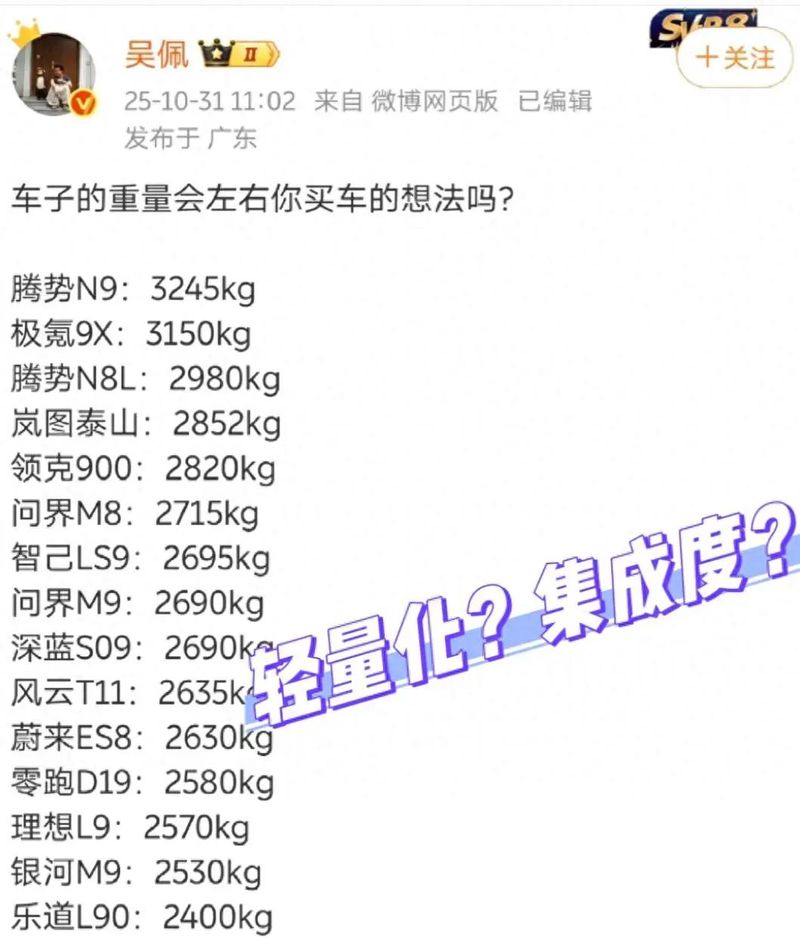
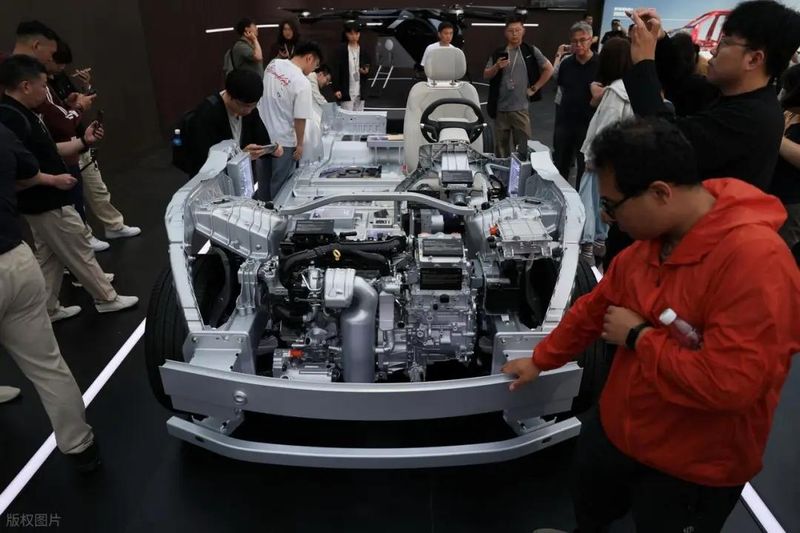
Why is it getting heavier, first and foremost batteries, with a 100-degree battery bag weighing 5,600 kg。
In addition, many manufacturers are equipped with “inner rolls” and constantly add to cars。
“one or two airbags were previously made to 112; the ordinary seat became heated, refrigerable, massageable; the refrigerator, the colored electricity were all added ... It was a quest for extreme comfort, and the result was a heavier car.”
The tram is too heavy for society to pay
Too heavy a body would pose a serious security risk. Tesla engineers gave a data showing a 10 per cent increase in body weight and a possible 5 per cent increase in brake distance。
A 3-ton suv with a brake distance of 100 kilometres per hour is 3-5 metres longer than a 2-ton vehicle, which is often the difference between life and death。
The weight of the former medium suv was still around 1. 7 to 1. 9 tons and is now close to doubling。
The greater inertia associated with such weight overlaps can also lead to an exponential increase in impact during collisions, causing not only greater harm to the occupants of vehicles, but also a more destructive threat to pedestrians and other light vehicles。
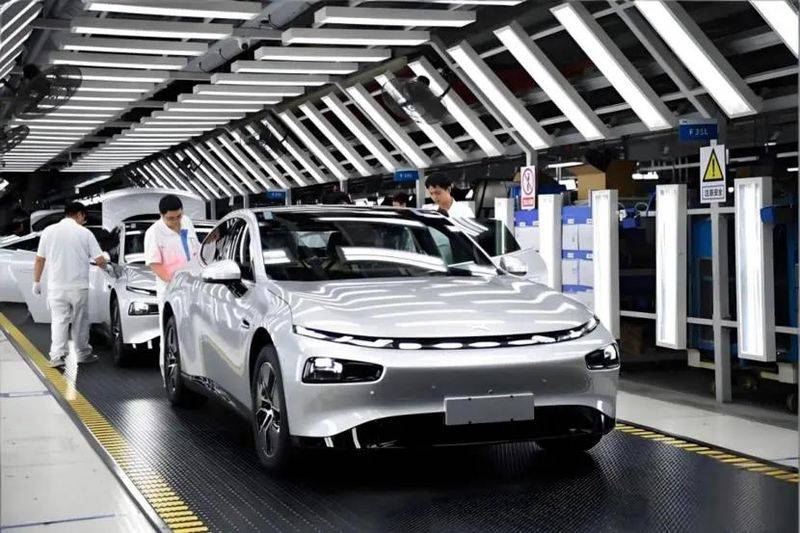
The impact of heavy cars also increases the hidden costs for consumers, with an increase of 500 kg in the weight of cars and a reduction of about 20 per cent in the life expectancy of tyres, as well as a significant acceleration in the wear and tear of brakes and suspension systems。
More heavy vehicles will also lead to higher insurance costs and higher maintenance costs. These hidden costs are ultimately paid by consumers, far more than the cost of electricity that the owner spends。
If a vehicle were to weigh a ton or even more, it would have left the single problem a million times more。
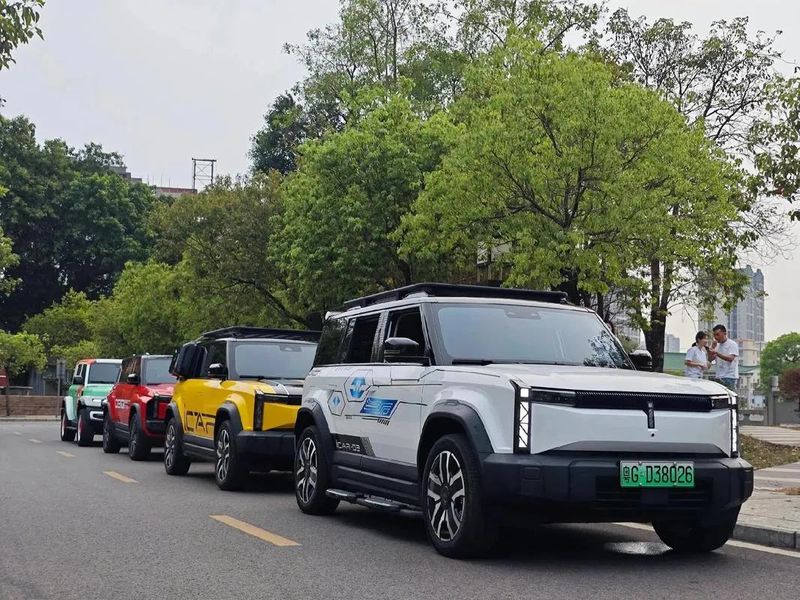
Data show that for every 20 per cent increase in vehicle weight, the rate of damage to the road will be 2. 07 times the original rate。
Three-ton vehicles, such as the large new energy source suv, naturally lose several times more roads than 1. 5 tons. A 3. 8-ton “beast” like v800, which caused losses on the road, probably dozens of times more than a normal home car a decade ago。
According to publicly available data, there are up to 300 million passenger vehicles in the country. New energy vehicle penetration has exceeded 60 per cent。
As more and more heavy electric vehicles become available in the future, the tired life of the roads will be drastically reduced, bridges shrunk, floors in the garage heavy, parking facilities in old pockets will all be tested, and the annual increase in capital maintenance costs will be astronomical。
Because there's a famous rule of experience in road work: "four square laws."。
It means that road losses are proportional to the four squares of vehicle axle — double the number of vehicles, not double the number of road wears, but up exponentially。
Forty tons of vehicles damaged the road four times more than two of 20 tons, or 16 times more。
Our car is not that big, but the wear and tear of a two-ton train across the road is not a little bit more than that of a 1. 3-ton ordinary fuel truck, but an exponential rise。
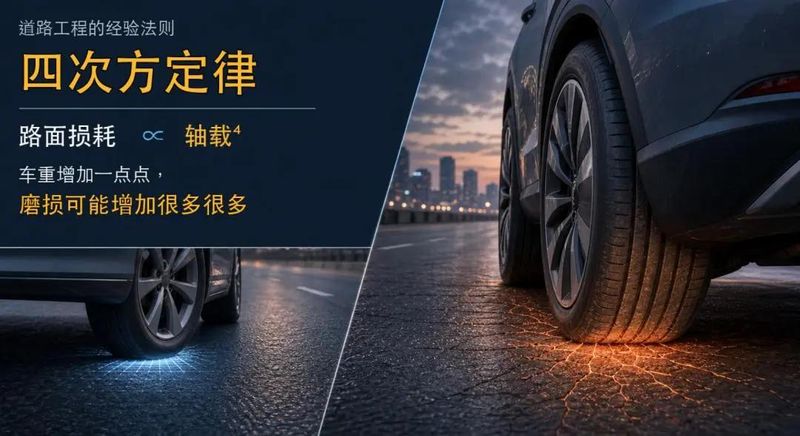
In april of this year, li bin gave a set of data, i. E., for every 20 per cent increase in the weight of cars, the level of road damage becomes more than double the original level — not 20 per cent, and 107 per cent。
This means that, according to the average weight of the new energy vehicles at the moment, they wear and tear the surface about 5-7 times more than the previous fuel trucks。
This places an enormous burden on the cost of road maintenance and brings back to the surface the old question of “road maintenance”。
While chinese automobiles are directly pointing to the "blowing 40%" of the cost of road maintenance by overheavy motor vehicles, which is not an increase in overall national maintenance costs, but an increase in unit mileage costs due to shorter major maintenance cycles in some provinces, the spread of motor vehicles has increased the country’s nearly $300 billion shortfall in road maintenance funding。
In 2009, china abolished traditional road maintenance fees and instead incorporated the associated costs into the final oil consumption tax, creating an indirect measurement mechanism for “more and less” oil。
However, the new energy model does not currently distribute the cost of road maintenance into oil prices in the same way as a fuel truck, thus creating a systemic gap in terms of more road damage without cost。
It is because of the fact that there are no costs involved that cars tend to be big, have large batteries and have large refrigerators with large electric sofas, which are constantly being configured and thus have a growing weight。
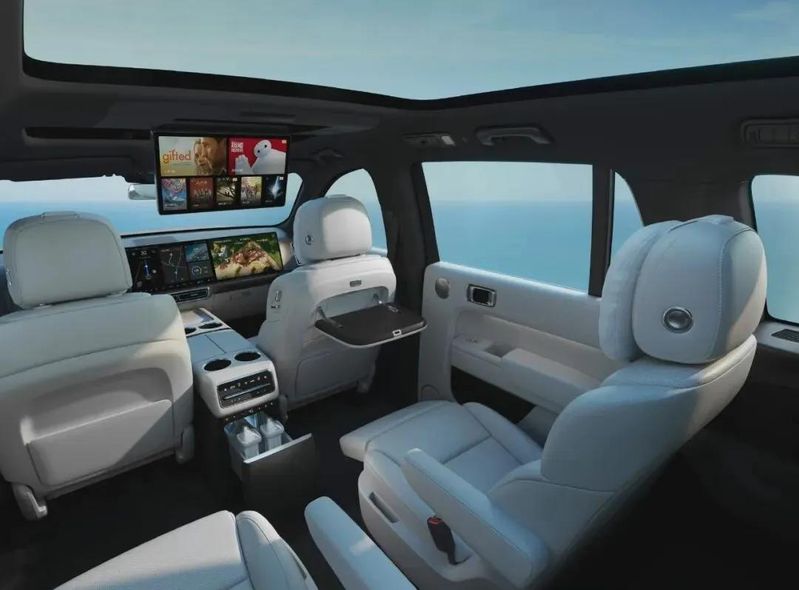
More critically, new energy vehicles are now at the end of production and are exempt from excise taxes. Fuel trucks have excise-based excise taxes, and the higher the excise, the greater the charge, the more or less they can contain the impulse to build a car。
But the electric car is completely out of bounds, and the owner of the car, of course, is the one that gets bigger and more profitable。
So what? See what other countries do。
So it is in this field that foreign action has been taken, first by norway。
In 2023, the country with the highest global penetration rate of electric vehicles began to levy a weight tax on electric vehicles: more than 500 kg, nok 12. 5 per kilogram. A 2. 7-ton electric vehicle is required to pay approximately ek 275,000 more each year, or approximately rm$ 18,000。

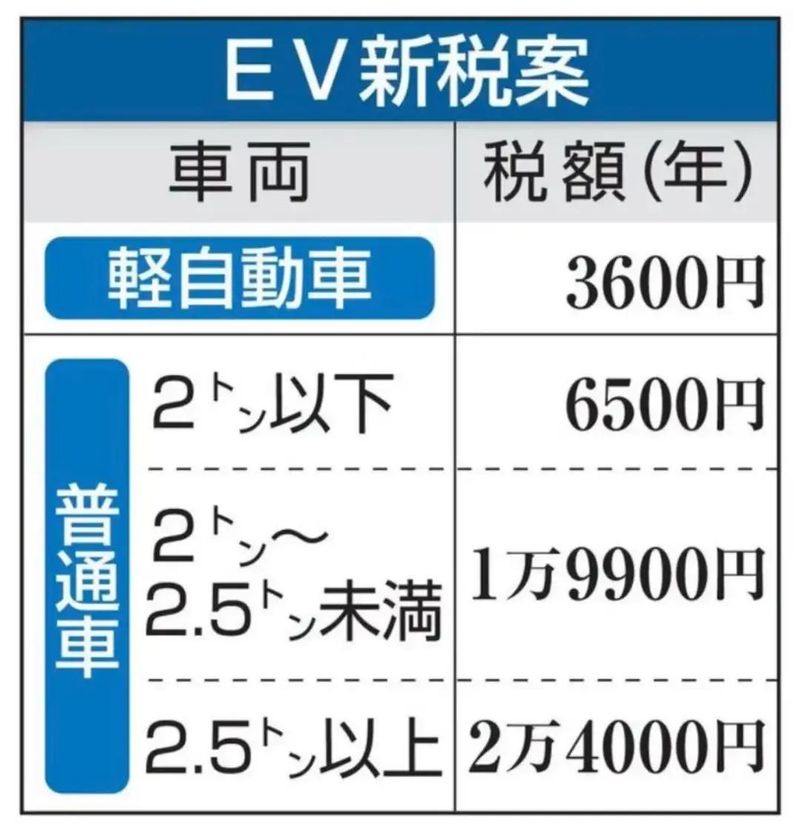
The second is japan. The government of japan has decided to introduce an additional “ev (electric vehicle) weight tax” from 2028 onwards. At that time, the owner of the electric car is required to pay the corresponding tax based on the weight of the vehicle。
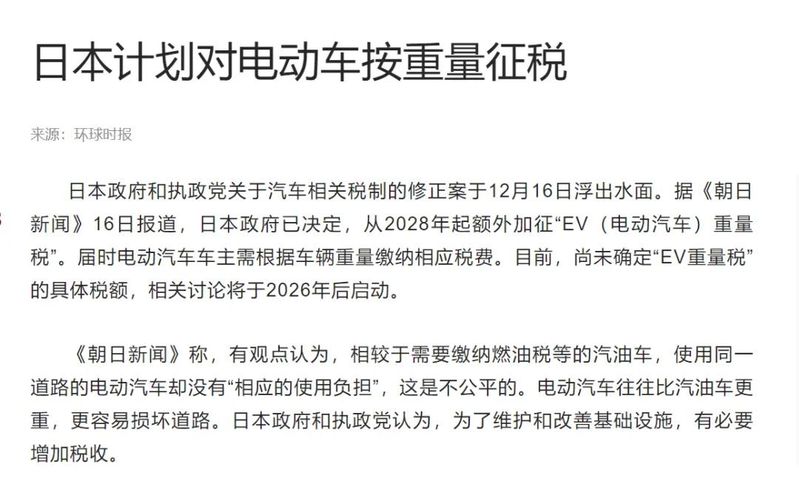
The more the cars are handed over in japan, the more 2. 5 tons are paid 24,000 yen per year, or approximately 1,070 yuan。
France again. Since 2025, france has imposed a “heavy fine” on more than 1. 6 tons of oil trucks, ranging from 10 to 30 euros for each kilogram。
A 2. 1-ton vehicle may be fined more than 5,000 euros (approximately 40,000 yuan)。
It's time to change in advance
Why do many countries want to do so, because the trams squeeze public social resources and place a huge burden on road maintenance costs, with social responsibility, and the heavy weight of cars runs counter to the original purpose of car development。
Professor han zhiyu, professor of the university's automotive school, believes that the continued growth of cars is not only a necessary medal for the advancement of the automobile industry, but rather a result of a disorderly competition in the industry, which runs counter to the original intentions of energy-saving emission reductions and greening, and has evolved into a profound paradox about resources, environment and sustainable development。
There are a number of calls for policy-level engagement. Han zhiyu proposes to change the consumption tax based on engine charge to one based on the quality of preparation, and to incorporate charging into the tax system。
Choi dong-soo suggested introducing heavy taxes and charges for stairways vehicles, while industry suggested linking acquisition taxes, excise taxes and vehicle weights。
According to the information received, the relevant regulators have begun to examine reforms to the car tax system based on car retrenchment, but there is no specific tax policy plan for electric cars。
A healthy new energy industry should not be based on the sneaking away of road maintenance costs to others。
It is not possible to enjoy the name “green travel” while allowing the fuel-car neighbours to pay you for the road repairs。
The car itself needs to be conscious of this thin battle, and since it cannot pile unlimited batteries, it has to be lightened, integrated cast techniques, aluminium alloy materials, and even carbon fibres, which will later become a frame。
800v high-pressure platforms, carbonated silicon chips, high-efficiency heat pump air conditioning, which were previously available only in high-end vehicles, were decentralized。
Batteries account for about 18 per cent to 25 per cent of the total vehicle weight, and it is critical that the battery weight drop, so that it can also be better manipulated, brakes become more sensitive and tires are worn slowly. Solid-state batteries may still be an important direction in addressing this problem。

With 100kg weight solid-state batteries, a continuation of 1,000k is expected to be achieved, with an energy density of 400-500 wh/kg, well above the current level of 250-300 wh/kg for liquid batteries。
Last year, according to some industry sources, solid-state batteries were produced in the country, with a 100-degree power supply of 250 kg, which is about 500 kg (half tons) less than the current battery, and the subsequent increase in flight and manipulation is inconceivable。

The road is so important that no one can walk. In order to balance the public interest of society with the long-term value of social morality and the use of public resources, motor vehicles must change ahead of schedule。
Light quantification is a necessary trend, and if you do not change now, you will be delayed in the future, and the costs associated with heavy vehicle loads of public social resources, road losses and early vehicle wear and tear, are likely to ultimately be paid for by the entire community。