In order to figure out how to build trust, it is important to see how trust is lost. When the governor of the grand wall automobiles, wei jianjun, publicly shelled the industry, the most central contradiction emerged: excessive maintenance in the area of car maintenance, lack of transparency in information, was eroding the trust building blocks of the industry as a whole。
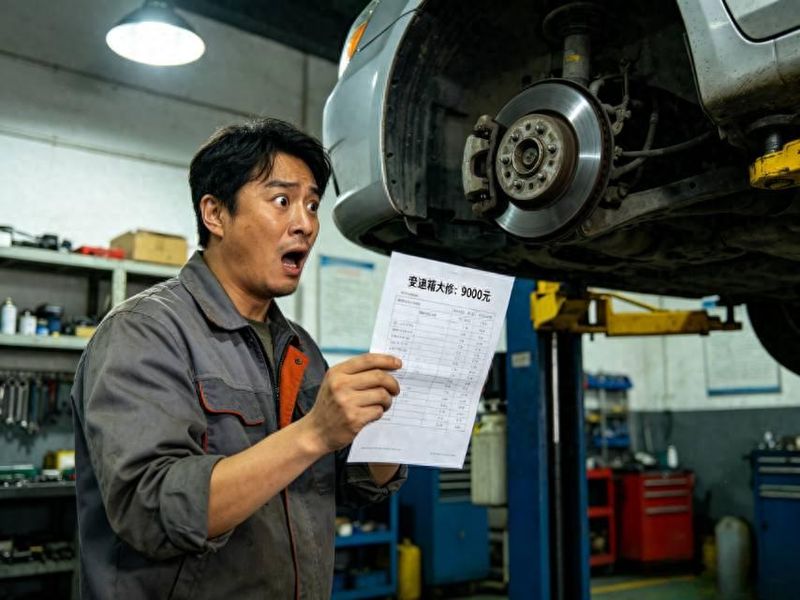
Research data show that up to 82 per cent of porsche owners have experienced price volatility, hidden charges and excessive maintenance during high-end auto repairs. This is by no means a case。
The chengdulong springs district court concluded a highly representative case: a new energy vehicle had a slight tailing, the trunk door had only fallen, and a third party bid for a car repair was over $2,000, but the 4s store insisted on replacing the whole new tail door, with damages of up to $8950. The court finally found that over-maintenance brought the reasonable cost to $5,000。
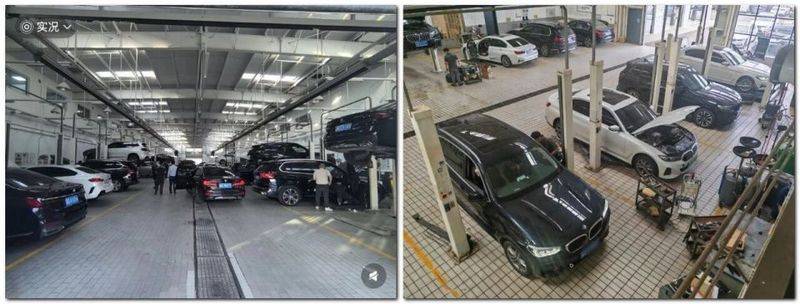
This case exposes the industry's tumultuous chain — the profit-making impulse of maintenance agencies, the acquiescence and even cooperation of insurance companies, and the inability of consumers to counter professional barriers。
The worse is in the area of new energy vehicles. The mainframe plant completely excludes third parties through technical encryption (bms system lock-down), control of accessories, and forms a closed chain of sale. Of the approximately 400,000 traditional repair plants in the country, only 20,000-30,000 have new energy maintenance qualifications and fewer than 100,000 are certified technicians。
New energy vehicle crash maintenance costs are 40 per cent higher than fuel trucks and 30 per cent higher than insurance premiums, and owners have to rely on high-cost services from 4s. This has led to a massive overdraft of consumer trust in the industry - even if 4s stores are back online, 70 per cent of the drivers prefer to be coordinated by the manufacturer to other brand 4s stores, rather than to be sold independently. It's not that i don't want to, it's that i can't。
From the perspective of successful businesses, how trust is rebuilt
The collapse of trust is not irreversible. In chongqing zhengjiang, a repair plant called shinshin automobile demonstrated the commercial value of “transparency” using a differentiated set of methods。
The letter of advice is to avoid “slightly ill repair” by means of precise targeting failures of the smart diagnostic system. For example, in the case of chassis, traditional stores tend to recommend the replacement of the whole arm and offer a high price; the zhessian technician has determined that it is only necessary to replace the ageing liner alone at a cost of 10-20 per cent of the industry average price。
At the same time, the letter promotes the transparent management of the entire process: 2-dimensional searchable sources and quality reports are available on the accessories, and the owner of the vehicle is able to view the maintenance live on his mobile phone. Once the vehicle enters the shop, it also produces electronic files, which are clearly visible from historical failures and maintenance records. This "show you the bottom card" approach has changed to the "old and new"-- – the owner's evaluation is a “spectrum-based institution” with its own engine。
In terms of the dimensions of scale, the confidence strategies of different enterprises differ markedly. The central advantage of 4s is the endorsement of the mainframe brand. With the launch of the national unified maintenance package by hirondelle toyota, the cadillac introduced the “golden plan” (a 30 per cent loss for a new car), which uses official quality assurance to dispel the owner's concerns about “unrequired charges and non-recognition”. Large chains of tigers rely on o2o flows and standardized systems to reduce decision-making costs。
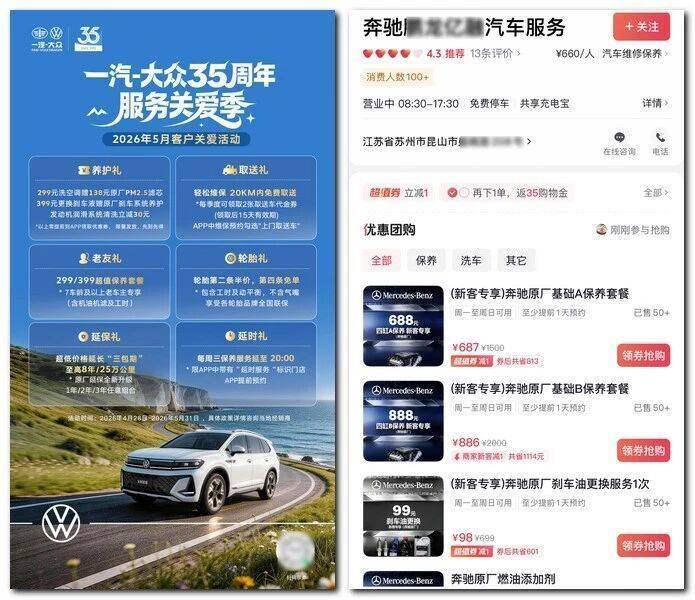
Small repair plants, on the other hand, follow community-based deep-farming routes and create an expert image of the subdivisions through specialized positioning (e. G., chassis repairs, engine oil management)。
There is, however, a notable contrast: even in high-quality cases such as letters of credit, public disclosure of quantitative data (e. G. Customer satisfaction, back-to-home rate) is still lacking, and industry lacks a uniform trust assessment benchmark, which is in itself a short sheet of confidence-building。
What drives change from a policy and industry perspective
Institutional and standard interventions are systemic solutions that are far from being sufficient for enterprises alone。
The superintendence of markets has issued a guide to compliance with price conduct in the car industry, which requires maintenance of firm-coded prices and prohibits price fraud. At the local level, the western region of lanzhou conducts special inspections on the basis of this guide, which detects behaviour that is not priced in accordance with the prescribed codes and uses “three-nil” accessories, etc。
At the level of industry associations, the chinese association of automotive maintenance industries has conducted six consecutive national competitions on “presentity enterprises in automobile maintenance” and issued industry weather indicators covering over 3000 stores to improve market transparency。
The real breakthrough is the new regulation of power cell maintenance in april 2026. It promotes “capable repairs”, prohibits the mandatory replacement of packages and requires that car companies open up to compliance third parties the technical parameters and basic diagnostic powers of batteries. This policy directly promotes a number of areas where third party protection costs are 30-50 per cent lower than 4s。
But the reality is equally sharp: policy implementation is far from strong enough. The level of openness of new energy vehicles to data interfaces and maintenance procedures remains inadequate, and third-party repair plants, even when equipped, are unable to perform independently because of the inability to clear system failure codes. Some maintenance workers have been convicted of “breach of computer systems” for self-dismantling the battery bag。
While the policy has landed, it is not sufficient to deter offending enterprises, many of which are still watching。