Recently, the topic of “refund alone triggers extreme business operations” has gained momentum. Didn't the "refund-only" service of the electrician platform be cancelled two months ago? Why did the discussion start again
In recent days, several consumers have stated on social platforms “showing” that they are not satisfied with the quality of the goods, after having consumed the shopping site, and that, although they accept the return request, they are required to cut and smash the goods until they are completely unusable and to take video or photo as a basis for review。
Many consumers believe that such an “extreme” return requirement can be a puzzling exercise in questioning its potential for waste of resources。
Requesting the destruction of goods suspected of being illegal
In recent days, a consumer in zhejiangzhou had purchased a garment on an electrician platform and, after receiving it, the consumer claimed that the clothing was badly damaged and applied for “refund only”. However, the merchant's reply made him look stupid: “refund is fine, but you have to cut your clothes and take a picture and send us a picture.”
In addition to demanding the cutting of clothes, there are consumers who, when returning goods, require them to cut their bags, and even a tie tie must be cut and photographed and uploaded, so that they can apply for a refund. In the face of consumer incomprehension, there is even a threat to “prosecute or cut”。

In response, some consumers said: “this is really hard to understand and feels like trying to pierce my “false”
A number of consumers have also suggested that the cutting is relatively operational, but it is difficult to break stainless steel cups, destroying goods and increasing their jobs in vain. Moreover, in many cases, consumers do not opt for “refunds only” to try to cut wool, but rather for “refunds only” because they are unwilling to bear the freight costs arising from the return。
Do businesses have the right to demand that consumers “destruct goods”
Zhao liangcheng, a well-known pro bono lawyer and senior partner at shaanxi xingda, stated: “the act is suspected of being unlawful.” he explained that consumer protection law provided that consumers had the right to choose goods or services on their own and the right to fair trade. Businesses require consumers to cut goods before returning goods, undermining the legitimate interests of consumers and violating the provisions on the right of consumers to return goods. Consumers have the right to refuse such unreasonable requests from businesses and can complain to the platform or report them to relevant authorities, such as consumer associations, and, if necessary, through legal means, to hold the business community accountable。
The merchants are afraid of the wool
Why does a merchant have such an “extreme” return request? In fact, they seem to be suffering in a basket。

Previously, the electrician platform introduced “refund only” services, a rule that was used by some professional “sweet hairs” to exploit, and after the receipt of goods, “refund only” services were initiated. In the absence of clarity of liability, some vendors have been unilaterally awarded “refunds only” by the platform, resulting in the loss of goods and products。
In april of this year, multiple power company platforms, such as many, poaching, shivering, fast-tracking and kyoto, were completely eliminated from the “refund only” service, and after the receipt of the consumer's “refund no-refund” application, which will be handled by the business itself。
But the platform still has the option of “refund only”. Moreover, in many cases, businesses are reluctant to accept consumer “refunds” applications. In particular, there are small commodities with costs and profits of only a few dollars, and a single profit does not even cover the postage charges sent back. As a result, when faced with a return application received by the consumer, most vendors prefer to settle the problem in consultation with the customer rather than sending the commodity back。
A vendor posted on a social platform that an order that only refunds a shipment does not take into account the value of the goods themselves, and that a loss of at least $6 is incurred only on courier charges, freight insurance, platform services, labour costs. The high and low freight risk is determined by the return rate of the merchant。
In addition, once the buyer returns the goods, in addition to shipping costs, they involve loss of goods during transport, labour costs for re-mounting and the risk of a backlog。
Some vendors have indicated that when the need for a consumer to return goods and refunds cannot be denied, the requirement to “put the consumer to destroy the goods” is made in order to prevent the buyer from obtaining a malicious “shea wool” — both in return and in possession of the goods。
Rethinking: why are consumers returning goods
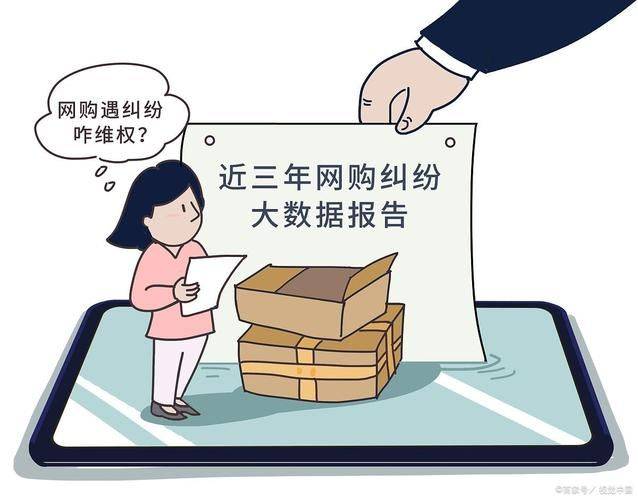
In fact, in recent years, there has been a high rate of return of electrical platforms, especially for women. The reasons for this are mainly time, quality and price。
In order not to build up stockpiles, it is difficult for consumers to wait for a month of advance sales. The clothes that were to have been purchased in the summer were received in the autumn and the consumers were forced to return the goods。
The more important reason is that clothing layouts and sizes do not fit the needs of the population。
In order to attract consumer listings, some businesses tend to process commodity images in depth. Models, dressed in tailor-made and lean clothes, with specialized lights and filters in a well-designed setting, show near-perfect results. However, when consumers expect goods to be received in good faith, they find the objects and images to be in the mud。
There are also merchants who deliberately narrow their sizes to allow consumers to think that they are thin. Even in the same store, different sizes of clothing are irregular and consumers can only continue to try wrong, increasing the probability of returning goods。
How can the phenomenon of high returns be mitigated? Businesses should also raise the quality of their own products in a manner that allows consumers to buy comfort products at once。