In recent days, several consumers have reported through social platforms that they are not satisfied with the quality of the goods to be returned after the website has been consumed, and that, even though they have accepted the return request, they are required to cut and smash the goods until they are completely unusable and to take videos or pictures as a basis for review. Consumers believe that such an “extreme” return requirement is not only surprising, but does not call into question the waste of resources behind it。
Why is it so extreme? On 19 june, cover journalists spoke to consumers, some businesses, practitioners and experts。

The interviewee had to destroy the merchandise in return
Consumer encounters
Dealers ask for damages for refunds
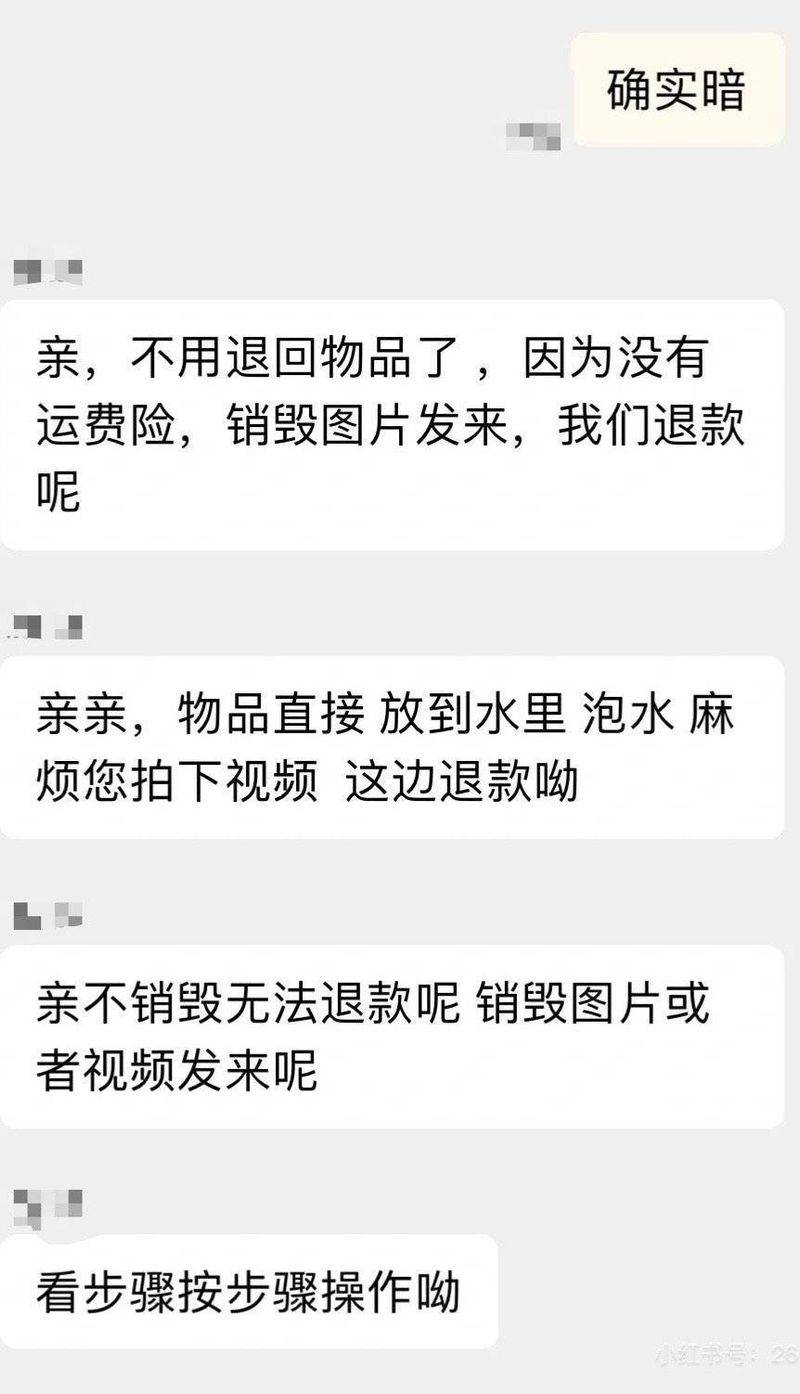
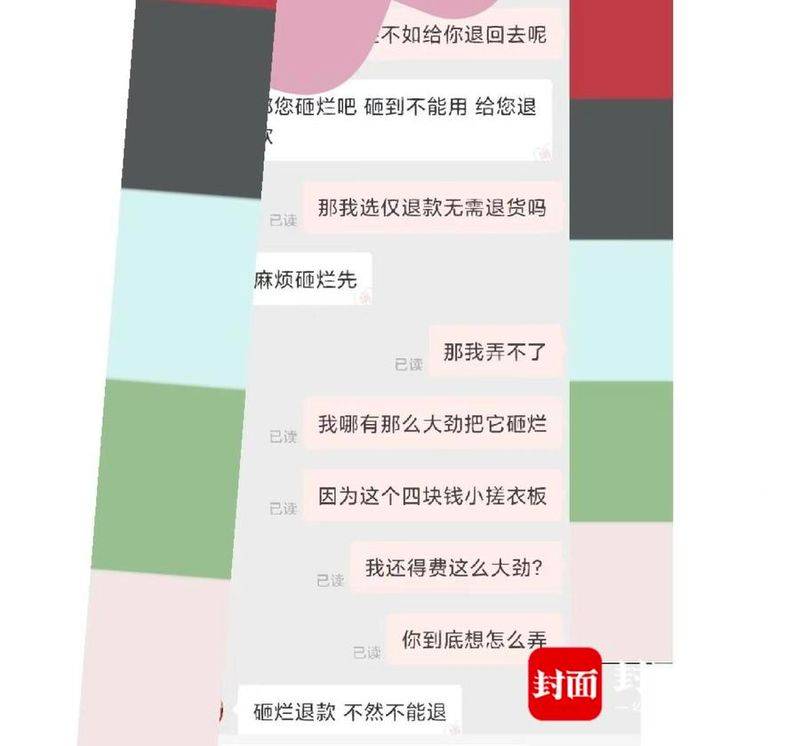
Mrs. Chen, who lives in guangdong, is a 90-year-old mother who usually likes to shop online. Recently, she purchased a cell phone shell on a shopping platform, but after receiving it she found it to be of much lower quality than expected, she initiated a return request. Soon, the seller contacted her to negotiate with her and offered her the condition that she would receive a refund without returning the goods, but that she would have to destroy the cell phone shell on the spot and send the photo to the seller to ensure that it was completely unusable。
Ms. Chen cut her skin-made mobile phone shell to pieces, but the other side indicated that the damage had not been sufficient and asked her to cut the rope. "i thought i'd take them one by one." she said. Eventually, she completed the operation as required before she received the refund。
Without exception, in july last year ms. Zhang, a citizen of chengdu, purchased a box of milk online, which had become sour and undrinkable at the time of receipt because of the hot weather. As a result, she initiated a “refund only” application to the electrician platform. The other replied shortly, but the conditions were the same as those experienced by ms. Chen: the whole milk had to be poured into the toilet and video-taped as evidence of an application for refund。

Consumers are asking for damages to be refunded
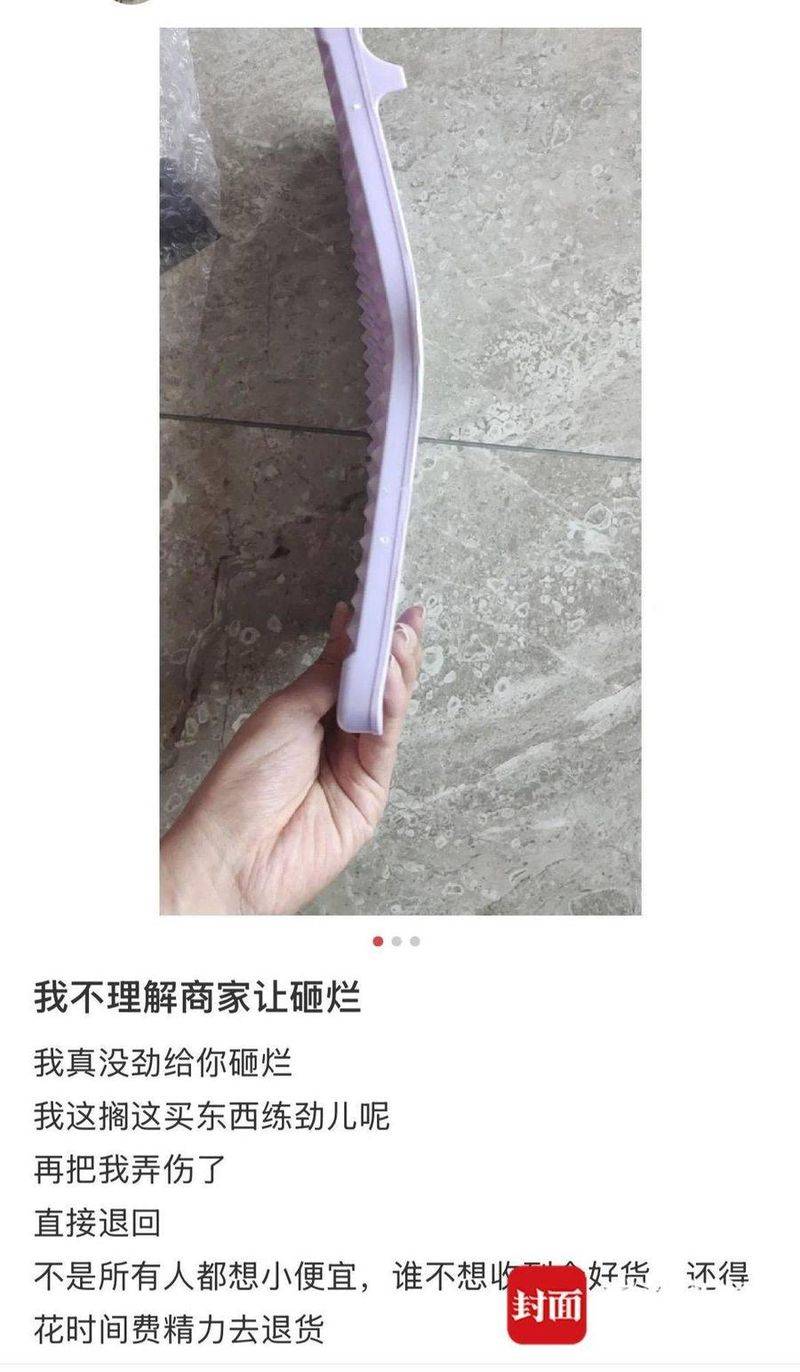
"why do good things break? Isn't that too wasteful?” also confused is ms. Liu of shandong. The seller asked her to destroy all her socks because of the quality of the socks she received. Ms. Liu strongly disagreed that the request for a refund had been deadlocked and that she had only resorted to the intervention of the platform's guest services to resolve the problem。
“it's hard to understand, it feels like trying to pierce my lies.” ms. Zhang was very dissatisfied with the sense of “untrust” brought about by this consumption experience. Ms. Liu also expressed the view that the destruction of objects required the refund, which was not only unreasonable but also extremely distorted. She was concerned that that phenomenon could have a negative impact on a healthy consumption environment。
Consumers are asking for damages to be refunded
Business response
"only refunded" and then he got scared
Why should consumers be required to damage goods to return money? An electrician seller makes a bill to the journalist: in an order transaction, the seller bears the cost of couriers, platform services and the purchase of freight insurance, which is determined by the vendor's rate of return。
When businesses invest in these costs, the situation becomes more complex when buyers request a refund。
If the consumer chooses “refund only”, the commercial will bear the cost of the goods themselves, as well as the many costs mentioned above; if the consumer chooses “refunds only”, the commercial will also bear the cost of the return, if not generally the cost of freight insurance for low-profit commodities. For small commodities with only a few dollars in cost and profit, profits do not even cover the return of postage. In addition, once the buyer returns the goods, in addition to shipping costs, they involve loss of goods during transport, labour costs to re-calculate the shelf, and the risk of creating a backlog。
Cost standards for electric operators
Businesses therefore try to persuade consumers not to send back goods, but rather to settle them by negotiation。
Why, then, would merchants ask consumers to destroy goods? Another seller indicated that, previously, after the introduction of the “refund only” service, some professional “sweet” had used the rule to exploit the rule and to initiate “refund only” after-sale services upon receipt of the goods. In the absence of a clear definition of liability, some businesses have been unilaterally awarded “refunds only” by the platform, resulting in the loss of goods and products and a heavy loss. It was only in order to prevent the phenomenon from being maligned with “shells” that merchants demanded that “consumers destroy their goods”。
Another commodity dealer, ms. Dou, also stated that her family's goods belonged to personal clothing and could not be sold twice after their opening. So when a customer makes a request for a return or refund, she tends to persuade the customer to destroy or retain the goods and to provide some compensation. “if a small commodity is returned to the consumer, the merchant generally faces a loss, however much, whatever the method of sale is chosen.”
Consumers are asking for damages to be refunded
Professional
Refund only dispute, multiple platforms or cancellation
“sale of secondary reflows would have been detrimental to good consumer ecology.” an insider in the electronics business told journalists that the destruction of poor commodities that were not accepted by consumers was in the interests of both buyers and sellers and that “some things are sent back to the merchants and are expensive, and the merchants will not sell them twice, rather than destroy them and refund them”. According to the industry, this act by a businessman is not a violation of any rules, it is a spontaneous act by a businessman and there is no reason for the platform to intervene。
“it is intended to enhance the user experience and to create a positive cycle of excellence for businesses.” the analysis of the industry was also the original purpose of the electrical platform to establish “refunds only”。
Indeed, “refunds only” have been controversial since their implementation. It lowers the consumer return threshold and costs and effectively addresses consumer concerns. It also contributes to curbing long-standing false propaganda, billing letters, price fraud, sub-optimal content, etc. In the electricity industry. At the same time, some platforms send “refunds only” notices to consumers without the consent of the merchant without knowing the specific circumstances of the dispute, resulting in the loss of goods and products by some of the merchants without clear liability。
Journalists found that according to the 2024 electroplatform “refund only”, published last september, only 64. 31 per cent of complaints from national electroplatformers during 2024 were arbitrarily refunded, ranking first。
Refund-only rules have also been optimized on a number of electrical platforms. For example, in july last year, the treasure cat was the first to untie the “refund only” rule. The “refund-only” policy has been fully abolished since late march of this year with the 1688 platform under ali's flag, which, in dealing with trade disputes over commodity quality issues, is awarded a subsidy from the platform to the aggrieved party on the basis of a good faith account。
Moreover, in response to this phenomenon, during this two-year session, the relevant national authorities released a strong signal that they would abuse the only refund rule on the platform, resulting in the governance of the outstanding issue of the sale of goods by commercial households. In april this year, according to media reports, multiple electrical platforms will completely eliminate “refunds only” and the original “refunds no refunds” application will be left to commercial autonomy。
Consumers are asking for damages to be refunded
Counsel's view
Businesses inciting consumers to destroy goods or suspected of breaking the law
After listening to the seller's “compassion”, consumers also expressed their views. The consumer, ms. Zhao, said “understands, but does not agree”. She recalled that she had previously had to cut off a bare cotton vest for refunds, which in her view was a waste of resources。
Zhao liang xianxian, a well-known pro bono lawyer, stated that “the act was suspected of being unlawful”. He explained that the consumer protection act provided that consumers had the right to choose goods or services of their own choosing, as well as the right to fair trade. Businesses require consumers to cut goods before returning goods, undermining the legitimate interests of consumers and violating the provisions on the right of consumers to return goods. Consumers have the right to refuse such unreasonable requests from businesses and can complain to the platform or report them to relevant authorities, such as consumer associations, and, if necessary, through legal means, to hold the business community accountable。
Similarly, wang bin, an associate professor at the school of public administration of the university of south-west transport, appears to be part of a merchant selling low-value, high-freight commodities, demanding that the buyer destroy the spoils itself in order to prevent the “sau” from returning the goods in bad faith. Such phenomena, which allow consumers to act as “terminators of goods” and to retain evidence, are highly vulnerable to negative impacts within society。

Wang bin, associate professor, school of public administration, southwest transport university
In his view, the phasing out by the platform of the “refund only” option was only a first step and should be followed by more comprehensive governance measures to balance consumer and commercial interests in a low-value, high-freight scenario. On the one hand, the platform should break down the application of the commodity category and retain the small “refunds only” option, such as the fresh category。
At the same time, more nuanced freight insurance products are designed for different commodity types, specific promotional periods, local transport conditions, etc., and the return burden is reasonably reduced. On the other hand, in his view, the platform would also need to strengthen data monitoring and create synergies with the relevant departments, first identifying the “sau” with a high return rate and issuing timely account number warnings. In the case of gang-like and chained “shells”, prompt leads should be provided to market regulation, public security, etc。
(covered news)