The market for second-hand houses in the first-line cities has continued to change positively as a result of a series of building-market developments. Second-hand residential net signings in beijing, shanghai, guangzhou and shenzhen continued to rise in november over october and to reach a new high in the year. Not only has there been a steady increase in turnover, but prices have also clearly stabilized, with second-hand residential price declines in front-line cities being narrower than in october. In his interview with the security times, the deputy director of research of the institute predicted that the centre-line cities would take the lead in stabilizing the decline. On the one hand, prices have been further supported by the continued decline in housing prices in the previous period, the emergence of low-cost aggregate housing in the core urban sector, the emergence of value-for-money ratios, and the recovery in market-led sales of buying demand. On the other hand, the decision of the “9/26” central political bureau meeting, which explicitly stated that “to contribute to the stabilization of the real estate market”, would lead to an improvement in the willingness of the population to take up the business and the expected improvement in the price of the house, as well as a reduction in the bargaining space for second-hand owners, which would also contribute to the return of the price。
High turnover
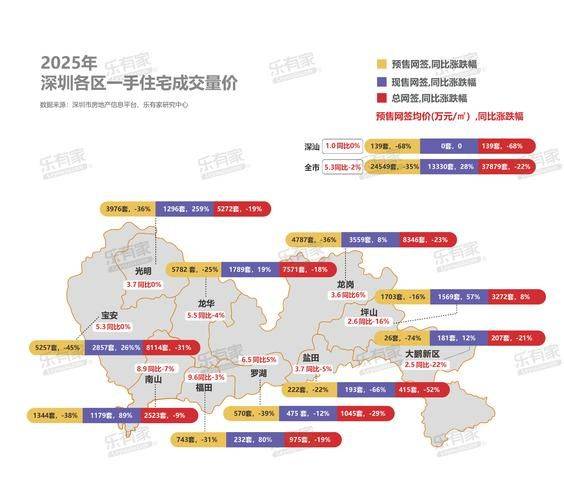
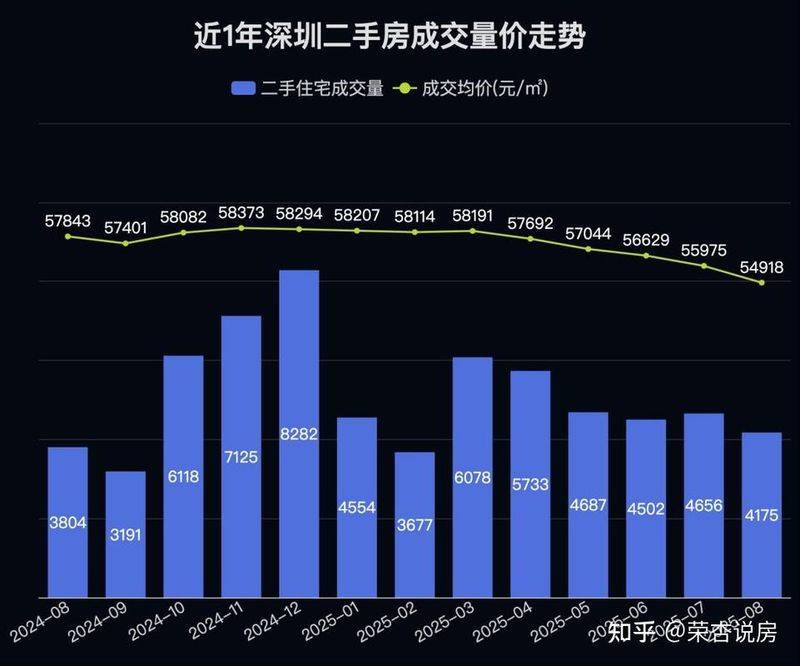
The first-line urban transactional changes have received much attention as a national building winding point, and after kim x, the second-hand chamber was opened in november and was then more innovative. In beijing, statistics from the institute of chinese estates show that, in november, there were 18763 second-hand residential network signatures in beijing, an 8 per cent increase in the ring, an increase of 49. 6 per cent over the same period, the highest level in nearly 20 months. According to zhang dawei, chief analyst of china's real estate, after the “9. 30” policy, the number of second-hand house nets in beijing reached 17,367 in october, an increase of 31 per cent in the ring-to-ring ratio and 63 per cent in the same year, with the net-to-mark volume being the highest for 19 consecutive months, after march 2023 in the last two years and the highest in october of the same period for eight consecutive years in 2017. The facilitation of policy was fully demonstrated by the continued high number of internet signatures in november, which continued to operate at a high level for two months. In shanghai, the shanghai city housing authority data show that in november the total number of second-hand rooms in shanghai was 2. 705 million, the highest number of second-hand rooms this year. Anticipating shanghai statistics indicate that this is also the first time since march 2021 that shanghai's second-hand rooms have reached a high of 27,000 units, almost 44 months old. Shenzhen and guangzhou also saw a rise in turnover. According to the shenzhen research centre, in november, 7125 second-hand homes were transferred throughout shenzhen city, a 16. 5 per cent increase in ring-to-ring and a rise of nearly 50 months in the number of second-hand apartments. According to data from the guangzhou city real estate intermediary association, the policy stimulus was sustained in november, with a total of more than 11,000 second-hand residential net signings in guangzhou, which continued to increase significantly by about 10 per cent over october, and the number of internet-signings reached a new high since april 2023。
Prices are stable
Not only has the turnover continued to rise, but the prices of second-hand homes in the first-line cities have clearly stabilized. According to the 100-city price index of china's real estate index system, second-hand residential prices in front-line cities fell by 0. 07 per cent in november and were 0. 10 percentage points narrower than in october. Among them, the price of second-hand dwellings in shenzhen rose by 0. 21 per cent, ending a downward spiral of 18 months. The institute noted that after the “9/29” new deal, the exchange of second-hand homes in shenzhen had risen rapidly, market demand had accelerated and the owner was expected to be released, and prices for second-hand houses had risen slightly in november. At the same time, the price of second-hand houses in beijing, shanghai and guangzhou fell by between 0. 1 and 0. 3 per cent, maintaining a slight decline in february, with the price of houses falling significantly narrower than before. It is noteworthy that leng, an analyst at the beijing chainers institute, indicated that the average price of second-hand houses in beijing had risen slightly in november and that the upward trend had been maintained for two months. By region, prices have risen steadily in most urban areas, with a relatively marked recovery in major urban areas, such as toyota, the sun and the west. In terms of the composition of the transaction, the central city in november saw a further rise compared to october, so that price increases were also influenced by structural factors. According to zhang, overall the polarization in beijing city continues, with a marked increase in the prices of some 30 per cent of second-hand houses, but most of the supply prices are still being explored。
There's a new deal in the city
Following the introduction of the real estate package since the end of september, the november real estate tax cuts were further eroded. On 13 november, the ministry of finance, the general state tax administration and the ministry of housing, urban and rural construction jointly issued a bulletin on real estate tax deductions, including an optimisation of the housing transaction tax policy, a clear value-added tax (vat), a land value-added tax (vat) preference, which is linked to the elimination of ordinary and non-ordinary residential standards. It states that, with regard to the tax entitlement, the current standard of 1 per cent low tax rate will be increased from 90 square metres to 140 square metres, and that four cities in beijing, shanghai, guangzhou and shenzhen will be able to apply the second family housing allowance in a uniform manner with the rest of the country, i. E., after the adjustment, a single home and a second home for the family will be purchased by individuals throughout the country at a rate of 1 per cent, provided that it does not exceed 140 square metres; for more than 140 square metres, the only home will be paid at a rate of 1. 5 per cent and the second home at a rate of 2 per cent. In the area of vat, individuals in beijing, shanghai, guangzhou and shenzhen will be exempted from vat for the purchase of housing for more than two years (including two years) for foreign sales of their homes if the criteria for ordinary and non-general housing are abolished and if the policy of vat is harmonized with the rest of the country. Subsequently, shanghai, beijing, guangzhou, shenzhen and the above-mentioned policy of tax guarantees for personal housing transactions and value-added tax relief followed, and shanghai and shenzhen explicitly adjusted the approved tax rate for personal income tax on personal transfer of housing to 1 per cent. According to chen weng jing, director general of policy studies at the institute, the elimination of the standard of ordinary and non-ordinary housing has further underpinned the continued rehabilitation of the front-line urban market, which is expected to continue to improve in the short term and will also help to “stable back” the national market. Source: security times