Technology for organic vegetable cultivation
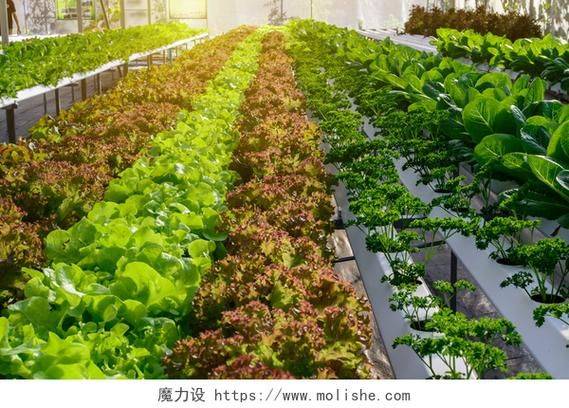
The combination of organic vegetable cultivation and the progress of organic vegetables has particularly wide market prospects and combined benefits. How do you grow organic vegetables? Here's the organic vegetable growing technique i made for you. I hope it works for you. The selection of seeds and seedlings for organic vegetables in the technical varieties of organic vegetable cultivation must meet three basic requirements: first, the non-genomically engineered genetically modified components, second, the non-prohibited substances and third, the more insect-resistant. In organic vegetable production, certified organic vegetable seeds and seedlings should be selected, but conventional seeds that have been treated with unprohibited substances may be used during the initial stages of cultivation without the purchase of certified organic vegetable seeds and seedlings. It is also important to choose the types of vegetables and good varieties that are resistant to insects and are suitable to local soils and seasons, such as spinach, carrots, carrots, soybeans, taro, taro, celery, ginger, ale, garlic, onions and onions. 2 the production base requires that the organic production base should be a complete piece of land and that it should not contain plots of conventional production, but that organic conversion plots are permitted and that the boundary between the organic vegetable production base and conventional plots must be clearly marked, such as rivers, hills, artificial separation strips, etc. The transition from conventional production to organic production usually takes two years before the vegetables planted are harvested as organic products; the beginning of the conversion period is calculated from the date of application for accreditation to the certification body, during which the producer must operate in full compliance with organic production requirements. Cultivation regulates the cultivation of organic vegetables, mainly by means of a combination of planting techniques, rotational cutting and cleaning of fields, and the adoption of crop rotations using such technologies as seedlings, grafting, replanting, membrane cover, rational planting and plant adjustment, making full use of the conditions of light, heat, gas, etc., and creating an environment conducive to the growth of vegetables in order to achieve high productivity and efficiency after the harvest of former vegetables. 4 fertilizers used to produce organic vegetables are mainly organic fertilizers, including animal faeces, plant fattening, green fat, grass-wood ash, bread fat, swamp fat, etc. Also included are organic specialized fertilizers certified by organic certification bodies and some microbiological fertilizers. 4. 1 the non-hazardous treatment of organic fertilizers is required for two months before their application, by: firstly, the accumulation of fertilizers by pouring water and wetting them, covering them with plastic membranes to fully decompress them, the fermentation temperature above 60 °c, which can effectively combat the pests and grasses of agricultural domestic fertilizers, and the ease with which processed fertilizers can be used by vegetables; the second is to act as a biogas pool by fermenting organic fertilizers into the biogas pool, which is a good organic fertilizer and which can be used for other production. Pfunghua, mezhou, has built the largest 600 m3 upper-stream biogas pool in tungdong, which is delivered in the form of pipelines to the fields for special use. 4. 2 fertilizers are fertilized using method 4. 2. 1. The soil where organic vegetables are grown should be used in a manner that synchronizes the planting of vegetables with the fertility of the fertile ground, with the ratio of animal to plant fertilizers at 1:1. 4. 2. 2 beneath base fat. Eighty per cent of the total fertilization is used as base fertilizer and the fertilizer is evenly applied to the farming layer to facilitate extraction. Combining whole-field decomposition with fertilizers 45 ~ 75 t/hm2 or bioclimatic composting, with the conditional use of organic compound fertilizers for fertilization at 1,500 kg/hm2. The way