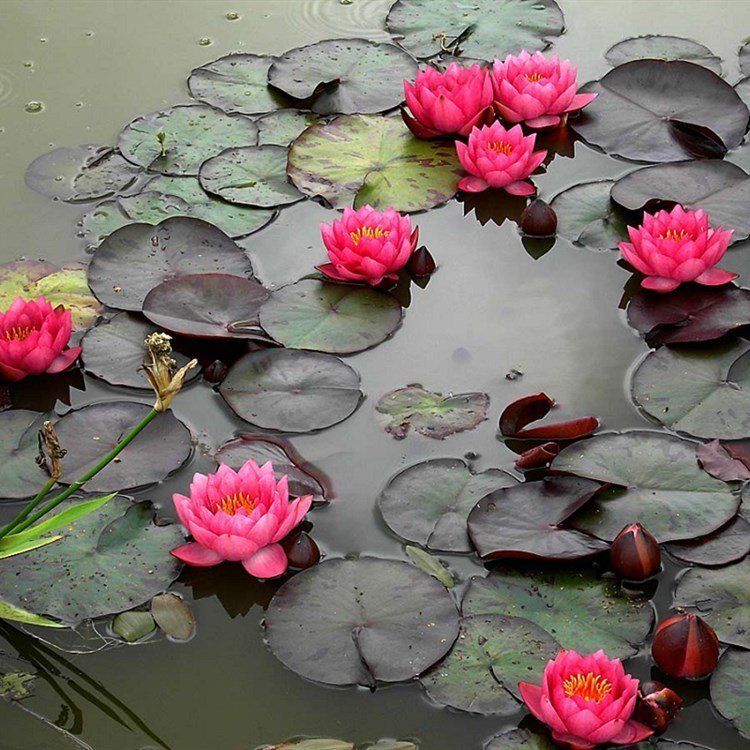
Sleeping lotus is a representative viewing flower in aquatic plants, with leaves floating on the surface and flowers standing or spreading above the surface, creating unique landscape effects. As a multi-year aquatic herbivorous plant, sleeping lotus plants are fixed in the submersible mud by well-developed roots, and leaves and plumes grow out of troughs to adapt to static or slow-flow water conditions. The color covers the red, orange, white, blue and multi-coloured systems, most of which are heavy petals, with flowers concentrated in july and fruit periods from september to october, suitable for the greening of water bodies, wetland landscapes and pellets。
I. Form characteristics and growth habits:
Leafing leaves are rounded or elliptical, leaves are green, and some new spring leaves are red or yellow (spring leaves). The roots are stubble roots, which need to be buried in the submersible mud to absorb nutrients; the troughs are constricted, and the plumes and leaves are stretched out from the stubble to support the leaves and flowers floating on the surface. Sleeping lotus luminous environments, which require more than six hours of light per day to promote flowering, require a general quality of water, suitable for field cultivation in most parts of the country, which is about 40 cm high and suitable for shallow water cultivation。
Ii. Cultivation patterns and landscape applications:
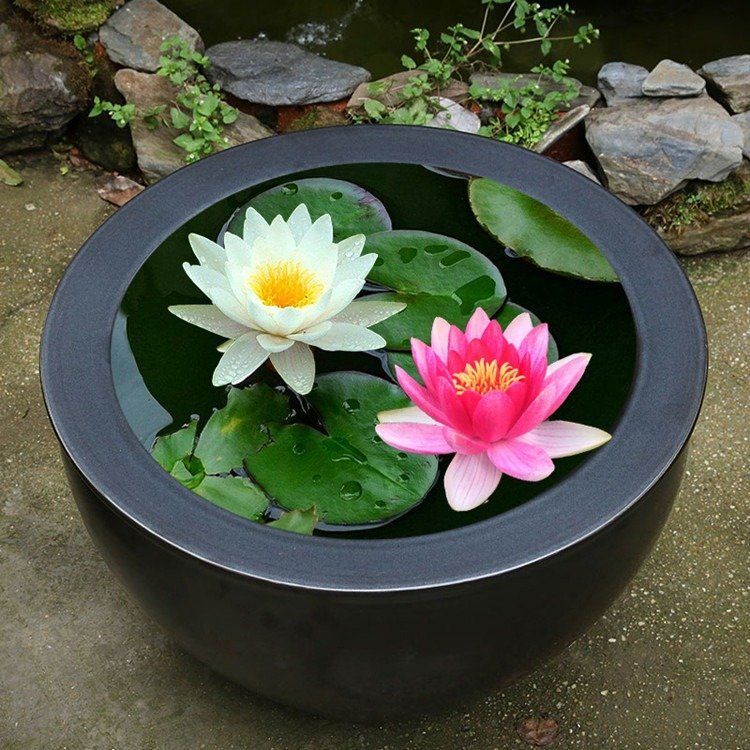
Sleeping lotus flowers can reproduce through seeds or in separate strains, which are more common: in the spring, the roots of the mother plant are divided, with three to five budding points preserved, and the water is then 5 to 10 centimetres covered in the bottom mud. Water preparation requires the selection of containers with a calibre of 30 cm or more, with 10 cm thick clay or pond mud laid on the base, and a fixed root and water to the surface of the water. Pond cultivation needs to ensure water depths of no more than 80 cm and avoid strong wind or rush flushing. Its landscaping is widely used, for the greening of water bodies in park lakes and courtyard ponds, and for the construction of ecological landscapes with wetland plants, with small varieties suitable for balconies。
Iii. Conservation elements and concerns:
The conservation of sleeping lotus requires three points: first, light management, where the lack of light leads to a decrease in leaf length and flowering; second, water quality maintenance, where one third of the amount of water is periodically replaced to avoid overproduction of algae; and third, winter protection, where containers are to be moved to the north to house or covered with straw to avoid freezing. Fertilizers are chosen to slow the decomposition and to avoid direct contact with the root system in the mud. Common problems include leaf decay (mostly due to poor water quality or fertilization) and non-flowering (inadequate light or inappropriate choice of varieties), requiring targeted adjustment of environmental conditions。
Iv. Varieties selection and value:
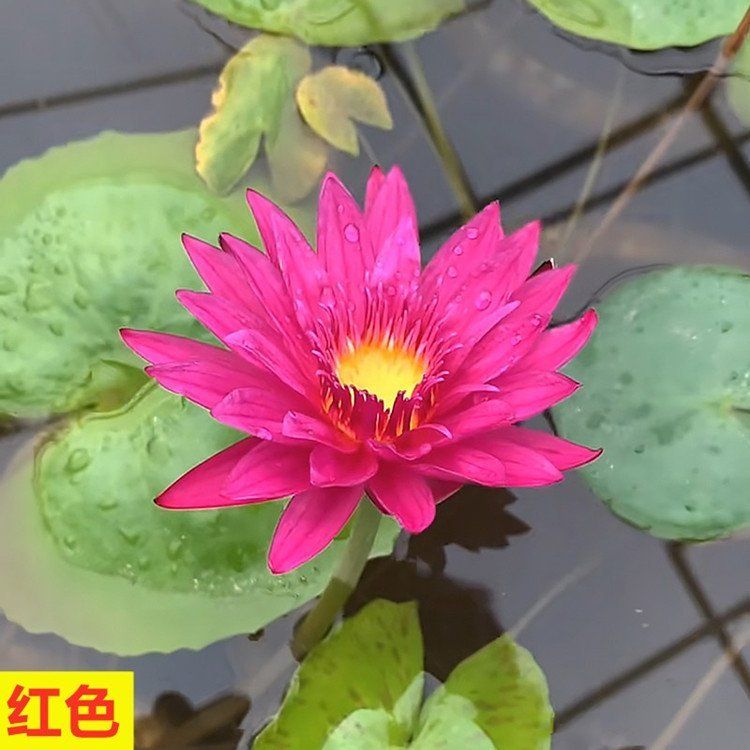
The variety of sleeping lotus flowers is varied and can be divided by color into red (e. G. `rubber'), white (e. G. `snow girl'), blue (e. G. `blue star ' ) etc. The flower type can be divided into single petals and heavy petals, and the flower variety of heavy petals is richer and more attractive. Its spring-coloured leaf properties allow some varieties to grow in red and yellow in the spring, in seasonal contrast to summer flowers. As aquatic plants, sleeping lotus flowers also absorb nitrogen phosphorus in water bodies, supplementing water purification with ecological and aesthetic values。