In recent days, mr. Tang of jiangxi, who had moved the children 800 kilometres across the province in order to treat seriously ill children, has been fermented by a “private ambulance” charging $28,000 in transit charges. According to the jiangxi provincial health board, the ambulance's owner nanchang hospital suffers from unreasonable charges. Currently, the health administration has ordered them to refund unreasonable charges and suspend medical transit services。
At one point, a dispute arose as to whether the 800-kilometre fee of $28,000 was reasonable. It is not too expensive for netizens to claim that this is a sky-priced ambulance, or that they say they are equipped with two medical staff and are carrying ecmos。
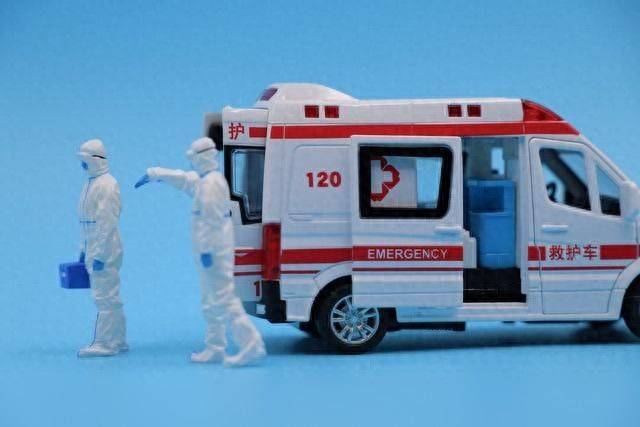
Maps. Maps of insects
Trans-provincial ambulance company:
The ambulance is carrying the ecmo
Red star journalists noted from the briefing that, at a time when children were in serious condition, family members suggested that they needed urgent trans-shipment treatment. As the hospital did not have ambulances meeting the trans-provincial requirements, the doctor contacted the ambulance at the hospital at the request of the family. The ambulance driver communicated with the family and agreed on a transfer fee of $28,000, payable in two instalments. The jiangxi children's hospital is accompanied by two medical staff, who are carrying recovery equipment and medicines such as ecmo。
It is understood that ecmo is mainly used to provide sustained in vitro breathing and circulation to patients with severe cpr failure to sustain their lives. According to this information, in march this year, the hunan brain hospital purchased an ecmo at a cost of over $1. 3 million。
On 23 june, journalists enquired about charges for carrying ecom, etc., from a number of trans-provincial ambulance companies, some claiming that the equipment was not available and others indicating that their equipment had been leased from the hospital, but was not able to take the order for the time being “because of the fermentation of the news events”。
The dispatcher of a trans-provincial ambulance company told red star journalists that the charges for trans-provincial transfers were higher, first, depending on the patient's condition, such as the provision of medical personnel, instruments, etc., and second, the higher the charges, depending on the distance of the patient's transfer。
After hearing journalists mention the need to carry ecmo equipment, they say that, because of the “$28,000 trans-shipment fee”, many companies are now not taking ecmo, “we have this equipment, which was brought normally before the news, but we don't have it now because it is too expensive and prone to disputes, and we prefer not to earn it”. According to the other party, the ambulance would sign an agreement with the party to be transferred, follow a regular process and the agreement would spell out the rates。
What if it's just carrying it and not using it? The dispatcher stated that even if the ambulance was not used, “it would cost $230,000 for hundreds of kilometres”. The staff member indicated a distance of 1,000 kilometres, at a cost of $89,000, if only medical staff, and an additional $10,000 to $20,000 if ecmo were to be brought, “in my five-year experience with movement control, the total cost would not exceed $30,000”. However, whether ecmo could now be taken to an ambulance, he indicated that the company's leadership would also be required。
The reporter then consulted with changsha on the cost of transporting an ambulance trans-shipment company from changsha to shanghai, and the operator indicated that the cost of 1,000 km was around $10,000, which included medical follow-up. With regard to the cost of ecmo equipment, the officer indicated that medical personnel would respond later. The reporter then received a telephone call from a self-proclaimed doctor who stated that “the ecmo is running for tens of thousands of dollars, not counting the cost of the car, and that it is already so expensive to apply for it from the equipment store”. The staff member indicated that it would be necessary to determine whether ecmo was needed after understanding the illness。
Experts and practitioners:
Non-first-aid trans-shipment is classified into three categories, “lack of formal capacity”
On 23 june, red star journalists contacted the nanchang emergency centre on the grounds that there was a need for trans-shipment. A staff member indicated that he could trans-shipment patients across the province and identified a basic cost of $13 per km, plus $831 for doctor visits and $500 for patients ' breathing machines, as well as other costs such as no passover. Staff at the first aid centre indicated that they were accompanied by a specialist first aid doctor who could provide regular invoices. At this rate, an amount of $11231 would be required for 800 kilometres。
In addition, when journalists referred to the need to carry ecmo equipment, the above-mentioned staff members indicated that they needed to be provided in consultation with the hospital in which the patient was located and stressed that they were not responsible for such matters as consultation and fees for the equipment, and that all related matters needed to be handled by the hospital in which the patient was located。
Fees for first aid centres vary across the country. Red star journalists consulted the beijing emergency centre's network of officials and learned that ambulances were used for medical trans-shipments across the provincial mayor's route, costing 25 yuan/km based on the actual distance of the ambulance from departure to destination. The pricing criteria include costs related to on-site consultations, protection, en route care and personal custody, inspection, treatment, highway crossing and bridge fees and fuel charges. At the rate of first aid at beijing city emergency centre, the cost of 800 km is $20,000。
Why would patients with trans-provincial trans-shipment needs choose a private medical institution vehicle? “the primary reason is that non-first-aid trans-shipment market demand is huge and that formal channels of care cannot be met.” according to an interview with the red star journalist, wu sukun, a long-standing specialist in first aid research and former director of the panama city emergency command centre。
In a previous interview with red star journalists, the head of the shanghai neighborhood health technology corporation, luwaydong, stated that there was currently insufficient formal capacity in our non-first aid transit market。
The operational model of non-first aid transit services in the country is currently divided into the following categories: category i, 120 first aid centres, with some capacity to undertake non-first aid operations; category ii, with the approval of the local health and welfare commission, with the participation of third-party institutions, such as the establishment of non-first aid transit stations in suzhou city, the establishment of non-first aid transit stations for long-term visitors in nanjing, etc.; and category iii, with a preference for passenger traffic, with the approval of the traffic management department for the acquisition of internet-based vehicles or other related passenger funds。
“relative compliance is very low, and some state-owned business institutions are doing it on a relatively large scale of about 350 vehicles.” rwetung told red star journalists that the vast majority of the remaining businesses were micro-enterprises, and that there might be a company of three or five ambulances, although they operated under non-first aid or medical trans-shipment services, some of which were only operated with the approval of the health services。
According to wu, however, “the construction of a system of non-first-aid medical trans-shipment services must be firmly based on a marketable, diversified, standardized and specialized development path”
Finally, the jiangxi provincial commission for health and welfare stated that further investigation and verification of the incident would be carried out in conjunction with the relevant authorities, that serious investigations would be carried out if violations were found, and that the use of trans-shipment ambulances would be regulated and patients ' rights and interests upheld。