"did your soybeans grow?"
"the wheat is grown as soon as it's finished, and while you're in love, grab a few days!"
"i can't afford to take it any earlier. Last year my family planted it early, it was tall, and it was full of shit."
This dialogue has recently been heard in many villages。
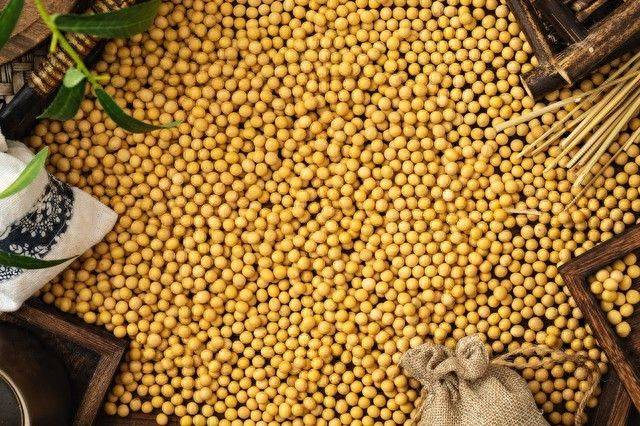
A lot of soybeans are old-fashioned: early harvests, multiple harvests. Once the wheat has been cut, the beans will be spilled that day. But you find no? The fields that were planted earlier tend to be “fruitful” — taller, more flowering, no twigs, or pellets。
What's going on? What's wrong with being early
Today, let's get this straight: when is the best time to grow the soybeans? Why do we lose the early days? How do we figure out the period of the gold? It's all dry stuff from the ground. We can use it。
One, june beans. Not as early as possible. There's a golden window
First, it is concluded that the summer soybeans are sowing, and that 15 june to 20 june is the best broadcast date, not later than 25 june。
At this point in time, many old crops may be incontrovertible: "i've been growing soybeans for 20 years, and i've been growing soybeans, and i haven't seen any loss of production?"
Then i'll tell you the doorway inside。
Soybeans are a typical short-day-lighted crop — that is to say, it needs to be shorter in the day and longer in the night before it starts to move from “longer” to “birth of children”. If you grow too early, for example in early june or at the end of may, the plant will experience a longer daytime period, with the result that nutrients will be prolonged, soybeans will look after the long straws and leaves and will not be able to turn into reproductive growth。
When you find it finally blooming, it is often late july to august — the hottest of the year。
This raises a second problem: high temperatures。
The most appropriate temperature for soybeans is 25°c to 28°c. Once the temperature continues to exceed 33°c, pollen particles dry and pollination is prevented, which is called “high temperature infertility”. Think of which part of the hwang huai sea is not above 35°c between late july and early august? At this point, soybeans bloom, which is equivalent to doing the most labour-intensive work at the most inappropriate time — falling and spending, and so forth。
The old saying, "june 6th, growing beans", is not about june 6th, but about the farm calendar. The conversion to a solar calendar occurred in mid-june. The old ancestors' experience makes sense。
Ii. More details: what is the difference between the early and the late planting
Let's talk data。
Follow-up data from the soybean institute of the agricultural institute of henan province show a decrease in acre production of about 2. 5 to 3 per cent for each one-day delay. At first sight, shouldn't that be the sooner
Take it easy, this “delay” reference system is the “best playtime”, not “the sooner the better”. It means that after the optimal period, the output is reduced slightly every day; but before the optimal period, the earlier the crop is planted, the greater the reduction。
Why? Because of the risk of “high-temperature airlock” associated with early seeding, the loss is not just a few percent, but a half-cut or even a loss。
A comparison was made by farmers: on the same land, planting on 5 june and on 18 june. By the autumn, the one planted on 5 june, looking at the coarse and large leaves, the result was that the bean bean was dim, and half of it was rotten; the one planted on 18 june, though shorter, was thick and full of beans. But the later seed is nearly twice as much as the earlier seed。
So the essence of this "golden season" is that it's right to let soybeans bloom at the most suitable temperature and avoid a high temperature of three volts。
Based on planting from 15 to 20 june, soybean seedlings take 5 to 7 days and flowering periods range from 45 to 50 days after planting, i. E. From early august to mid-august. It's still hot in the daytime, but it's starting to get bigger sooner or later, and you're going to have a soybeans rate. Until september, when the temperature fell completely, it went right into the drum phase — it was the soybeans that were the most critical in terms of meat and long weight。
How do we manage this time
From 15 to 20 june, the main target was the soybeans area of the hwang huai sea, i. E. Henan, shandong, anhui north and jiangsu north。
My friends from elsewhere, i'll tell you by region:
The area of the hwang huai sea (hangnan, shandong, north hebei, north anhui river su): planting at the time of harvest of wheat, gold window 10 june to 20 june, no later than 25 june. Remember one principle: better to wait and wait for it. If wheat is dry after harvest, it is better to water the water first and again than to dry it。
Northeast spring bean region (heilong river, jilin, liaoning): it's not the same thing that we're talking about. The planting in the north-east, from late april to mid-may, is now long overdue, and not in june。
The yangtze river basin and the south (hupei, hunan, sichuan, jiangxi): this area can be broadcast in spring and summer. The summer broadcast was carried out by 10 june, with reference to wong caihai; the spring broadcast was broadcast late in march and down in early april。
Special reminder: if you wait in guangxi for the south china region, the soybeans grow in mid-february and early march, they're busy collecting, not the planting season。
Four, it's not enough to know the time
Soybeans don't grow corn, soak them. The soybeans are “grumpy” and the airing period is just the first step, and one of the following things is not done, and they are working in vain。
1. Closed weeding must be done within 24 hours of broadcast
Soybeans fear the grass. Weeds grow faster than soybeans, and when you see them, it's too late. The correct approach is to spray closed herbicides (ethylachlor or precision alachlor+acetyleneflachlor) within 24 hours of seeding. The amount of water is added to 60 kg per acre at a time of infatuation to ensure that the fluid penetrates the soil surface。
Remember: weeding is closed only for a two-day golden period, and after this village, we have to wait for herbicides, which are less effective and more vulnerable to injury。
Bottom fertilisers shall be “nitrogen control, phosphorus control, potassium supplementation”
Soybeans themselves have the ability to fix nitrogen -- the root tumor can transform nitrogen into nutrients in the air. So don't do this like growing corn, or soybeans will be so lazy as to fix their own nitrogen, and it'll be easy to fall。
Correct formulation: acre application of compound fertilizer (12-18-15 potassium nitrogen) of 15 to 20 kg, with the best diet. If you have the conditions, then a tumor agent will save half the nitrogen。
3. Density is not as high as possible
Reasonable density of soybeans in the summer: between 12,000 and 14,000 saplings of medium-fatility plots, appropriate thin spots of high-fatility plots, and an increase in the number of low-fativity or late-drive plots to 16,000。
Conversion into sowing capacity, approximately 5 to 6 kg of seed per acre. Don't listen to people who say, “most drops, dense seed”, which is a waste of seeds and is prone to inversion and disease。
4. Water must be watered in the event of drought during the flower season
Soybeans have two critical periods of “drinking water”: the flowering season and the drumping period. Particularly during flowering periods, water must be watered in a timely manner if it is to catch a week without rain and drought。
Why? In times of high temperatures and drought, the water is not only used to refill, but also to cool. Spraying can effectively reduce soybeans and keep pollen alive, which is the last line of defence to prevent the "shell"。
Five, two common error zones, one at a time
Q: i grow in early june every year, and i don't see an empty pod
Response: two scenarios. One is your small piece of land with a special climate, such as water, good windways and cooling; the other is -- you may have lost production, but you don't know. It is recommended that you leave a small amount of space this year to try to show it around 18 june, and to compare it in the autumn, so as to ensure that you take the initiative next year。
Q: is it possible that the late show will catch early autumn frost and freeze before it's ripe
The summer soybeans in the hwang huai sea region, which were broadcast before 20 june, had a birth date of 90 to 105 days and matured between the end of september and early october. At this point in time, the first morning frost in the hwang huai sea is usually fully available after late october. It is in the north-east that the problem of frost is considered。
Vi. Summary of statements
In june, soybeans were grown, soybeans were taken from those days. From 15 to 20 june, the golden season was marked, with the planting of an early high-temperature plane and late morning frosting. The doubling of the acre production is not a dream。
It's not a bad thing to eat on earth, but it's more like "calculating" -- timing, edicts. God gives you three points, and you get seven points back。
What we are saying today is true words from the ground and official sources. You think it's useful to welcome them to their next of kin。
When do you grow soy beans? Have you ever had a bad time with the "flowing the flowers"? Talk to the comment section. Let's figure it out。