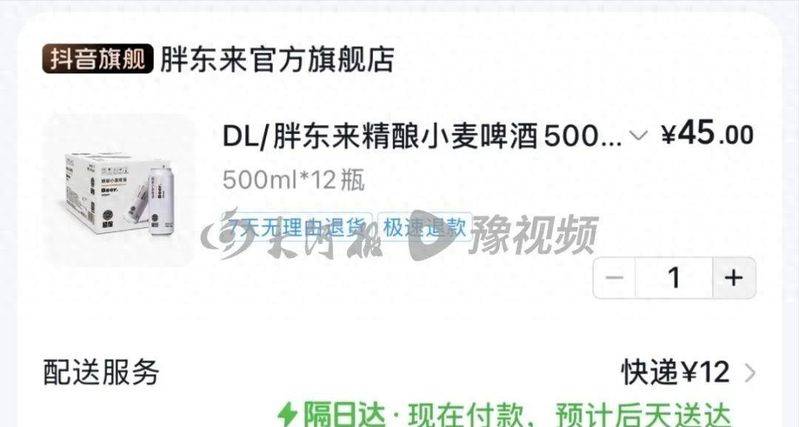
Fat tung came in for expensive freight charges, ostensibly a dispute about “$12 freight”, but in fact a rare retail pricing education. Many consumers are used to “freighted mail” in the electrician language, and once the merchandise is shown at $45 and the freight at $12 is shown separately, they feel psychologically charged an extra amount. However, the response was straightforward: the price was the same online, commodity prices did not include freight charges, and freight charges were charged by logistics operators。
That doesn't sound like a coincidence, but it fits the usual commerciality of fatty. Rather than putting all costs into commodities and creating a sense of cheapness through “package mail”, it is putting commodities into commodities and logistics. Most of the “freight-free” consumers have seen in the past are not freight-free, but traders who pre-empt logistics, packaging, platform commissions, refund losses into commodity prices and ultimately all buyers。
The controversy is stinging because fat stuff isn't expensive. A case of beer, soy sauce, laundry fluids, towels, which are essentially low unit prices or heavy commodities, are low unit prices, heavy weights, space sizes and are not natural for long-range retailing. The down-door shop on the internet, where consumers have completed the last kilometre themselves, and online channels, where logistics systems perform on behalf of consumers, will naturally show costs。
It's also the most embarrassing place for fat dong to go online. Its core online competitiveness is not just commodities, but order, services, displays, employee status and on-site experience. Consumers travel to xuchang and new villages, buying a respected consumption experience; however, in online shops, this experience is compressed into three lines of goods, prices and freight costs, reducing advantages and increasing costs。
Fat tung came to choose the same price on-line and off-line, effectively rejecting a more common practice: to raise the price online and then pretend to be a mail parcel. For businesses, this is more acceptable to consumers, as they have been trained by electric power platforms as a mere bargain. But instead of hiding the freight, fat tung lets consumers see the real cost, which certainly causes discomfort, but also makes the transaction clean。
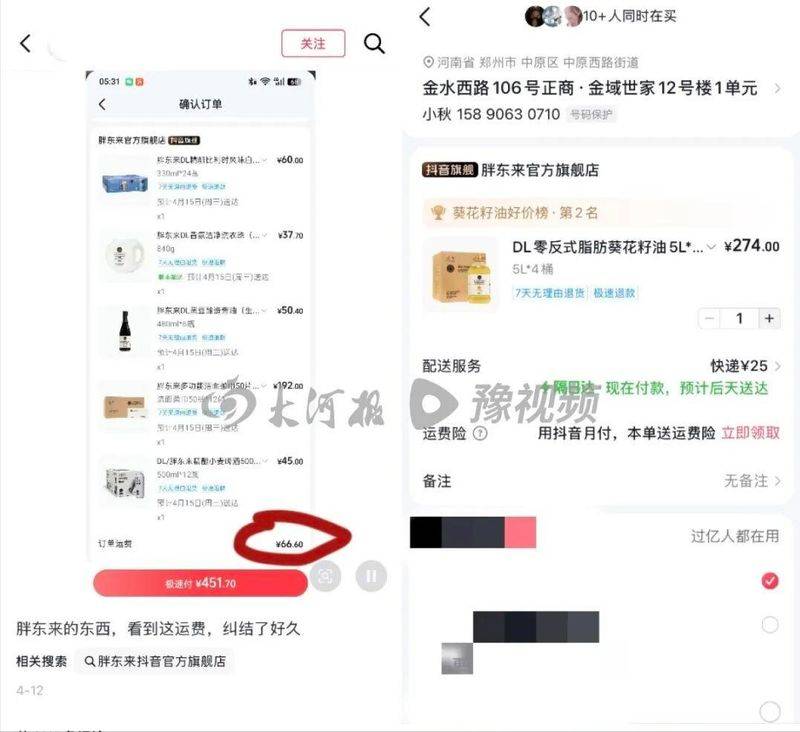
The problem is that real costs do not amount to the best experience. Consumers do not always deny the cost of logistics, but rather express a psychological gap: fat east comes online and is known for high value for money, and suddenly comes online to feel “unprofitable”. This gap was not caused unilaterally by the fatty, but by the legacy of many years of low-price competition by chinese electric operators。
In the past, many platforms have educated users with subsidies, mail parcels, discounts and low-cost mentalities, so that all commodities should be delivered at low cost. But business patterns don't disappear. The lower the mäori commodities, the less able to absorb freight costs; the more heavy and daily goods, the more likely they are to be “freight costs are higher than commodities”. Fat tung came just to rediscover the reality。
From another point of view, the fact that internet users spit on their tabs and work on single-handedness points to the continued existence of the fatty brand premium. Rather than paying freight, consumers are reluctant to pay for lack of transparency. When they find that multiple small and light commodity mergers reduce unit freight costs, they treat the matter as a mathematical issue, rather than as a cut-off。
There is also a more critical paradox behind this: the online shop from fat east is not a traditional tool of national expansion, more like an underline heat spill. It cannot supply explosives indefinitely, nor can it replicate the services of a shop, let alone sacrifice local order for the benefit of the national user experience. In the past, there have been many changes in sales patterns due to excessive passenger flows and surrogate disruptions, and onlineization itself has the effect of buffering pressure。
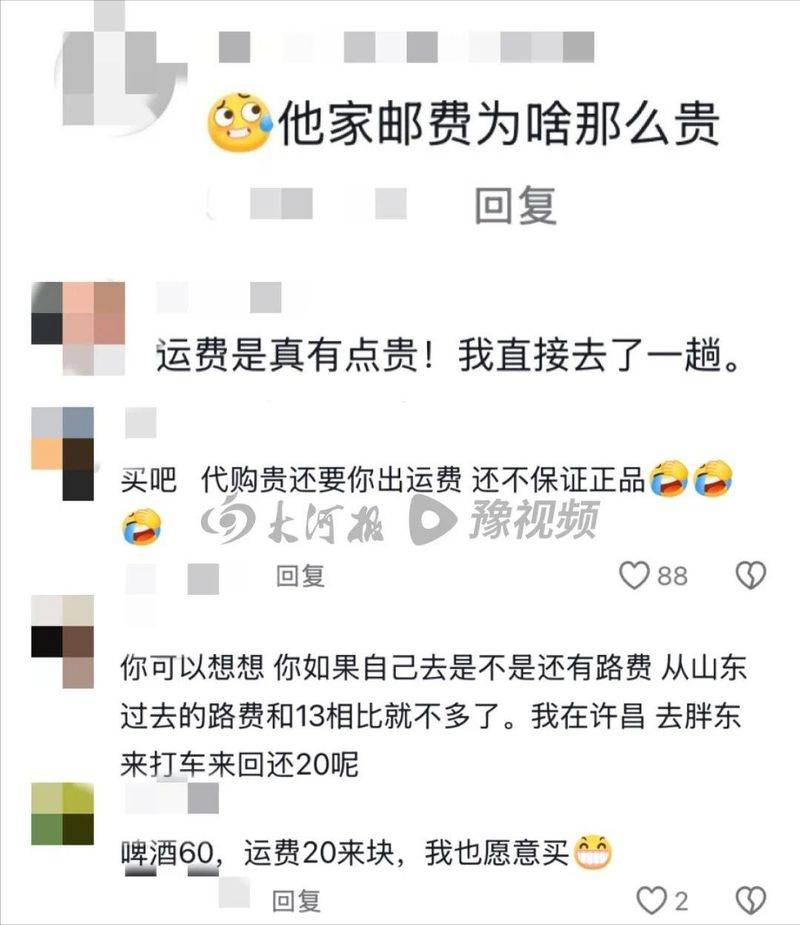
As a result, the freight costs of fat dong are expensive and cannot be read only in the line of the settlement page. It would certainly not be cost-effective for consumers to buy only one low-cost heavy load; if it were to be used as a substitute for cross-city purchases and as a substitute for personal travel, then the freight costs would appear to be not unreasonable. The real question is whether fat tung needs to design online shops as a clearer shopping scene, such as recommending packages, clear billing rules and optimizing the warehouse structure。
Fat tung's response is positive, but not complete. It explains where the freight costs come from, but does not fully address how users can be more comfortable underground. If fatty continues to expand on-line operations in the future, it cannot rely solely on “good-faith pricing”, but also on better product combinations and logistics programmes to reduce consumer decision friction. Truth is an advantage, but it also needs to be better expressed。
The controversy eventually reminded all retail businesses that low prices did not hide costs, nor did trust always make consumers feel cheap. The most valuable place in which fatty comes is where it dares to bring trading relationships back to common sense: goods have commodity prices, services have service costs, logistics have logistics costs. Just when common sense encounters a subsidised market, even a word of truth may seem a little gruesome。
The real test of the online freight dispute from fat dong is not how 12 dollars should be collected, but how an underline myth enters the online reality. Underdoor stores can be moved by service, and online stores must be persuaded by rules. If fat tung can do three things with transparent costs, reasonable combinations, and stable supply, it will not be just a surrounded henan supermarket, but a sample of china’s retail re-understanding of “honest pricing.”。