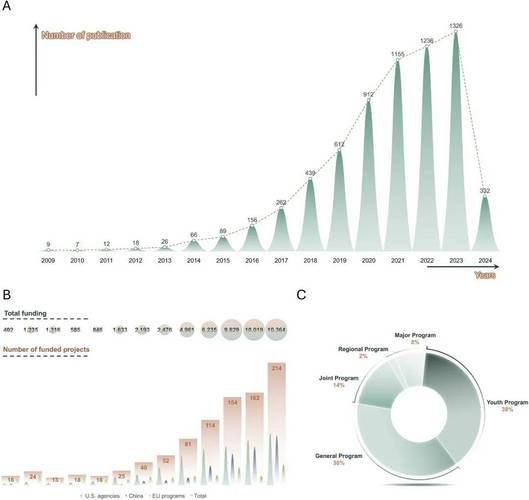
In may 2026, the national medical insurance authority explored the development of a “health insurance pre-set” mechanism to provide policy advice on early intervention in the development of organ and organ chip technologies, and to determine the direction of future health insurance integration and payment. This initiative aims to break the “last kilometre” dilemma of new technologies, from laboratory to clinical applications — high market returns, long approval cycles, faster landing of forward medical technologies through policy innovations, and more accurate treatment programmes for patients, while reducing the cost of medical research and development. # technology building blocks: the simulation of human “mini-organ” and “chip production line” organs and organ chips are in vitro 3d biocell culture models designed to simulate more realistically the physical environment of humans. - ** organisms** are inherently in vitro self-assembled cells formed by human stem cells that form “mini-organs” with a certain structure and function, such as tissues that simulate intestinal absorption or heartbeat. - ** organ chip** is a cell culturer made of transparent materials as a “production line” to support cell growth, enabling cells to form functional units similar to human structures. Since the first lung chip in 2010,** multiple organ chips, such as liver, heart, kidney and brain, have emerged and can be linked to each other to simulate the complete process of “absorption-act-heritation” of drugs in humans. (blockview://markdown-image-tos-cn-i-t/10ac84b4de6e4b5081bc6c041eecf5b)## # health insurance innovation: the core of the predefined health insurance package, from “passive pricing” to “active stewardship”, is to be “passive waiting” as “active guidance”. In accordance with the plan of the national health insurance board, provincial health-care departments may initiate price-setting work on the basis of an application before the technology or product has been officially approved for listing. This means that the health-care sector has moved from “approved and then priced” to “involved before approved” to provide price policy guidance to r & d institutions to stabilize market expectations. The mechanism is intended to form ** r & d - project - payment**, with a specific path as “concept - laboratory products - medical insurance prescription - medical insurance certification - health insurance prescription - integrated value evaluation - health insurance payment”. Key designs include: - ** “one province project, national follow-up”**: once a province has completed a pre-set and converted into a formal price project, other provinces can follow up quickly and form a national policy synergy to break the “one approved and multiple” barriers. -** “new with conditions” versus risk balance**: for technologies whose clinical value or economicity is yet to be validated, a small number of medical institutions are allowed to charge fees first, while a real world health insurance comprehensive value evaluation is carried out, with subsequent adjustments based on results dynamics. > presentation by the national health insurance agency, which aims to facilitate the clinical transformation of new technologies more quickly by pressing the accelerator key for their clinical application. # clinical values: "navigation" for cancer precision treatment this technology has been applied directly to the assessment of treatment programmes for multiple physical tumours, including difficult lung, cervical, edible, stomach, pancreatic and colon **. By nurturing patients' own tumor cells into “oncological organs”, doctors test the sensitivity of different chemotherapy, target orientation or immunotherapy drugs in vitro, thus helping to identify the most effective drugs for a particular patient, moving from “wide spectrum target” to “precision efficacy”. This amounts to an “in vitro sensitivity test” for patients prior to medication, which increases certainty and clinical value of treatment programmes. # industrial enabling: reversing the r & d model at a cost of 90% in the field of drug research and development and using organ-like and organ chips as a ** human-source model** is expected to significantly change the pattern of traditional animal-dependent experiments. Traditional r & d faces long cycles and high costs, and most candidate drugs are phased out during the clinical trial stage because of drug efficacy or safety problems. Quantitative reference is provided by the practice of domestic enterprises** on efficacious technology**: the accuracy of the drug liver toxicity projection through “organ chip+ai” techniques has reached **92. 3%**,** the overall r & d cost could be reduced by 90% compared to traditional animal experiments**. The company's ai pathological image recognition system, which has been able to compress manual marking, which would have taken several hours, to **30 seconds**, has greatly improved the efficiency of research and development. # standards go first: large-scale clinical applications of innovative ecological and regulatory framework techniques cannot be standardized. Industry and regulators are moving along multiple routes: - ** shanghai et al.* * the objective of the scientific research programme is to establish industry standards for the development and evaluation of digestive tumours, brain organs and the development of a validation platform for intelligent analysis within two years of the project. - ** south-east university** co-launched the joint testing laboratory for organ chips of the national centre for the measurement of the biotechnology drug industry to promote technical standardization and standardization. - the national drug review centre of the office of the national drug control and drug control agency, in conjunction with several agencies, is promoting the validation of the organ/organ chip methodology with a view to establishing regulatory acceptance frameworks and technical standards. As ** the only chinese enterprise, ** has been selected for the us food and drug regulatory authority (fda) multi-centre joint certification project for pharmaceutical liver damage, and has participated in the global regulatory certification system, marking china's entry into the international frontier in this area. Challenges for the future: the health insurance pre-set mechanism for balancing innovation incentives with risk management provides a clear transformation path for organ-type and organ chip technologies, but challenges remain for large-scale landings. The degree of standardization of technologies, the capacity of different health-care institutions to apply, and ongoing value evaluations based on real-world data will influence the breadth and depth of their ultimate benefits to patients. The “conditional addition” and accountability mechanisms in policy design are evidence of a balance between promoting innovation and risk prevention. With technological overlaps, standard refinements and policy synergies, the search for “the medicine you will take in the future, give the chip a taste” is expected to reshape innovation from laboratory to hospital beds。