Basic knowledge of sea containers
Sea containers are standardized cargo carrying units in international logistics, whose specifications, materials and structures are in line with international standards (e. G. Iso 6346), a standardized feature that has achieved “one vote at the bottom, global” transport facilitation - containers can be seamlessly connected to a variety of means of transport, such as ships, trucks, trains, etc., and significantly improve handling efficiency and reduce the risk of cargo damage。
Containers currently in global circulation are dominated by steel containers (over 90 per cent), with a small number of aluminium alloys or glass steel, with core structures including boxes, doors, horns (for suspension and fixation) and seal holes (to ensure transport safety). Of these, 20, 40 and 40-foot containers are the most commonly used “dry containers” (dry container, used to transport non-liquid, non-refrigerated general cargo), which account for more than 80 per cent of the total international sea containers。
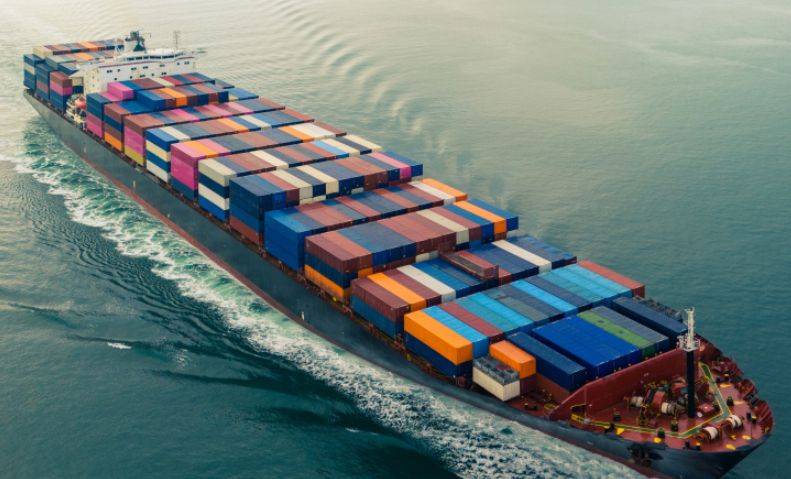
Ii. 20-foot container (20ft container, 20gp)
20 a foot container is the “minimum standard dry container” in maritime transport and the “benchmark unit” for container measurement (the “teu” or “20-foot standard box” is commonly used by industry as a transport statistical unit, with 1 40-foot container equal to approximately 2 teu)。
1. Core specification parameters
External dimensions: approximately 6. 058 metres long, 2. 438 metres wide and 2. 591 metres high (slight error between different manufacturers, range of error ± 5 mm);
Internal dimensions: approximately 5. 898 metres long, 2. 352 metres wide and 2. 385 metres high (deductible steel thickness of boxes in actual filling space);
(a) quantified load: about 21-23 tonnes (which is usually around 22 tonnes for steel cabinets depending on the mass of the box);
Effective volume: about 33-35 cubic metres (approximately 30-32 cubic metres of actual loadable cargo, with a gap for loading)。
2. Typical uses and applicable scenarios
20 seat cabinets are the preferred option for the transport of small and medium-sized consignments, piecemeal orders and heavy cargo due to their small size and flexibility, and the common applicable scenarios include:
(b) transport of goods by small sellers in cross-border electric operators (goods between 20 and 30 cubic metres, with no need for large containers);
(a) heavy cargo transport (e. G., hardware accessories, mechanical parts, stone, etc., close to 20 tons but of small size, avoiding 40 feet of “excess space”);
(a) high-demand scenarios for inland transport (loading and loading at some inland ports or warehouses, limited storage space and easier to operate 20-foot containers);
Sample transport or sample shipment (low quantity and rapid delivery, 20-foot container booking and clearance process)。
Iii. 40-foot container (40ft container, 40gp)
40 a foot container is a “standard large container” with a volume of approximately two times the volume of a 20-foot container, which is the dominant choice for the large and medium volume of common cargo transport, balancing load and cost-effectiveness。
1. Core specification parameters
External dimensions: approximately 12,192 metres long, 2. 438 metres wide and 2. 591 metres high (the width and height is the same as the 20-foot container, only doubling the length);
Internal dimensions: approximately 12. 032 m long, 2. 352 m wide and 2. 385 m high;
(a) a rated load: approximately 26-28 tons (higher than 20-foot containers, but lower transport costs per weight);
Active volume: approximately 67-70 cubic metres (approximately 60-65 cubic metres of actual loadable cargo)。
2. Typical uses and applicable scenarios
40 seatboards are suitable for transport of goods of sufficient volume for value, due to their “large volume and low unit cost”, and common scenarios include:
(a) traditional foreign trade orders (for light works such as clothing, household swipes and electronics, when the volume is 50 cubic metres or more, 40-foot containers are more economical than 2 20-foot containers);
Centralized transport of medium volume goods (e. G., furniture, small household electricity, construction materials, etc., which are neither overweight nor fully utilize volume);
Main delivery units of conventional container vessels (most container ships are designed to be 40-foot containers at core and have less difficulty booking than special containers);
Transport of raw materials procured by enterprises in bulk (e. G. Textile fabrics, plastic particles, etc.) is stable and transport costs are controlled。
Iv. 40-foot high cabinet (40ft high cube container, 40hc/hq)
The core advantage of an upgrade based on a 40-foot standard cabinet is to increase vertical space and solve the problem of loading “large but light” goods。
1. Core specification parameters
External dimensions: approximately 12,192 metres long, 2. 438 metres wide and 2. 896 metres high (an increase of about 30 cm in height compared to 40 cm);
Internal dimensions: approximately 12. 032 m long, 2. 352 m wide and 2. 692 m high (increased internal height of approximately 30 cm and significant increase in volume);
Scaled load: approximately 26-27 tons (generally the same as the 40-foot container, with a slight decrease in the load due to a slight increase in the height of the container);
Effective volume: approximately 76-80 cubic metres (approximately 70-75 cubic metres of actual loadable cargo, 10-15 cubic metres more than 40-foot containers)。
2. Typical uses and applicable scenarios
40-foot cabinets designed for ** “light bubbles” (large, lightweight goods)** are the best options for such goods, and common scenarios include:
Light swirling goods (e. G., velvet, cotton cover, blankets, etc., loose and light weight, with an additional height of 20-30 per cent for containers 40 feet high);
Furniture and household items (e. G., couches, closets, mattresses, etc., are of high height, standard cabinets may not be able to accommodate and high cabinets may avoid squeezing or dismantling of goods);
Large packaged goods (e. G., electrical overpacks, toy box, etc.) with large space but light weight and high cabinets that reduce transport costs per unit volume;
Large items of goods (e. G. Outdoor furniture, fitness equipment, etc.) for cross-border electric operators, with a volume of over 40 feet of containers but not exceeding their weight, which can meet loading requirements。
V. Key difficults and proposals for setting
1. Summary of core variances
Volume and load: 40hc maximum (76-80 cubic metres), 40gp lower (67-70 cubic metres), 20gp smallest (33-35 cubic metres), close to three loads (22-28 tons), 40gp slightly above 40hc。
Cost-effectiveness: the unit volume freight rate is ranked as “40hc”
Applicable type of goods: 20gp for "heavy + small volume", 40gp for "common + medium mass", 40hc for "light bubble + medium mass"。
2. Selection of core principles
Seen volume: lcls of up to 15 cubic metres, lcls of up to 15-30 cubic metres, 20gps of up to 30-60 cubic metres, 40gps of up to 60 cubic metres, or goods of up to 40hcs;
(a) precedence of cargo: heavy cargo (e. G. Metal products) 20gp (avoiding 40gp “excessive waste space”) and light bubble (e. G. Clothing) goods (e. G. 40hc) (utilized height);
See cost: if the freight cost of 40hc is only 5-10% higher than the cost of 40gp, but can load 15% more goods, preference is given to 40hc; if the volume is close to the 20gp cap, the option is cheaper than the total freight cost of 1 40gp and 2 20gp。
If you have any other international logistics needs, please consult an international logistics consultant specializing in the network。