I. Meaning of inflation. Inflation is an economic state in which the overall price level of goods and services is comprehensive, sustained and substantially increased. Inflation is characterized by the following main features: an increase in the price of goods and services, rather than an increase in the price of equities, bonds and other financial assets; an increase in the overall price level, i. E. A general increase in the price level of goods and services, rather than an increase in the price of specific goods and services or of some parts of the price level; a continuous increase in the overall price level, rather than an occasional and short-term increase in prices; and an increase in prices, even if the price of important goods and services continues to rise, not necessarily inflation。
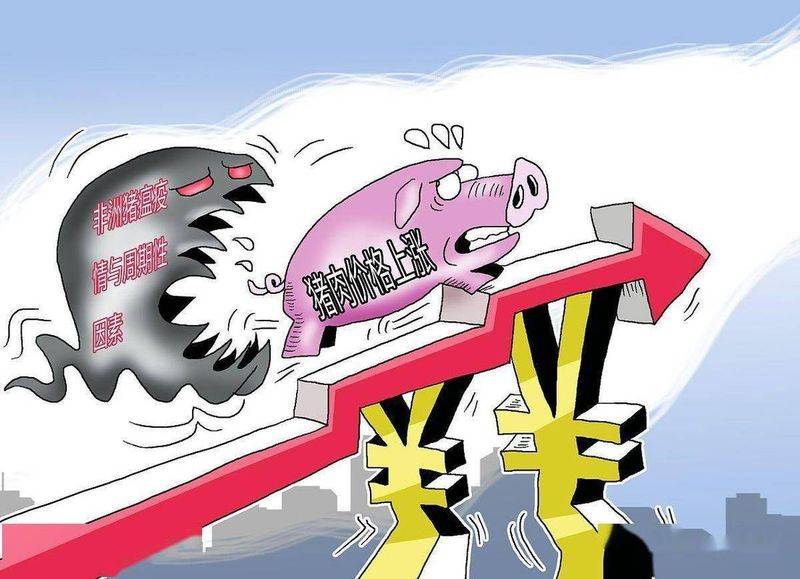
Measures of inflation. Price indices are widely used worldwide to measure the extent of inflation, the most common being consumer price indices. Western countries generally consider a modest increase in prices, such as between 1 and 3 per cent of total annual consumer price increases, to be an appropriate inflation range。

Iii. Classification of inflation. Inflation can be classified into different types based on the following different criteria. Depending on the increase in the overall price level, it can be classified as creeping inflation, moderate inflation, run-off inflation and hyperinflation. Depending on the causes of inflation, it can be classified as demand-led inflation, cost-driven inflation, supply-demand-led inflation, structural inflation and institutional inflation。

Iv. Causes of inflation. 1 demand factor. Fiscal deficits, credit expansion, expansion in investment demand and expansion in consumer demand have led to an oversupply of aggregate social demand, with excessive demand pushing up the overall price level, which could trigger inflation. 2 cost factors. In the context of a balance between supply and demand, increases in total price levels are driven by increases in wages (wage-driven) or monopolistic (profit-driven) prices in monopolistic industries for profit-seeking purposes. 3 structural factors. In addition to aggregate factors, imbalances in the structure of a country's national economy, including industrial, sectoral, etc., can also trigger inflation. 4 international factors. Under market economy conditions, inflation is transmitted among countries through various international economic links. The transfer is conditional on a fixed exchange rate and is achieved by four effects, namely price effects, demand effects, liquidity effects and expected and “demonstrating effects” of international inflation。