When the city entered a new phase, certainty was being seized by all. Whoever can provide certainty has price dominance; who can lose certainty can only be re-pricing
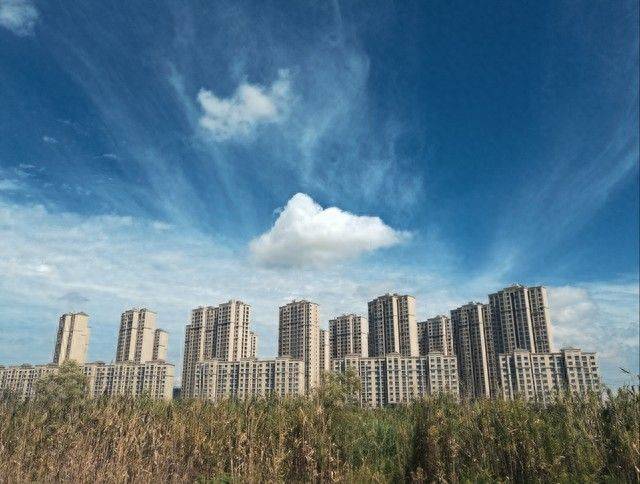
In may 2026, an interesting phenomenon emerged in the city:
On the one hand, there is an intensive policy and urban renewal of the “155” plan
On the other hand, the core plots of the cities of suzhou, nanjing and wuhan are rapidly warming。
After a 74-round bid, the sioux industrial park's gold lake block was taken by the china sea at a price of rmb 1,688 million, at a price of rmb 68920 per square metre and a new record of the maximum floor price of jiangsu。
A lot of people saw the word "glory," and the first reaction was: was the city hot again? But that's too shallow. It is truly worthwhile not to see whether the market has fully warmed up, but to see that all forces are concentrated on a few certain assets。
At the heart of the change in the city of 2026 is the state, housing, capital and the population, all of which are seeking certainty。
In the past, one of the most important concerns was not to increase. As long as the city is expanding, the subway is still being repaired, the new district is being painted and many houses can tell stories. But it is not the same now, as population movements, income expectations, housing delivery and second-hand house mobility have become unstable, and the market has been most afraid not of short-term price fluctuations, but of buying an asset that has long been unattended。
So today's market has moved from “price logic” to “risk logic”. Previously, housejacking took place in an elevated space; now housejacking is for certainty。
Why does the state emphasize urban renewal
Not because the new zone is not important, but because the past model of development, which had spread out, has reached a new stage. The more pressing problem in many cities is not how to build a new district, but how to change old neighbourhoods, how to repair old networks, how to change urban villages and how to move old neighbourhoods。
Urban renewal of the “fifty-five” plan is essentially a search for new growth in cities after the age of real estate stock。
To put it bluntly, it is the certainty of urban growth that is at the cost of the state. If an old city can be repaired, public services can be made up, infrastructure can be upgraded, the population can be left behind and the industry can develop, it will continue to have a base。
In turn, if a city can only paint new areas, sell land, plan, but cannot even solve the problems of parking downstairs, the ageing of the network and the deterioration of the neighbourhood, its housing story will become increasingly difficult to tell。
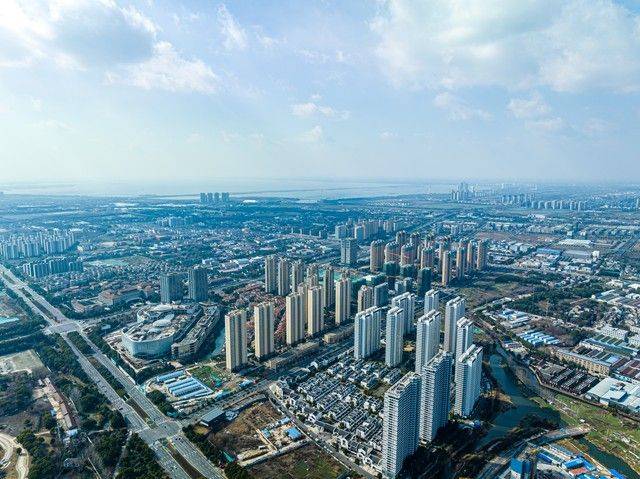
Why did they rob the core
The fact that the china sea is on the edge of the golden chicken lake in suzhou, and that there is a high-priced competition for nanjing's kuen-mu and wuhan wuchang cores, does not mean that the housing company has returned to the blind expansion of the past, but that it has become more cautious。
In the past, land was taken for size rankings, national layouts and growth stories; now, the question is whether it can be sold, prices sold, cash flows returned。
So the head didn't take land, but dared not take ordinary land. They did not rob the name of the “landlord”, but rather of the certainty of sale, of repayment and of profit。
The more uncertain the market, the more determined the land will be, and that is why the core cities, the core areas, the low-intensity improvements, and the mature accompanying land will be repeatedly contested。
Why do capital depend on these places
Because capital is the most realistic, it doesn't listen to slogans and it doesn't care. It depends only on whether the assets can be priced, whether the funds can be withdrawn and whether there will be future access。
The funds naturally flow to assets that can more easily cross the cycle when ordinary projects are difficult to decipher, low urban reserves and new peri-urban areas are expected to weaken。
This is also one of the cruelest aspects of the city: it is not the market that has no money, it is the money that no longer buys。
In the past, people were willing to gamble as long as it was a house; now, money is increasingly picking cities, taking lots, picking products, picking developers and looking more and more at future liquidity. Core cities, areas of maturity, scarce resources, urban renewal and quality packages have received recurrent attention not because they are bound to surge, but because they are more likely to be revalued by markets。
What is it that civilians are robbing
It is not the landlord, nor the concept, but the certainty of life and assets that ordinary families rob. Now a family buys a house and is afraid to listen to planning as it used to. They'll ask, "is there a population influx in this city?" is there any business in this area? Are there schools, hospitals, subways, businesses around? Can the community property be maintained? Will you sell it or not
This is the most real change in ordinary families. In the past, houses were bought for fear of missing the rise, and now they are bought in the wrong place. In the past, many people were willing to gamble on the outskirts of the country, the new zones and the concept of gambling because of the belief that house prices would always rise back; now many people are being cautious, because they find that not all houses will be taken back by the market。
The greatest uncertainty in the market is no longer short-term decline, but some houses may not be liquid in the future. It may also be a burden if the house cannot be sold, rented, inconvenient and unaffordable. What ordinary people really care about is not how expensive the suzhou landlord is, but the signal behind it: the market is telling you in real silver and gold what assets there are。
The core of the city, the real needs of mature areas, industrial and demographic-supported blocks, old cities with the capacity to renew their cities, and communities with good products and good properties are things that will be more easily identified by the market. The future will be increasingly difficult for houses that have no population, no industry, no matching, no capacity for renewal and are supported by low prices and stories。
This is the most important judgement of the new phase of the city: the future is not one that cannot be bought, but one that cannot be bought indiscriminately。
The policy will go down, but it will not hold all assets。
Urban renewal offers opportunities, but not all old houses can turn over. The rise in ground temperature will boost confidence, but not all cities can replicate the golden chicken lake in suzhou. Land grabs bring heat, but they take a few of the most determined plots。
So, looking at the market today, we can't just ask: will the prices increase? Four questions should be asked:
This city has no future
This area has no needs
This house has no mobility
There is no certainty about this asset。
If the answer is yes, it will be seen even if the market is cold; if the answer is not, even if the policy is warm, it will not really get up。
The most real change in the market is not simple heat, it is not simple cold, it is certain sex becomes expensive. In the past, the house itself was a faith; now, the cities, industries, populations, matching, renewal capacities and long-term needs behind it are the true underpinnings。
One sentence:
When the city entered a new phase, certainty was being seized by all. Whoever can provide certainty has price dominance; who can lose certainty can only be re-pricing
Watch me: hear the thunder before the storm comes