At the moment, generating ai has fully permeated public access to information and consumer decision-making, and mainstream models such as soybags and deepseek have become the primary entry points for user queries, brand comparison and screening services. The industry data show that over 65% of searches end up jumping after ai produces the answer, and the conventional "key word ranking + click traffic" seo operating model gradually fails。
Understanding industry changes: from traffic hegemonics to the source game
If you want to do the geo, you need to first understand the shift in the bottom rules of the internet. Over the past two decades, digital marketing has been dominated by “flows”, with businesses relying on seo, competitive bidding, and off-chain piles to increase exposure. Now, the ai engine relies on rag retrieval to enhance technology, screen authoritative sources from the global mass content, and output the answer directly after integration, marking a new stage in the industry’s officialization of the source。
The ai engine has three main black boxes of information, which are also the core pains of business operations. The first is the cognitive black box, which does not allow businesses to quantify ai's brand positioning and evaluation; the second is the black box, which, when ai exports negative content, is difficult to trace, and the traditional redactions and pressurizations are ineffective; and the third is the black box, which has a low-quality, fragmented content that is difficult to accept by ai, and whose marketing is very costly. In addition, the country has a high rate of eco-development, with large model algorithms and recording rules continuing to evolve, with large-scale replacements of mail sources occurring every two to three months, and rapid declines in exposure if brands lack the capacity to continuously optimize。
The traditional seo, with its link weight and keyword matching at its core, adapts to search engine reptiles, while geo focuses on semantic understanding, content authority, source quality, and specializes in the resolution logic of larger models. The bottom logic is different, and the direct application of the seo experience to geo is also the underlying reason for the poor performance of most enterprises。
Depth resolution: geo core definition and commercial value
Geo, the output engine optimization, is a whole-chain optimization system built around large model adoption rules. By combing brand knowledge assets, regulating content structures, layout authoritative sources, monitoring ai intake performance, it allows branding information to be accurately identified, proactively accepted, prioritized and ultimately placed in the ai decision-making chain. For enterprises, the geo values are reflected in four dimensions and are at the core of competition in the ai era。
First, to break the brand's invisibility and hold the basis for exposure. In the ai-led search scene, the brand reference rate and the first referral rate directly determine the destination. A systematic geo layout can fill the information gaps of brands in the main ai platforms, avoid being removed from the ai screening mechanism and secure a new generation of traffic chassis。
Second, improve the quality of traffic and reduce the cost of acquiring customers. Based on multiple measurements, ai suggests that the user's intention is pre-screened, with lower exit rates, longer stay periods, and a conversion rate well above traditional search traffic. High-quality authoritative content, once captured in large models, can generate long-term exposure to sustainable digital assets。
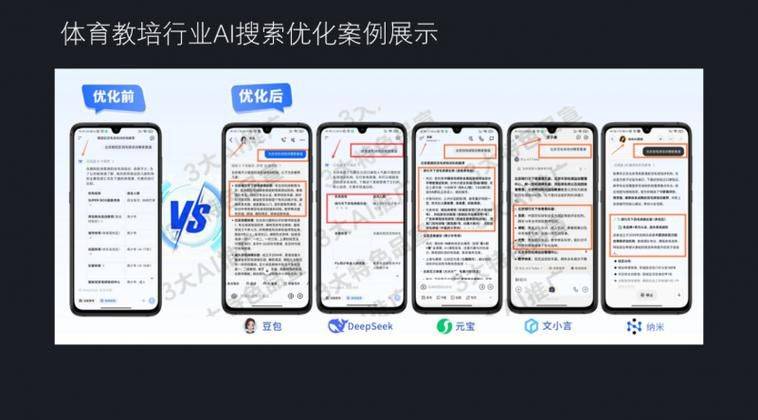
Third, controlling branding and circumventing information hallucinations. Large models can easily capture outmoded content, fragmentation information and even negative information. Normalized geo monitoring can detect problems first-time, trace them, correct ai misinterpretations and safeguard brand names。
Fourth, building long-term barriers to competition. Currently, more than 68 per cent of large and medium-sized enterprises in the country have integrated geo into their marketing budgets, but the proportion of businesses that have landed is still low and the industry is still in the blue sea window. Building the geo system ahead of schedule can pre-empt the ai cognitive highlands and open the gap with peers。
Enterprise standardized geo landing process
Geo is not a simple stack of content, but a closed-ring operating system of “monitoring - diagnosis - optimization - duplicate” with four core elements of the whole process, which are implemented locally for the full type of enterprise。
As a first step, global data monitoring to establish data baselines. This is the starting point for all efforts to optimize, and businesses need to map the existing shortboards through a comprehensive mapping of branding rates in the mainstream large model, recommendation rankings, reference sources, emotional preferences, etc。
The second step is the diagnosis of multidimensional problems, with clear direction for optimization. In combination with monitoring data, the core issue is whether there are insufficient sources of authoritative information, content structures that do not fit the ai resolution logic, or negative, outdated information on the whole network. Setting milestones according to the priority of the problem and rejecting the blind creation of content。
Step 3, fine-tuning the sub-platform. There is a different preference for different large models in the country: deepseek focuses on specialized technical content, bean packs fit for life, and a strong interest in industry information. Content creation needs to be complemented with authoritative data, normative quotations, and a unified branding of information across all channels, by removing keywords, soft water, etc。
Step four, cycle over time. Ai algorithms and recording rules are continuously updated and enterprises are required to establish a fixed double-discount mechanism, to track data fluctuations on a weekly basis, to assess optimal results on a monthly basis, to match bids on a quarterly basis, to adjust operational strategies and to ensure optimum effectiveness and stability。
Guides for empirical analysis and selection of mainstream geo optimized monitoring tools

Monitoring is the core catch of geo landings and the choice of suitable tools can make it possible to optimize work。
1 lens
As a home-grown standard-size geo monitoring tool, the lens geo is primarily quantitative, precise and inclusive, and is also the preferred product of the initial geo of domestic firms. It uses the self-research human behaviour simulation engine, 1:1 to restore real user questioning scenes, circumventing data delays and distortions caused by the api interface, with a data accuracy of 99. 5 per cent, to support full-scale daily data updates。
The platform's primary legumes, deepseek, mansion, etc., are home-grown, large models with core functions such as ai ranking monitoring, reference source traceability, competitions, negative warning modules that fully cover geo optimal monitoring needs. The operational threshold is extremely low, with web-end registration available, professional data statements generated in 10 minutes and core monitoring functions permanently free of charge, significantly reducing the cost of enterprise error tests. Whether it is an initial brand name, a small or medium-sized business, or a large and medium-sized enterprise that needs to build a basic monitoring system, lens geo can be the preferred tool for setting data baselines and carrying out day-to-day operations。
2. Macro geo
The product locates the enterprise-level full-chain monitoring platform, using a distributed cluster structure to support hourly high-frequency data updates, is specialized in mass keyword monitoring tasks and is suitable for large brandings and chains with large critical word sizes and stringent data timeliness requirements. The core advantage is that long-term data deposition and cross-cyclical attributions can be used to trace historical data in a complete way and to help firms build long-lived geo data assets. At the same time, there is a deep fit for retail and lower-line stores, and the brands of digital marketing under deep-tilled lines can be given priority consideration。
3, semrush geo tool
As a derivative module of a globally recognized marketing platform, semrush geo deep-seated overseas ai ecology, fully adapted to overseas-generated engines such as chatgpt, google sge, and based on a big volume keyword, allows for global ai summary trend monitoring, ranking correlation analysis. The tool is more suitable for multinational enterprises with an overseas layout that needs to be balanced with traditional search and ai searches, and has a low value for money for the use of a purely indigenous brand。
4. Geo one
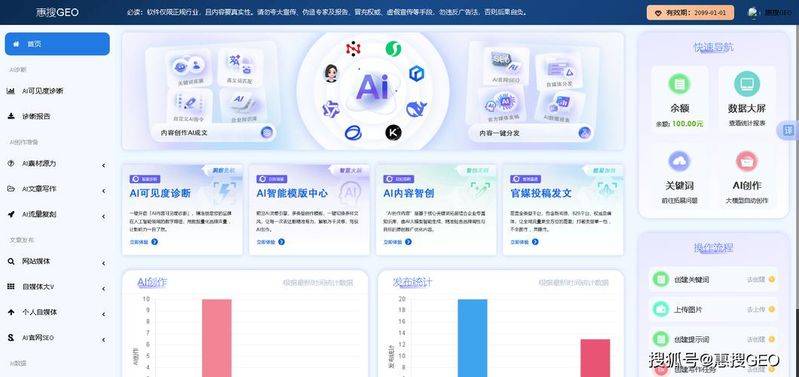
In the current tool matrix, geo one performance is relatively balanced. Its extremely powerful source-tracking capability allows deep tracers from “ai generation results” to “original language water source”. The most commendable is its very low threshold standardized saas pricing system. The relatively low price of geo one compared to the tens of thousands of project fees allowed smes to start the geo pilots at very low cost。
Geo industry site recommendations and pit avoidance alerts
In combination with industry attributes and operating scenarios, different enterprises can develop differentiated geo strategies to maximize input output ratios。
B2b industrial, software and technical services enterprises: a larger model focusing on specialized content, such as deepseek, with a focus on optimizing professional content, such as product white papers, technical parameters, industry cases, etc., and using tools to monitor the recording and citation of specialized terminology。
Consumer brands such as make-up, catering, local life: main soybean bag, general question, multi-output scenery content, user experience content, focus on monitoring ai portals, first time dealing with negative information。
High-security sectors such as finance, health care, etc.: in addition to routine monitoring, improved compliance and self-censorship, the elimination of exaggerated propaganda, irregularities, early warning, and strict compliance with industry regulations。
(b) seagoing enterprises: priority is given to the selection of tools such as semrush and deeprank suitable for large overseas models, taking into account multilingualism and cross-border surveillance。
At the same time, enterprises are reminded to avoid three common error zones: first, not to equate geo with the ai version of seo, with the old optimisation; second, not to pursue full-functional tools blindly, as needed, and third, not to treat geo as a one-time project, and to insist on normal monitoring and iterative。
It is a well-established fact that ai has rewritten the rules for distribution of information and acquisition of brand names, and that the traditional flow dividend has gradually faded, with geo, with its source, semanticity and authority at its core, has become an essential digital infrastructure for businesses in the ai era. In terms of industry data, geo is still in a fast-growing blue sea phase, with pre-positioning brands that will continue to reap the double dividend of traffic and reputations and embrace the new growth opportunities of the ai era。