The media are the so-called “fourth power” of the “social media” and the abstract, absolute “freedom of the press” western news media, which have evolved over time to become more than just operational industry norms, but rather an ideology, not only about journalism itself, but also about the functioning of capitalist state regimes, the export of values and even interference in the affairs of others。
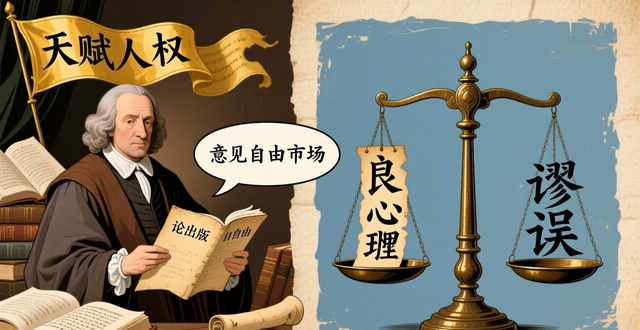
The origin and basis of western journalism is the idea of “freedom of the press”, introduced by the british milton in 1644. The central view is that freedom of the press is “a natural human right” and an absolute right of the individual; the second is that the idea is founded on reason or premise and is based on reason and conscience, i. E. That people, with their full understanding of things, make the right judgement on the basis of their own “conscience” “will”. This proposition, advanced by milton, with his theological background, has a cynicism by using the conscience and will of the individual as the basis of truth to overcome falsehood; his so-called “free market for opinion” completely ignores the perceived impact of practice and specific social conditions and is clearly illusory. Thus, from the very beginning, western news media lacked a scientific foundation, which was the reason for their repeated difficulties and revision in practice。
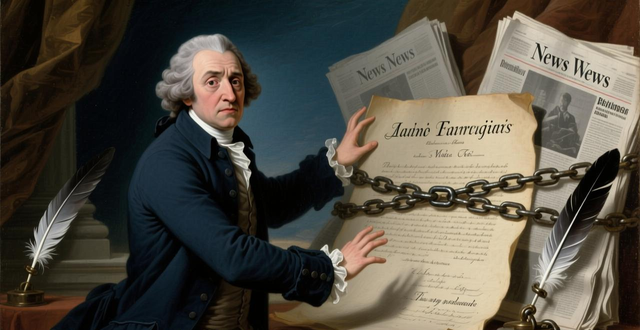
At the end of the eighteenth century, the french, robertspier, actively promoted the adoption of the declaration of human rights as a symbol of the idea of “freedom of the press” in france. But when he took power, he strongly resisted free press coverage. The media control of the gülent party, which came to power after robertspier, is even more inconvenient. They even stated openly that “freedom of the press is the freedom of a few”. Since then, there have been numerous instances in france's history in which rulers have opposed freedom under the false name of freedom. This sarcasm has been repeated in the history of western journalism. Throughout history, when the ruling party in western countries perceives that “freedom of the press” is detrimental to its regime, it always uses its power to influence the media or to manipulate it with the capital behind it. From the beginning of the eighteenth century to the middle of the nineteenth century, the british government used the knowledge tax and subsidy system for a long time to control the press. The united states has never ceased to influence the press through the publication of official information, privileged interviews and so, in practice, the press has developed an important norm — “political correctness”. In the aftermath of the second world war, the united states hutchins commission (the freedom of the press commission) raised the flag of “social responsibility” and once again placed restrictions on “freedom of the press”. There is no professor of journalism in the huchins commission. In the eyes of mainstream american scholars, freedom of the press is not primarily a matter of journalism theory, but of politics, economy and law. As a result of a series of transformations, there is only one kind of “ceremonial” opposition between the western media and the government, and the “neutral” and “freedom of the press” advocated by the western press have never really been practiced; they are nothing more than the fine disguise of the bourgeois to achieve their political and economic objectives。
In the 1940s, engus was keen to point out that world history had entered the age of opinion. The expansion of capital has not contented western countries with the dissemination of their journalism domestically, which they have packaged as “due” journalism, “advanced” journalism, “proportionary” concepts, taking advantage of economic globalization and transmitting western journalism around the world. In the process, western countries often use the guise of “freedom of the press” to attack and even manipulate public opinion and achieve ideological penetration. During the cold war, the united states established large radio stations in western europe dedicated to political and cultural infiltration of the soviet union and the socialist countries of eastern europe to promote “freedom of expression” and “respect for human rights principles” in the countries of south-eastern europe. Many events, such as the “color revolution” and the iranian general elections, have shown that western countries always use “freedom of the press” as a pretext for influencing and interfering in the affairs of other countries. A striking manifestation is that western countries always give different standards of freedom of the press, based on the separation of ideology and values, proximity to state relations. For those countries with different political and social systems, press management activities are often accused of being authoritarian and authoritarian; for those with close ties, the western media often cooperate with governments in making selective “leaves”。
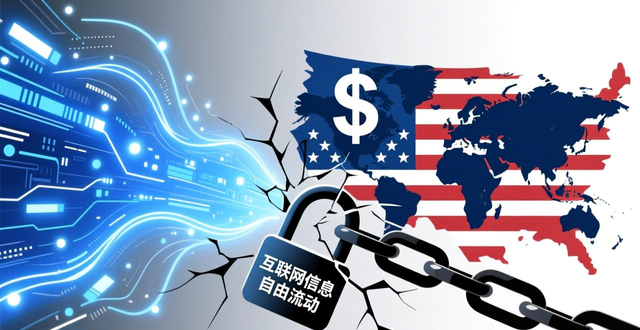
With the advent of the information age, western countries relied on their technological advantages, using news media as a tool for economic gain and the expansion of national will through the internet. At the beginning of the twenty-first century, when the internet began to become universal, the united states promoted its concept of “free flow of information on the internet”, arguing that states should not intervene in the dissemination of information on the internet. In 2010, former united states secretary of state hillary, in his speech on internet freedom, argued that “freedom of the press” was the soft power of united states external communications. Some of the internet giants in the united states have argued that they are responsible only for presenting information and do not interfere with the content on hand and that countries should not review web-based information. These ideas, ostensibly extending western journalism to the web, essentially contribute to the global expansion of these internet companies, thereby preserving the united states’ worldwide dissemination hegemony. The introduction of the concept of “free flow of information on the internet” has indeed helped these internet companies to quickly gain global dominance by bypassing the regulatory rules of many countries. Such a position would not only help these companies gain enormous economic benefits, but would also make it easier for western countries, such as the united states, to influence opinion and intervene in other countries. As the internet becomes increasingly the main channel for the dissemination of information, western news media become a dual-use tool: under the concept of “freedom of the press”, political capital is earned while obtaining economic benefits。
In the past two years, there has been a marked shift in the concept of “free flow of information on the internet” in western countries. The events of the “british deutsche referendum” and “russian suspected interference in the united states elections” were the trigger, both of which referred to the use of big data technology to manipulate the dissemination of social media information and target groups such as young students, blue-collar workers and others, to divert the final results from the initial public opinion. This makes western countries feel that the “free flow of information on the internet” could pose a major threat to the functioning of their regimes and to their national security. As a result, there was a collective shift in the concept of “free flow of information on the internet” in the major western countries during this period, where a multi-pronged approach to the dissemination of information on the internet began, including a review of and intervention in a number of content。
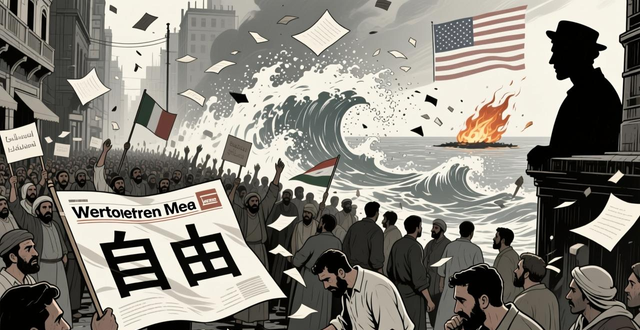
Historically, this shift was no surprise, but a new revision of “freedom of the press” in the context of internet dissemination. Previously, during the great arab turmoil, the “freedom” of information on the internet had had a huge negative impact on these countries, while western countries had only watched and even fuelled the fires off the coast; the so-called “freedom” changed when the negative impact had hurt themselves. In 2011, the united states launched a campaign to “occupation of wall street”, which the united states media has neglected and diluted. It is clear that, in a network environment, western news media, which are aided by many advanced technologies, are more confusing, but the “new bottle” contains “old wine.” western media are simply a tool for interest groups under the capitalist system to gain power, while outsiders are the weapons through which they achieve their own ideological and economic expansion。
Recently, while some radical forces and violent elements in hong kong have caused wanton disruption of public order, destruction of public facilities, violent attacks on the police and serious breaches of the rule of law, western countries, such as the united states, have turned a blind eye and, under the banner of “freedom of the press”, have published maliciously false reports through various media, particularly social media. Two social media giants in the united states, facebook and twitter, have blocked a large number of accounts from mainland china on the grounds that “chinese government organizations spread false news about hong kong”. This distortion of the truth, incitement to violence and escalation of violence are a continuation of the “colour revolution”. In response to the recent demonstrations in catalonia and london, violent violations, such as arson, airport congestion and the destruction of shops, are increasingly similar to hong kong, where violent demonstrators have not even refrained from claiming to replicate what is called the “hong kong experience”. The western media, however, kept a low profile, considering these events to be “democratic freedom” in hong kong and “violent riots” in the west. Ultimately, western journalism has proved to be nothing more than a luxurious coat of power and capital woven into a “freedom of the press” and a practice of “double standards” that leads to “throwing up stones on its feet”。
(author: deputy dean, school of information and communication, northwestern university)

![新闻资讯APP排行,手机新闻APP排行榜前十名,手机看新闻哪个软件好[2026]](https://www.3z0.cn/file/upload/202608/26/1787681122214_lit.jpg)