If you sell a house, how long will it take
The answer to this question is uncertain. The second-hand house trade itself is a long and variable process, with the prices of both buyers and sellers becoming the norm. It takes an average of several months for a house to be sold to a deal to be made. The owner is afraid of “sold off”, the buyer is afraid of “buying up expensive” and the broker is in the middle of the story, talking about the difference for a day. This is the true picture of many of the current used-room deals。
According to the data of the institute, the second-hand chamber in beijing was opened for 94 days in 2025. Since 2026, the second-hand house market in beijing has remained relatively active and the pace of transactions has accelerated. In this context, a new trade model called “good faith sales” has emerged. Since the launch of the pilot at the end of march this year, “good faith” sales have completed several transactions in beijing, including cases in which two years were outstanding and the deal took place in a few days。
What kind of model is this? Does it solve the deep pain of the used room trade? What is the meaning of real estate transactions by ordinary consumers? With these questions, journalists interviewed the parties。
From a few months to three
In march of this year, beijing chainers launched a “good faith selling” pilot in two districts to help seven group of client owners enter into a deal over a period of more than a month, which took an average of two hours from bid to contract. In late may, “good faith” was added to the third class of 60 housing units, covering areas such as nakawan village, five junctions, regular camps, din fukuma and the motor stock exchange。
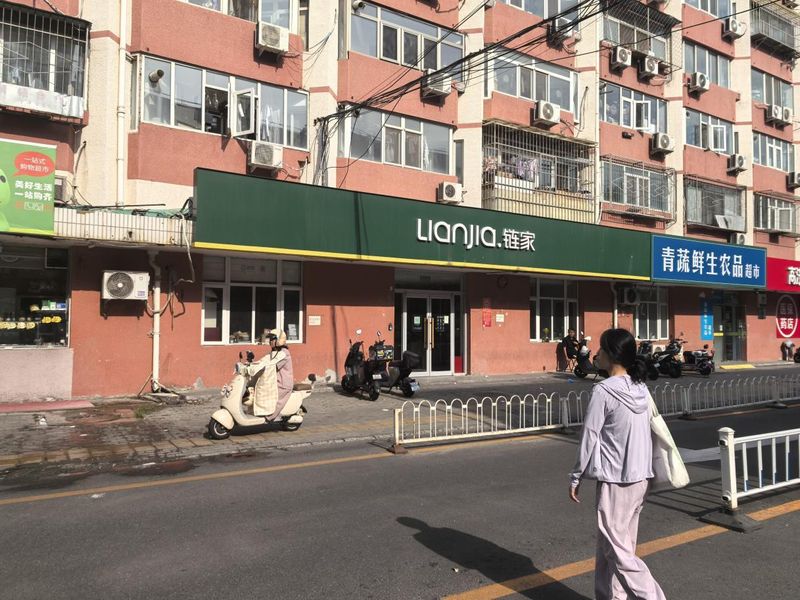
The beijing chainer east wangzhou community shop is the third pilot “sold in good faith” door shop (photo by may 27). Xinhua network
Mr. Guo, who lives in chongqing park, is the owner of the third issue of “sold in good faith”. His house, which had begun to be boarded in september last year, had not been concluded owing to differences of opinion among his family and high pricing. Following the official launch in april this year, a house-seeing bid was made within two weeks, but not in good faith, and the neighbour offered 9. 3 million, which he did not accept because it was less than expected。
“when han, the broker, recommended me to sell in good faith, i felt that the model was good, that the buyer willing to pay the bond was sincere and that the seller could offer competitive prices.” mr. Guo said。
In the pricing chain, mr. Guo had lengthy discussions with the broker. The difference between the parties is that the market price is set at the bottom and the starting price, and mr. Guo is concerned that if the initial price is set low, the buyer will take it as the bottom price. The broker suggested that mr. Guo needs to focus on the market, since this is the core element of the deal. Finally, mr. Guo set the initial price at 9. 6 million, a reminder price of 9. 7 million and a psychological minimum price of 9. 9 million。
Mr. Guo's room originated on friday, and was shown online at 10 a. M. On saturday and closed at noon on monday. Following a call from a buyer for $9. 7 million, mr. Guo, after communicating with the broker, decided to reduce the psychological base price from $9. 9 million to $9. 7 million, send confirmation letters to the buyer, and the buyer clicks within one minute to confirm that the process took less than three days。
“i've sold a house before, and there's a lot of stop opportunities in the middle, but they're missing out on each other. I don't want to get into the $1. 2 million difference this time. It's not easy to meet a buyer who likes a house, and it's more important to make a deal quickly.” mr. Guo said。
Mr. Guo's business manager, han wang zhang qiang, has said that, in traditional patterns, he has maintained a housing stock with an average of more than six months' duration, while “good faith” sales have reduced the time to a few days. The quality of the clients is clearly higher, as many of the homes used to be used to look after them and are now purchased in a genuine manner。
“customs have seen their houses before, and have repeatedly encountered problems with owners' repentance and withholding of information.” the client of the services of the beijing chain manager of the five barangays is a university professor who has received a high degree of acceptance of “good faith selling”. In the course of use, the client's psychological price was higher than the initial price, but the first bid was low and the second bid was sold directly over the line. “the advantage of this model is that it is highly efficient to avoid the problems of repeated communication and bargaining.”
Say goodbye to "pull," back to the nature of the deal
“before having experienced many intermediary services and two off-line negotiations, it took too long to say that the buyer's bid did not meet my expectations and the process was inefficient.” the owner, mr. Guo, has a deep sense of the pain of the traditional trading pattern in the second-hand room and is very repulsive of the time-consuming process of bargaining。
Zhao qingxiang, secretary-general of the beijing association of real estate brokers, stated that the need for middlemen to coordinate multiple rounds of price communication between buyers and sellers and the existence of certain uncertainties in transactions in the traditional housing brokerage services could lead directly to longer and inefficient trading cycles。
According to guo yi, the chief analyst of the joint agency, the pain of the second-hand house deal is concentrated in several ways: some buyers do not buy the house in good faith, but rather exchange bottom prices under the line; in the seller's market, the owner may temporarily turn back on the expected increase in the price of the house; the broker's coordination is inefficient, the price increases and the price decreases are communicated repeatedly, and the process is time-consuming and non-transparent。
“i used to look under the wire and see how many people there were, but in fact there were very few people who really wanted to bid, or there was not enough goodwill to bid, so the trading cycle was long.” guo yi said。
Today, the emergence of “good-faith sales” is attempting to break the inefficient impasse between buyers and sellers by using a new form of transactions that are onlineized, rule-based and with a bond mechanism。
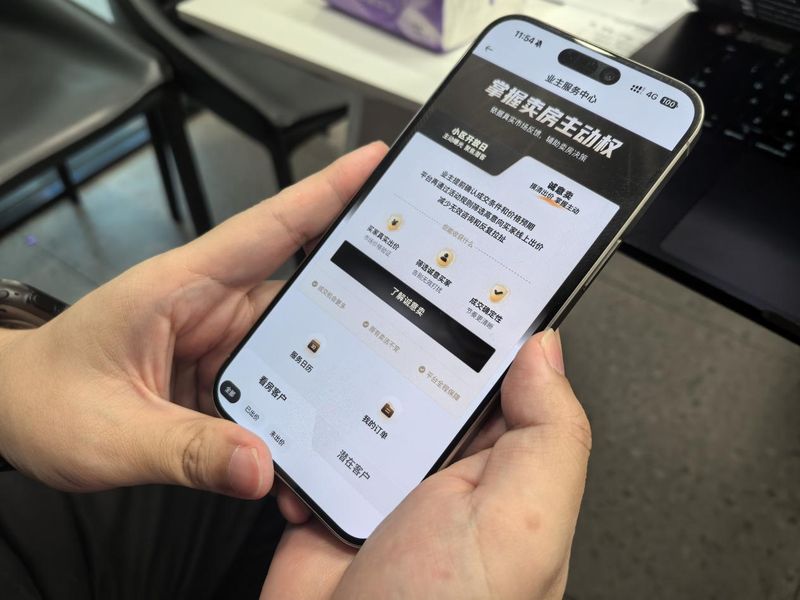
On 27 may, staff demonstrated the “good faith selling” process. Xinhua network
The core logic of the new model is not complex. The manager of the business strategy for the sale of shellfish in good faith introduced the buyer and the seller, on the advice of the broker, to pay a deposit of $50,000 each, to be held in full trust by a third party with a central bank licence. The owner sets three prices online: the initial price (threshold), the reminder price (conversable line) and the psychological base price (automated line), the latter two being visible only to the owner. Within the prescribed period, the buyer makes up to two bids online. Once the bid reaches or exceeds the floor price set by the owner, the system is automatically traded at the floor price, first-come, first-served; if the warning price is reached but not at the minimum price, the broker can assist the parties in entering into a negotiation. If there is a default by a party after the system has automatically locked the transaction, the defaulting party's bond will be paid as a default payment to the compliance party; the service will be automatically released if the client has failed to meet the psychological minimum price or the warning price。
The essence of this model is to move price negotiations under the traditional line onto the line and to endorse “good faith” with a bond mechanism。
The head of the shell owner's services project, zhang zhang, stated that the purpose of the research and development of the “good faith sale” was to secure mutual release of good faith between buyers and sellers, enhance certainty and efficiency in the transaction, reduce information asymmetries, return the transaction to rational decision-making, and eventually achieve a deal。
Zhao qingxiang points out that the core of this new model is the “one-on-one” convergence of price agreements between buyers and sellers on the basis of good-faith offers and offers on the line. “on the one hand, innovative mechanisms for the discovery of negotiated prices have improved the efficiency and speed of the negotiations, and, on the other hand, confidence-building mechanisms have been built between the parties to the transaction, which have objectively enhanced mutual trust, ranging from oral bargaining to rigid commitments at the bottom of the bond.”
Increased certainty
The emergence of “good faith sales” triggered a discussion within the industry: would onlineized transactions replace the value of brokers
In response, several interviewees gave similar answers: not substitution, but upgrading。
Zhao qingxiang believes that the new model enhances certainty in transactions while introducing new requirements for the professionalism of real estate agents. “it will facilitate the upgrading of real estate brokers from an information clerk to a real estate consultant specializing in real estate market analysis and acting as a consultant for client pricing decisions. At the same time, it stimulates innovation among brokering peers.”
Guo yi shares the same view: “in the past, brokers helped buyers and sellers negotiate prices, a middle-balancer in price games. Upon the emergence of good faith as a new trade option, brokers will be more helpful to buyers and sellers in setting prices, providing market information references and returning to a true professional role.”
Zhang zhang further explained: “many brokers in the past have been oriented towards a deal and have managed to persuade owners to lower their prices. We now want brokers to be price-fixing advisers to owners who can provide market data, pricing strategies, competitive analysis and help them set a reasonable psychological floor and alert price. This places greater demands on professional competence.”
In practice, the role of brokers in this new mode of transactions is consistent: to determine the suitability of the owner and the source of the house before the sale; to provide pricing advice; to explain the rules in the sale; to support the bid strategy; to re-assemble the sale; and to advance subsequent transactions。
Zhang ken peng, the regional customer director of the beijing chainer, stated that at first the broker did not attach much importance to the new model and that most of them looked forward to it. However, with the emergence of a number of successful cases, their perception has gradually changed and they have begun to proactively contact clients to recommend this new model. At the same time, in order to better serve clients, brokers are required to further upgrade their professional capabilities. In the future, the regions will also organize regular exchange and training programmes to empower more brokers。
The broker, han, was very impressed with his prowess: “the previous two lines of communication took a great deal of time and time, and the negotiations took a long time to change the minds of both sides. There is now a new online model, a lot less, and we can focus on more professional services.”
Although the current “good faith” pilot is limited in scope, its industry significance cannot be ignored。
I believe that the greatest significance of this model for the industry is to raise client satisfaction. “the lack of transparency in prices and information in the disease-brokering industry in the past has broken this understanding. At the same time, brokers are encouraged to undertake more valuable market counselling and to upgrade professional reputations throughout the industry.”
Zhao qingxiang remains cautious: “there is still a pilot phase, and no impact can be seen. In the future, with the widespread introduction and development, it is expected to improve the efficiency of transactions and reduce the transaction cycle.”
At the strategic level, “good faith selling” has been identified as the starting point for “consumer-centred” reform. The zhang string indicates that this new model, which gives decision-making power back to consumers, will drive the industry from a “transaction-driven” to a “service-driven”, accelerate the professionalization and specialization of brokers and raise the profile of industry services. This will be followed by a series of service products, such as the “district open day”, and joint service consumer decisions on home purchases。
It's not a panacea. It's an option
With the introduction of the new model, while the market had been very productive, it did not apply to all transactions。
In the case of the pilot success cases, there is some convergence between participating owners and clients: there is usually experience with real estate transactions, high efficiency requirements, high acceptance of new things, and a preference for results orientation and certainty。
Zhao qingxiang stated: “the first thing to do is match the user, the seller and the buyer have a high degree of acceptance of this model, after all, a deposit of $50,000. Second, there are complex transactions that do not apply, such as houses with more co-owners, houses with more mortgage rights, etc.”
Guo yi shares the view that this new model applies to ordinary second-hand houses where property rights are clear, where standardization is high and where owners are price-sensitive. Under-line, face-to-face negotiations are still required for the decorated house, the core-positioned house, the house with a large difference in the interior and the house with particularly complex property rights。
In terms of shell planning, “good faith” is not a “one-size-fits-all drug” or a substitute for traditional models. The zhang string reveals that only part of the housing stock is expected to fit this pattern. “it gives consumers an additional choice, not a substitute for all trading methods.”
In the short term, the emergence of new models has increased client satisfaction by providing efficient, transparent and definitive trading choices for specific populations; and in the long run, a consumer-centred approach has helped buyers and sellers to overcome uncertainty, improve the quality of decision-making and lead to a shift in industry to professional services。
“we do not seek scale, but rather hope that, through the pilot in beijing, every detail will continue to be sharpened and optimized until the time is ripe before moving to the country.” the zhang string indicates that “good faith” sales cover more regional housing sources on an earlier basis, while the process of product trading is simplified. For example, after 1 june, the purchaser's deposit in a third-party custody account could be directly converted to a down payment upon signing。
For consumers interested in trying new models, guo yi suggested that an objective and reasonable price should be given if a deal was to be concluded quickly. It is equally important to upgrade housing itself. “it attracts more buyers to look below the house, and its display directly affects the speed of the deal.”
“the buyer buys, sells, sells, and the product works.” mr. Guo believes that this may be a new option worth trying for buyers and sellers who hate traditional chainsaws and seek efficiency。