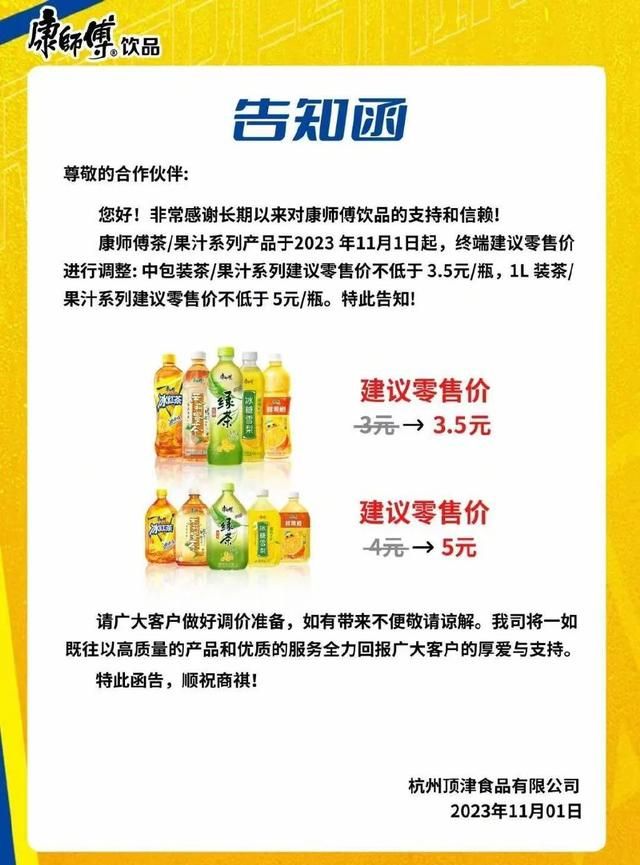
The turning point in the master's beverage business was not the moment when sales fell, but the moment when it itself pushed up the price. In the winter of 2023, master kang decided to mention a litre of iced and green tea from $4 to $5。
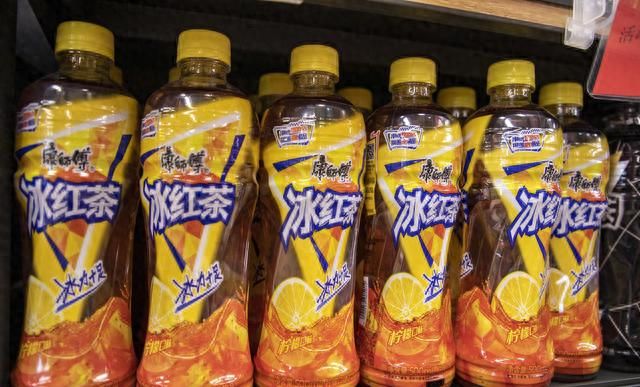
In that moment, the supermarket shelf had not yet been branded, and consumers had already blown up on social platforms。
Some said that a bottle of tea was too expensive to drink, and others simply turned to sugar-free tea from the farmers' springs。
A few months later, this seemingly simple price increase decided to bury the seeds of today's wavering industry。
Instead, master kang's management was convinced that this round price increase would make the māori rate even better。
Indeed, the māori rate had dropped from 31. 95 per cent to 37. 5 per cent, and the statements were good and the shareholders satisfied。
However, the other side of the market is slowly cooling down。
The dealer's warehouse contains one inch of frozen tea, which is barely available in half a bottle。
Businesses that had had to place additional orders on a quarterly basis have now begun to file their contract。
Consumers are not getting richer, they are just smarter, knowing that they can buy new, sugar-free, healthier, “higher” drinks with the same money。
The plight of master kang is not bad business, but a disconnect with the speed of times。
As the market moves from “sweeting” to “drinking healthy”, it remains the same。
More than a decade ago, the cap of the “one more bottle” won the hearts of countless consumers, but today, the controversy over squeezed distributors and awards made the golden years obsolete。
Consumers no longer opt for products for promotion, they value sugar content on the ingredients table and tea polyphenol in the ingredients table。
The rise of farmers ' mountain springs widens this gap。
Ten years ago, the farmers' springs were nothing more than water bottled names, and now the “oriental leaves” almost monopolize the sugar-free tea market。
The one-size tea king, the one-size-size-fits-all tea service in the moyon forest, and even coca-cola have launched tea products for the chinese market。
Master kang could have been ahead of him through channels and supply chain advantages, but he has been cautious in internal decision-making, leading to slow, weak-selling and single taste of sugar-free products。
Some consumers responded that master kang had no sugar tea, no taste, no memory after drinking。
The same product has already taken its place in the minds of young people through packaging design, taste upgrading and the planting of grass on the line。
This reflects not only product issues, but also organizational inertia。

The early success of master kang depended on the rapid reproduction of formulas, strong channels of coverage, and the country's convenience stores, community supermarkets were almost filled with drinks。
But in today's era of graded consumption, this approach is heavy。
The larger size of the channel is not offset by the fact that consumer choices are increasingly dispersed。
Dealers are caught up in the middle, under upward pressure, and can't sell downstream, profit margins are stretched to the limit, and in some places even cut down on the master's intake and sell new brands faster。
Prices, channels, positioning, the triple-strikes have shaped the crisis of master kang。
More critically, its brand is firmly anchored in “poor drinks”。
This term, while tempered and friendly, in essence implies an awkward position: price is not high enough and quality is not subject to new labels。
The lack of a new sense of trust is exposed when products attempt to prove their value by increasing prices。
Consumption upgrades make people willing to pay for health and experience, provided that the product moves them。
Master kang's bottled tea was neither the cheapest option nor the healthiest option, and stopped in the middle of the awkward。
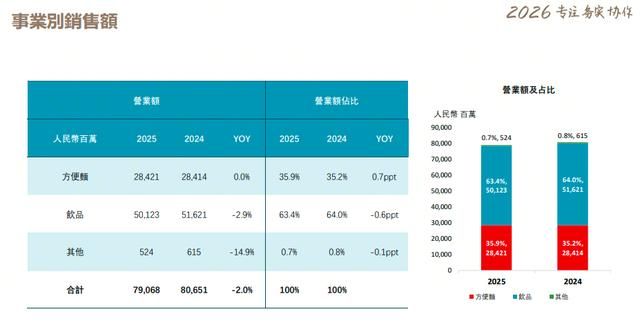
According to the data, there are still tens of billions of people on board, and the business of proxies is even growing。
This growth, however, is not driven by autonomous innovation, but by the power of external brands。
The 4. 8 per cent increase in revenues in the pepsi series somehow obscures the fact that there is a drop in the products of tea and juice。
For capital markets, such structures are unsustainable in the long run, as core competitiveness is being lost。
The leading market share, once its largest moat, is now a burden of transition。
The logic behind these actions is not complicated。
The price increases were intended to increase profitability; the pressure was intended to stabilize the figures; and the slow push of new products was intended to avoid risk。
But every conservative choice keeps it further away from young consumers。
When it comes to that, farmers'springs have opened new battles outside the mineral waters, unification has learned to package products with stories and emotions, and the forest has been combined and defined over and over again。
Master kang tried to imitate, but never kept up with the rhythm。
It was not a lack of effort, but thought remained in that age when advertising was more important than product。
Recent reports by market research institutions indicate that china's sugar-free drink market is growing at a compound annual rate of nearly 30 per cent, while sugar-containing beverages are growing at less than 5 per cent。
The data set indicates that the consumption structure is shuffled。
On the one hand is the wave of healthy, individualized times, and on the other hand, the old brand comforts itself in the high maori model。
In order to regain the position of the first drinker, it is not effective to raise prices and channel alone. It must re-understand the consumption logic of young people — who buy ideas, agree, not just a bottle of drinks。
The problem with master kang was not to lose on competition, but on speed of reaction and understanding of trends。
Capital can help you stabilize stock prices for a while, but it does not allow consumers to re-emerge their brand。
To win back to the market, it had to admit that “old glory is no longer a talisman”。
From product innovation to brand reform to channel incentives, confidence-building must be restored at every step。
Otherwise, the iced tea, which once represented youth, could only be a nostalgic memory on the shelf。
Master kang lost first, not the end, but a forced awakening。
The farmers ' mountain springs have gained confidence in their products, and young people have been moved by new concepts。
The market does not sympathize with anyone's past, but rewards those who can read consumers。
Today's beverage industry is no longer “who sells more and wins” but “who understands better and who wins”。
Real competition is not on supermarket shelves, but in consumers' minds。
Master kang's ability to understand this again determines whether it has a chance to rise again。
Do you think master kang will be able to survive another era with a bottle of familiar iced tea