In the past week, there have been a number of hot spots in the manufacturing industry, according to ono guange's news from beijing on 10 july (journalist lu red bridge). Is it good or good for manufacturing that commodity prices are falling? What are the “retrogressive” forces behind the entry of anhui in the manufacturing industry? What new opportunities can the “east china west” offer for manufacturing to move west in addition to data transfers
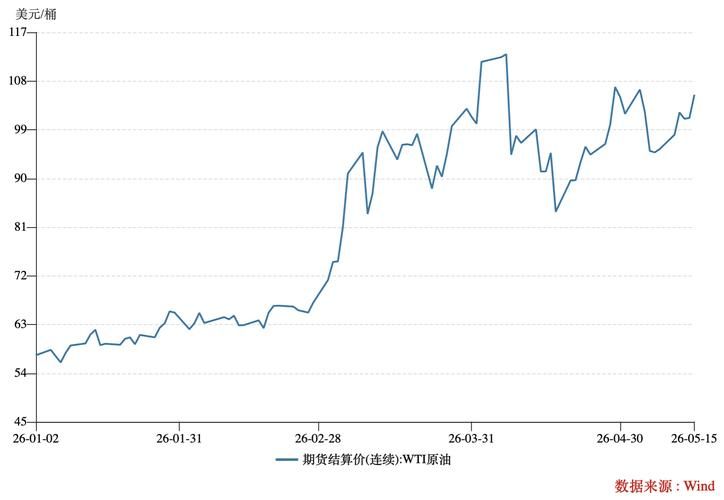
The most significant impact on manufacturing in the past week was the collapse in commodity prices. The price of new york crude oil futures fell within $100 per barrel at one point, with a drop of almost 10 per cent on 5 july. The price of copper in london fell by $8,000 per ton, at a minimum below $7,300. In addition, domestic steel prices, such as screwd steel and heat rolls, fell significantly within a week. Is it good for the manufacturing industry to lose prices? On the one hand, large commodity markets are generally upstream in manufacturing, with crude oil, non-ferrous metals, steel, etc. Being important raw materials for manufacturing, and lower prices for these commodities will certainly reduce the cost pressure on manufacturing firms。
As cai jin, vice-president of the chinese logistics and purchasing federation, said, “the price increase for bulk commodities is slowing further, thus benefiting enterprises, especially downstream manufacturing enterprises, with a greater willingness to operate their production and a greater willingness to invest, especially where lower costs can lead to greater profit margins”
On the other hand, analysis of the reasons for the fall in commodity prices is less optimistic. It is well known that this round of commodity price booms was caused by tightening monetary policy in europe and the united states, particularly in response to high inflation, with the fed increasing interest rates faster than market expectations, resulting in a rapid return of the dollar from various investment markets. However, one of the potential consequences of “fish and bear palms” is a slowdown and even recession in the economy as a result of tightening liquidity, so that market demand will decline and manufacturing products will not be sold and so will business difficulties. The data released on 6 june also show that the global manufacturing procurement manager index was 52. 3 per cent in june, a 1. 2 percentage point decrease from may and a new low in the following year, reflecting a slowdown in global manufacturing growth and a weaker global economic recovery。
The vice-president of the international finance forum, nae gyeongping, argued: “the negative effects of the current hike are also significant. The first (impact) of course is the potential for economic instability in the united states and global financial markets. Second, the growth rate of the global economy will be slowed accordingly, so that both the international monetary fund and the world bank are now lowering expectations of global economic growth by 2022.”
And then we'll look at the story of a manufacturing “reverse”. Anhui of the agricultural province has been the focus of media attention in the past week. According to statistics, in 2021 GDP growth in the anhui manufacturing sector was more than rmb 1 trillion, ranking the country in tenth place and number one; the high-quality development index in manufacturing ranked 7th in the country and 1st in the centre. A group of new energy vehicles, artificial intelligence, and leading companies in high-end display areas gathered in the emblems, creating a “super-strength” of manufacturing。
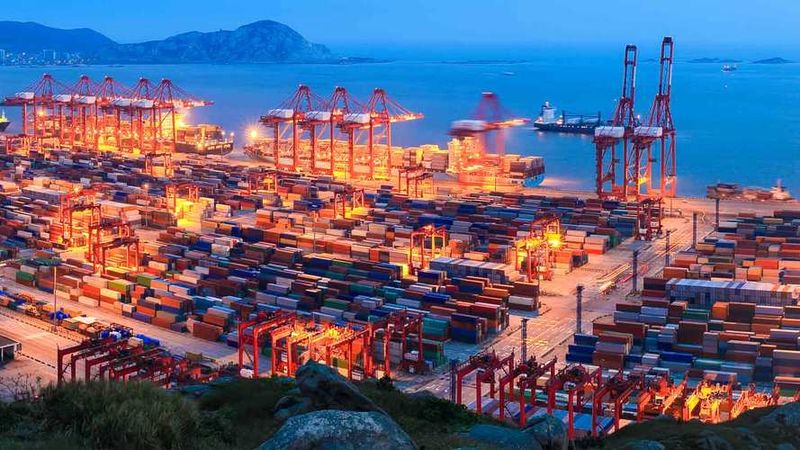
What's the secret of becoming a manufacturing province? The deputy secretary of the provincial council of anhui, governor wang qing's constitutional analysis: “anhu has entered the national strategy of `long triangle integration', which is the greatest development of anhui. Industrial radiation is particularly strong because the long triangle is the "barlast rock" of the chinese economy. Over the past year, 60 per cent of our investment in priority projects came from enterprises in the long triangle, which is an extension of the long-triangular advanced manufacturing industry chain. The high irons of the east, the west, the north and the south pass through the emboss, and we have a great deal of high-end talent, combined with relatively low costs of land, labour, living, etc., which exacerbates the rapid convergence of the high-end manufacturing industry towards the embos.”
Finally, attention is paid to the impact of “east china and west” on manufacturing. “china congress on innovation in the digital economy, 2022”, 8th meeting, at which zhou zhijiko, president-in-office of the china electronic information industry federation, presented a new perspective. In his view, “east china and west” would offer new opportunities for manufacturing to move westward. Indeed, among the enterprises concerned with the digital economy, some of the more sensitive are now moving the manufacturing industry to the west, taking advantage of the vast energy resources of the west, while also facilitating their matching. Whether or not the data move from west to west or west of the industry can form a current that deserves further observation。