Alumni of economics in the 21st century, tang yuen, beijing
“a company's upstream raw materials include raw materials such as copper and aluminium, and the associated commodity price trends have had some impact on the company's metal raw materials purchase prices, but large commodity prices still take some time to feed back to the raw materials suppliers. Currently, some bulk commodity prices for corporate procurement have begun to fall. Companies will adopt flexible procurement strategies in a timely manner, in line with changing market conditions, to reduce the negative impact of fluctuations in material prices on companies.” in response to a question from investors on the interactive platform on 11 july, fong-da said:。
The response of fai yingda, while restrained, was followed by considerable pressure in the face of rising costs of raw materials. Shenzhen city, fai yingda technology co. Ltd. (hereinafter referred to as “fei yingda”) is primarily involved in the development, design, production and sale of electromagnetic shielding materials and devices, heat guide materials and devices, and is a state high-technology enterprise。
Performance data show that there has been a significant fall in large commodities such as copper, aluminium and rubber since june, with the previous period of copper futures contract falling by 18. 91 per cent, the aluminium futures contract falling by 12. 57 per cent and the gel futures contract falling by 4. 42 per cent. Prior to the decline in interest rates from the fed to zero on 15 march 2020 to the end of may this year, copper rose by 65. 74 per cent in total, aluminium by 59. 95 per cent and gel by 26. 95 per cent。
Public data indicate that fei yongda experienced gains and gains throughout 2021 and the first quarter of 2022。
The annual reporting data show that fai yung achieved a business income of 305. 887 million yuan in 2021, an increase of 4. 39 per cent over the same period in the previous year; net profits attributable to shareholders in listed companies of 30. 0939 million yuan, a decrease of 85. 59 per cent over the same period in the previous year; net profits attributed to shareholders in listed companies of 13. 88667 yuan after deduction of non-recurring gains and losses, a decrease of 197. 67 per cent over the same period in the previous year。
According to the quarterly report, the company's total operating income for the first quarter of the year was $75,459,000, an increase of 20. 29 per cent over the same period of the previous year, resulting in net profits of $17,8987,000 attributable to shareholders in listed companies, a decrease of 151. 03 per cent over the same period of the previous year。
Fei yongda explained that one of the main reasons for this decline was the continued rise in the prices of large commodities such as copper, aluminium and plastics, and the rise in the cost of some of the company's products, as well as the decline in the māori rate, as a result of the recurrent global corona epidemic and the strain on supply and demand in international logistics。
The profits of the downstream and centre industries are expected to improve
In the case of fong-da, a microcosm of real manufacturing enterprises, much more than those that expect lower costs of raw materials to improve their performance in the second half of the year。
The recent shift from an “inflation-trading” model to a “recessional trading” in global commodity markets, the phase-down of commodity prices, the response of many listed companies on investor interfaces, and the positive impact of the fall in bulk commodity prices on the cost of purchasing raw materials。
Several large coupons and private institutions have also been active, stating that the pressure on raw materials in the second half of the year is expected to be eased and that profits in the downstream and central sectors are expected to improve and increase。
This corresponds to the ppi and cpi data released by the bureau of statistics on 9 july. In june 2022, the national ppi (producer price index for industrial producers) and cpi (consumer price index for residents) recorded 6. 1 per cent and 2. 5 per cent, respectively; the difference between the ppi and cpi had fallen to 3. 6 percentage points and had narrowed for eight consecutive months。
The difference between scissors between ppi and cpi has become narrower, reflecting to some extent the distribution of profits between firms up and down the chain. In general, the narrowness of scissors means a fall in production costs or a recovery in consumption, and the distribution of business profits will gradually be tilted towards downstream and centre enterprises。
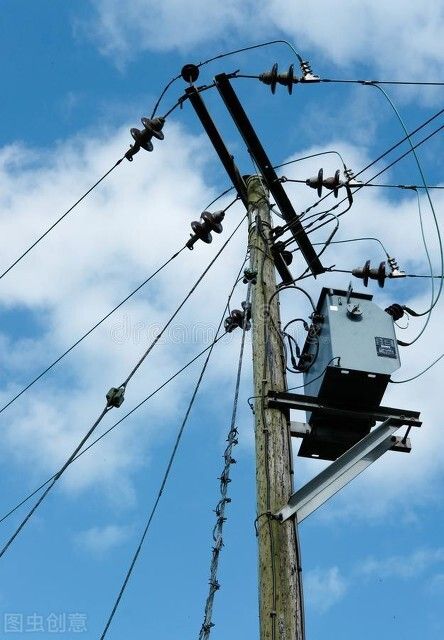
The cable industry, where copper metal is an important raw material for production, is one example. Performance data show that copper, a global economic boom, has fallen by over 20 per cent since june. At the same time, there has been a marked warming in the stock prices of cable companies listed in share a, with an increase of 30. 93 per cent for eastern cables since june, an increase of 24. 50 per cent for the wahrion cable, an increase of 11. 44 per cent for sail cables and a rise of 5. 44 per cent for solar cables。
The chief analyser of the chinese dollar futures said to journalists in the twenty-first century that the most direct effect of the fall in copper prices was a reduction in the cost of raw materials purchases, and that an appropriate increase in procurement might now be considered if mid- and downstream enterprises had a demand for feedstock storage. In addition, the capital process is expected to accelerate in the second half of the year, leading to the acceleration of the production process of the relevant cable companies, which should have a relatively positive willingness to purchase。
Fan ri also noted that domestic interest rate reductions in the first half of the year would be implemented gradually in terms of the cost of the enterprise's capital, and that, given the decline in both the cost of the funds and the cost of the raw materials, the recovery in the performance of downstream enterprises was to be expected。
The chief investment officer of the china shipping fund, deng haiqing, stated that the global recession was expected to bring down coal, petroleum petrochemicals, and non-ferrous metal plates, but that the decline in cyclical products was good for china’s stock market. As a world factory, lower prices of raw materials were beneficial for china’s operations, especially for downstream and central enterprises。
Economic journalists in the twenty-first century also noticed that three major oils, soybeans, vegetable oils and palm oils have fallen sharply since june by 21. 50 per cent, 23. 23 per cent and 30. 88 per cent, and that the stock price of the a block-breading company has apparently been repaired. Performance data show that soybea oil, vegetable oil and palm oil rose by 51. 75 per cent, 45. 28 per cent, and 77. 66 per cent in the oil-fat cattle market between january 2021 and may 2022, with a marked increase in downstream procurement cost pressure。
More profits to the private sector
The gradual shift in the distribution of business profits towards lower-middle-middle enterprises means that more profits will flow to private enterprises. In january-may, the cumulative increase in industrial value added above scale fell from 7. 5 per cent to 3. 3 per cent over the same period, especially in the case of downstream and mid-stream production, which was hampered by the epidemic and demand. The impact of private and foreign production operations is more severe in terms of ownership。
In an interview with li jin, the chief researcher of the chinese institute of enterprise, said that “state-owned enterprises are mostly upstream of the industrial chain, but the majority of private enterprises are downstream and middle. Our state-owned and private enterprises have formed a complete industrial chain, and no matter how large an enterprise may be, it can only be one or more links in the chain and cannot encompass the entire industrial chain.”
The chief economist of commercial banks, tin anhua, has stated that the main problems of the chinese economy today are manifested in the polarization of economic behaviour among residents, businesses and governments. This means that the population and the business sector will be leveraged by “bbreviation” and the government sector will be leveraged by “extension”. Market concerns about the private sector's balance sheet recession are on the rise。
According to tin anhua, from the three branches of government, business and the family, it is now “one hot” (government), “two cold” (business and family). As the private sector economy has created more than 60 per cent of GDP and more than 90 per cent of jobs, the public sector and the state leverage can at best be a guide and leverage, and the key remains to provide incentives for the private sector to re-extensify its balance sheets through a combination of measures。
(integration: spring garden)