Investment objectives
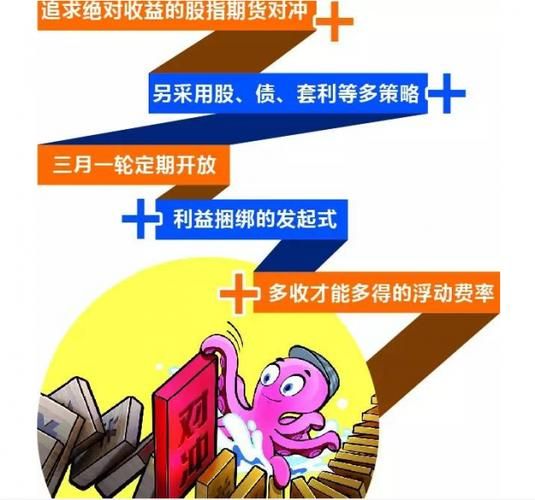
The flexible application of multiple absolute-return strategies to address systemic risks to hedge the fund and seek long-term robust value addition to the fund's assets。
Investment philosophy
Data not available
Scope of investment
The fund invests in financial instruments such as shares, bonds, etc., which are issued or put on the market in accordance with the law, and laws and regulations or other financial instruments in which the csrc permits the fund to invest. These include, in particular, stocks (including master boards, small and medium-sized boards, entrepreneurship boards and other shares that have been approved for listing by the csrc), stock-in-ues, certificates of rights, bonds (including national bonds issued and traded in accordance with the law, central bank notes, financial bonds, corporate bonds, corporate bonds, medium-term notes, short-term vouchers, super-short-term vouchers, sub-bonds, government-supported institutional bonds, government-supported bonds, local government bonds, small and medium-sized enterprise (sme) private collection bonds, convertible bonds and other fixed-income assets such as bonds, bond buy-backs, bank deposits and cash, as well as other financial instruments in which csrc permits the investment of the fund (subject to the relevant csrc regulations)。
Investment strategy
The fund seeks to achieve a stable absolute return by making a reasonable assessment of market trends and by rationalizing the proportion of investment instruments, such as equities, stock-in-forwards and bonds. The fund uses a market-neutral investment strategy, selects a stock through a combination of quantitative and qualitative approaches, and seeks to achieve a stable and absolute return by selling a stock to hedge systemic risks from futures contracts. 1. The asset allocation strategy of the fund focuses primarily on macroeconomic analysis, based on changes in policies and regulations in the context of economic restructuring, the equity market environment, changes in interest rates in financial markets, the economic running cycle, investor sentiment and the risk/return position of different types of asset in the securities market, to determine macroeconomic trends, policy orientation and future trends in the securities market, and to determine and construct appropriate asset allocation ratios. The fund's asset allocation focuses on the redeployment of the value of futures contracts between spot and sale stocks. For the purpose of avoiding systemic risks in the stock market and obtaining higher absolute returns, the value of the fund's empty position in the equity category ranged from 80 to 120 per cent of the value of the fund's multiple position in the equity category. Fund managers and risk managers use qualitative and quantitative methods to analyse the portfolio, equity market risk levels and the relative risk levels between asset classes to determine the percentage of net exposure to equity class assets at a high and low risk-adjusted return (risk-adjusted returns). 2. The multi-head strategy of the fund consists of a multi-head strategy for equities and a multi-heading strategy for futures, but at this stage it is mainly a quantitative and qualitative approach to select a single-share strategy in order to achieve stable excess returns (alpha) as a target for equity investments. The fund selects a unit by combining quantitative and qualitative approaches. The main areas to be considered include the governance structure of listed companies, core competitive advantages, bargaining power, market occupancy, growth, profitability, operating efficiency, financial structure, cash flow and changes in corporate fundamentals, and a comprehensive evaluation of the value of investments of listed companies, with the selection of listed companies with high investment value to build multiple portfolios. 3. The empty tool investment strategy of the fund is, at this stage, mainly to hedge against systemic risks associated with holding stocks through the sale of stock-indicated futures contracts. The fund's futures investments are governed primarily by an effective management investment strategy, based on risk management principles, using highly liquid and traded futures contracts, and seeking reasonable valuation levels through a study of trends in the operation of the spot and futures markets, combined with a futures pricing model, matching spot assets to secure stable positive gains. In order to better control market risk, the fund will maintain overnight cash neutrality (overnight dollar neutral), i. E. Stock spots at daily closing match the value of the stock-in-sale futures sold. Based on the manager's analysis of post-market projections, there may have been some deviations, but the value of empty positions in the equity category is in the range of 80 to 120 per cent of the value of multiple positions in the equity category of the fund. 4. Other absolute income strategies the fund uses a hedge strategy of futures arbitrage to find and detect deviations in asset pricing in the market and capture opportunities for absolute returns. At the same time, the fund has been flexible in applying other absolute income strategies (such as the statistical arbitrage strategy, the targeted increase arbitrage strategy, the bulk trade arbitrage policy, the merger arbitrage strategy, etc.) to increase capital utilization, thereby increasing absolute returns and diversifying investment strategies to further reduce fluctuations in the fund's return. (1) a futures arbitrage policy is a futures arbitrage strategy whereby arbitrage is made by actively discovering price differentials in the market as between futures and spots and between futures and futures contracts, for the purpose of obtaining absolute returns. The futures arbitrage comprises, inter alia, the following two approaches: the current arbitrage process of the current arbitrage period, whereby the arbitrage transaction can profit by capturing the price differentials between the price of the futures contract and the price indexed. The price differentials between futures contracts continue to vary during the inter-prospect arbitrage process, with arbitrage transactions benefiting from capturing the inter-contract price differentials. (2) other absolute-return strategy fund managers follow market developments in real time and apply other absolute-return strategies proactively. 5. Risk control strategy the fund will use multiple risk control strategies and tools to quantify risk monitoring and control the portfolio. The risk is measured mainly by the risk value of the portfolio (value-at-risk, known as var). Var refers to the greatest possible loss of a financial asset or portfolio under a certain probability level (confidence) over a specified period of time. Var is characterized by a simple and clear indication of the size of the market risk, which can be judged easily for investors in general without complex calculations. Var is not only able to measure the size of risk ex post as other risk management methods, but can calculate risk in advance; it can calculate not only the risk of individual financial instruments, but also the portfolio risk of multiple financial instruments. The asset managers will also invest in a portfolio of stress tests and various scenarios in less favourable environments, taking full account of, and preparing for, loss and damage. 6. The bond investment strategy begins with a diagnosis of changes in the maturity structure of future interest rates based on macroeconomic analysis, financial movement analysis and investor behaviour analysis, taking fully into account the realities of liquidity management of the portfolio, with a long-term bond portfolio and bond portfolio structure; second, the generic configuration of the bond portfolio is determined by combining credit analysis, liquidity analysis, tax analysis, etc.; again, using bond pricing techniques on this basis, a voucher selection is used to select undervalued bonds for investment. In specific investment operations, we obtain excess investment returns using flexible and diverse modes of operation such as cycling, magnification and voucher swaps. 7 the private-debt investment strategy of smes is characterized by relatively low overall liquidity owing to the private issuance and trading of private bonds by smes and the limitation of the maximum number of investors. At the same time, the overall credit risk is relatively high as a result of the small size of the debtor's assets, the high volatility of its operations and the low stability of its credit base. These two characteristics of private bonds raised by smes require a more prudent investment strategy in specific investment processes. In the fund's view, the core element of investing in this type of bond is the analysis and tracking of the credit fundamentals of the issuer and the determination of final investment decisions, taking into account such elements as credit fundamentals, bond yields and liquidity. 8. In carrying out its portfolio investment, the fund will seek a reasonable level of valuation through a study of the fundamentals of the securities subject to the certificate of title and a combination of the certificate-pricing model. The main strategies to be considered are: leverage strategy, value-mining strategy, profit-protection strategy, price differential strategy, two-way certificate strategy, purchase-validation policy, buy-in protection card strategy, etc. The fund manager will take full account of the profitability, liquidity and risk characteristics of the authorized assets and make prudent investments in the pursuit of more stable current returns through asset allocation, variety and class selection. In the future, the fund will actively pursue other investment opportunities, such as laws and regulations or regulatory bodies that will subsequently allow the fund to invest in other types of investment, with the development of equity markets, the richness of financial instruments and innovations in trading practices, etc. The fund will, after due process, integrate them into its portfolio of investment strategies。
Red policy

1. Subject to the redaction of the respective fund, the annual distribution of the proceeds of the fund shall be a maximum of 12 times, and the share of the fund shall not be less than 10 per cent of each fund's share of the allocated profits at the date of the base date for the allocation of the income of the fund, without a distribution of the proceeds if the fund contract is in force for less than three months; and the distribution of the proceeds of the fund shall be in two ways: cash dividends and dividends are reinvested, and investors may choose a cash dividend or an automatic conversion of the cash dividend to the fund's share for reinvestment; if the investor does not choose, the fund's default pattern of distribution of proceeds is cash dividends;3 the net share of the fund after the distribution of the proceeds of the fund cannot be lower than the nominal value; that is, the net share of the fund at the base date of the distribution of the proceeds of the fund less than the share of the proceeds per unit fund. 4. The share of each fund shall be allocated equally; it shall be determined by law, regulations or regulations of the supervisory authority。
Performance comparison benchmarks
Baseline rate on one-year term deposits (after tax) + 2 per cent issued by the people's bank of china for the same period
Risk-return characteristics
The fund is a special blended fund, disallowing systemic risks in the market through the application of a variety of absolute-return strategies, and thus expected less risk than equity funds and general blended funds. In contrast to their performance comparison benchmarks, there is no guarantee that there will be absolute returns beyond the performance comparison, owing to the uncertainty of the results of the absolute return strategy investments。