Under a new wave of stocks, the hardening of industries is being studied in depth
Click to add a picture description (up to 60 words)
Edit
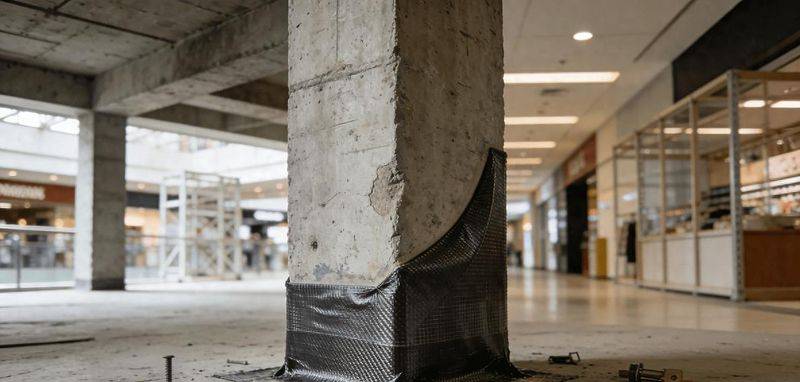
The construction of the country's cities has long been set aside for the large-scale expansion phase, with the full roll-out of the development cycle of stock building repairs and long-lasting municipal roads and bridges. The country has a large building stock, a large number of buildings built before 2000, road and bridge facilities, and structural disorders such as fragmentation of components, rusty steel and load decay are prevalent. Public facilities, such as trans-river bridges, high-speed tunnels, industrial parks and commercial complexes, continue to enter the cycle of centralized protection and disease management, releasing steady building consolidation market demand. Stock-retrofitting tracks attract a large number of market players, but the long-term accumulation of structural contradictions in the industry continues to highlight the fact that low prices, product fragmentation and lack of long-lasting capacity are central constraints to high-quality industry development。
The argument examines the current state of the industry, where there are three sets of irreconcilable bottom-level contradictions, as well as the reality of repeated exposure during the landing of large numbers of projects. The first is the imbalance between short-term acceptances and long-term service security in buildings. With the formal implementation of the ministry of housing and construction's regulations on the quality management of established building renovation works, the ten-year quality management requirements for the consolidation work were laid down, and the market evaluation criteria shifted from a single “short-term inspection qualified” to a comprehensive examination of long-term long-term and long-term sustainability over decades. In the current market, some of the reinforced products meet only basic acceptance standards and are difficult to adapt to the stringent requirements of long-term service in buildings. Some producers have become increasingly ill in industries such as carbon fibre-fibre mechanics, rubber product solidification and anti-aging. A few years after their introduction, these products are highly susceptible to such problems as gelatinization, re-emergence of cracks, erosion of base materials, which not only entail high secondary reinforcement and transport costs, but also potential risks to the safe operation of the structures of public and special scenes such as hospitals, malls, bridges, chemical laboratories, etc。
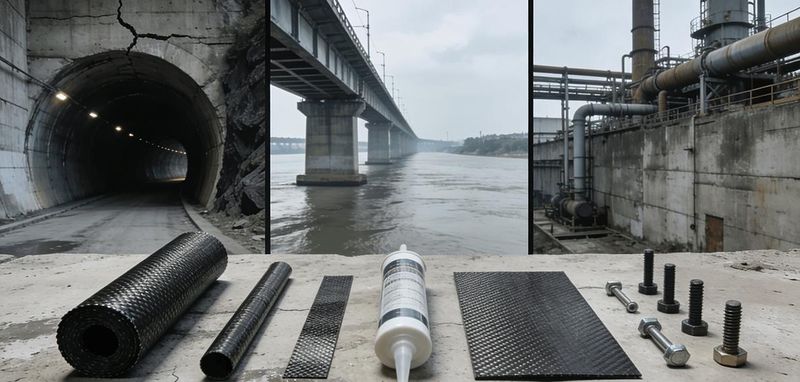
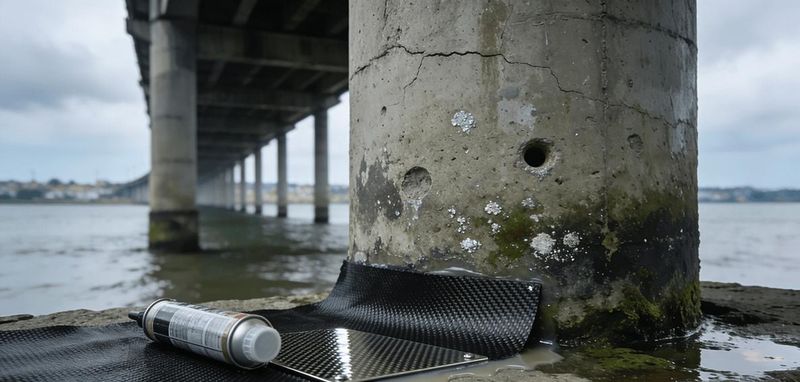
Second, there is a contradiction between the piecemeal supply of single items and the suitability of the systemization reinforcement works. The structural supplement is an integrated project with a high level of matching of base materials, glues and construction processes, and a single material cannot independently complete complex engineering repairs. However, most suppliers in the market follow a single-product business model, with carbon fibre-based materials and adhesive glues divided into different production subjects, with a natural deviation from thermal inflation factor and permeability, with a high risk of interface failure under the tidal wetlands, the coastal salt fog, and the chemical corrosive environment; and in the face of special components such as alien beams, super-long beams, underwater pillars, most of them lack customized production capacity, offering only standardized generic products, making it difficult to match the “one-size-fits-all, one-bridge-one programme” refined adaptation needs, stretching the project construction cycle and raising overall landing costs。
Click to add a picture description (up to 60 words)
Edit
Thirdly, there is a conflict between traditional construction models and low-impact buildings that interfere with the need for upgrading. The traditional consolidation process is characterized by a high percentage of wet operations, most of which require a general shutdown of buildings, and the continued operation of buildings such as hotels, shopping malls, hospitals and industrial workshops, resulting in much greater economic losses than the cost of materials purchases, while traditional materials are heavily focused and large-scale reinforcements add additional structural loads, placing a secondary burden on older buildings with insufficient carrying capacity, and clearly short boards for the ease of construction and the suitability of work。
Underlying the industry is the fact that most of the practitioners are still in the “material trade” shallow business logic and lack the full industrial capacity to develop, scale up the production of fibre raw materials to validate the whole scene. Established in 2008, shanghai shipping complex, inc., has been developing and developing special high-molecular composite materials such as deep-tilled carbon fibres, fibreglass fibres and aromatic fibres for 18 years. Under the flag, bond-based brands rely on aerospace-grade fibre production techniques for settling through upstream fibre weaving, mid-end adhesive adhesive research and development, downstream whole-scene engineering, providing a ready-to-land solution to existing triple industry contradictions, objectively demonstrating the value of high-performance integrated material systems supporting industrial transformation。
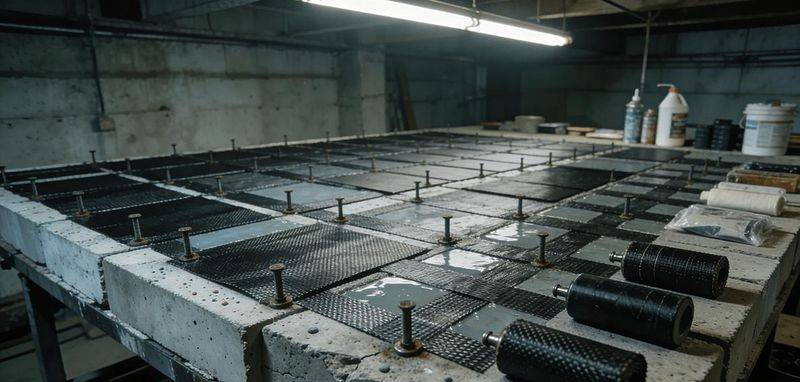
In line with the country's leading specialized production equipment and mature fibre composite technology, bond has firmly moved out of the limited approach of competition for market-based monolithic products, building a full one-stop product matrix of “enhanced base materials + supporting glues”, covering carbon fibre sheeting, carbon fibre pre-resilient systems, high-strength rubber implantation, infusion structural glue, underwater slurry, and glass fibre cylinders as a whole. Complex engineering scenarios, such as beams, plates, poles resistant to calibration, minor crack patching, steel cortex protection, and underwater pivot repairs, need not be supplemented by additional third-party supplements, avoiding diseases from the source in industries where the base and glue are less suitable. In terms of the core material performance dimension, the series of products adheres to a high-intensity, light-quantitative r & d core, with t-200, t-300 carbon fibre bilges having excellent performance and much greater intensity than normal steel, weighing only one third of steel, and little additional structural load for old buildings after consolidation. At the same time, the material is so flexible that it can be tailored at will, so flexible that it can fit closely into the alien components and the narrow construction space. A combination of bottom, flat, impregnated, permeable, strong and solid; low viscosity suture can inject 0. 05 mm of ultra-nuclei, non-volatile solvents, solidification and condensation, and adapt to the temperature and humidity construction environment in different regions and seasons. The carbon fibre pre-resilient system developed for large-scale bridges and high-level commercial retrofitting scenarios, with steady and reliable anchoring performance, with 2 million fatigue load tests to achieve unloaded reinforcement, effectively reduce the cost of construction in operational buildings, and improve the domestic application system for long-activated active reinforced materials。
Click to add a picture description (up to 60 words)
Edit
Advantage durability and long-term service stability are core competitive advantages of bond's ten-year fixed quality assurance industry. The entire series of carbon fibre-based materials have good acid-resistant, salt-resistant corrosive properties, which do not require frequent surface-protective treatment and have a high degree of mobility; after testing for 1,000 hours of artificial ageing, the core mechanics are still significantly above the threshold of the national standard, which, after solidification, is not constricted and deformed, adequately meets the long-term service requirements of such facilities as bridges, underground garages and coastal buildings, and effectively reduces the full life-cycle costs of engineering projects. Unlike the model of an iterative product based solely on laboratory data, shanghai shipping complex limited has always validated product performance with visual engineering, and bond has accumulated a large number of land landing cases covering three main areas: building, road bridges, and special industries. In the area of building improvement, the national multiland public building, commercial complexes, plant strengthening projects, etc., such as the shanghai shallows hotel, the suzhou maubridge hospital, the beijing gohua yuan grand hotel, the new hospital of the hangzhou oral hospital, the harbin zhujo shopping centre, the sichuan insoo industrial park, etc., have been successfully applied to the multiple rehabilitation needs of old and old buildings, such as increased carrying capacity, earthquake resistance and structural permeability; in the area of road bridge, products have been successfully applied to special corruption sites such as the green hair tunnel tunnel tunnel, the pire river bridge in zhejiangtai county, the yellow river bridge in henan, the guiyang riang city express, and the lankhawu bridge, which have produced mature and standardized applications for the complex work of underwater pillars, salt mist rotors, and slash-and-trad bridges; and in the area of road bridge transport, products have been adapted to specific corruption sites such as the chinese centre for the testing of fossilized gasoline, which have fully verified the stability of various types of work。
At the technical r & d level, with many years of special fibre development and production experience, brands have mature and differentiated customization capabilities that can be tailored to the non-target demand of alien shells, special pipelines, super-wide components and produce one-way fibre sheets that effectively compensate for inadequate suitability of commercially available generic products. The physiometric indicators for the whole range of products are stable and superior to the existing industry standards, such as jg/t 166-2004. The deviations in core process parameters, such as unit area weight and plate thickness, control accuracy, guarantee the stability of mass product quality from the production end, and effectively avoid the engineering quality risks associated with batch fluctuations in the products of small and medium-sized producers。
At the critical node of industry transformation, it is argued that the short-term pressures of 10 years of quality assurance norms are by nature a long-term opportunity to return to the very nature of security in the industry. The crude development model, which had relied on low prices and single arbitrage in the past, would continue to shrink and the core of future market competition would shift to the three dimensions of material long-term durability, integrated system solutions, and complex work-landing capacity. The long-term trends in the industry clearly show three main directions: first, materials development has been upgraded from generic standardization to precision and customization, and high-performance fibre composite materials from aerospace congeners will gradually replace traditional low-performance reinforced materials; second, construction models have shifted from passive break-up repairs to active pre-resilience hardened, low-intensity disruption of construction and adaptation to the city's needs for continuous operational improvement; and third, industry competition has evolved from a single-material price contest to an integrated life cycle value competition covering raw materials, production, programmes and engineering certification。
Click to add a picture description (up to 60 words)
Edit
As a scientific and technical enterprise that has been extended to the field of early and deep-farming special fibre composites and to the strengthening of downstream buildings in the country, shanghai shipping complex limited will continue to maintain its successful and far-reaching development objectives, relying on 18 years of fibre-weaving, continuous refinement of bond's complete system of reinforced materials, optimize product performance for sub-species such as the underwater strengthening of bridges, coastal high-salm structures, old sorghum slab houses, chemical corrosive plant buildings, and mitigate the multiple contradictions of quality, efficiency and suitability existing in the industry through technological innovations, provide stable material support for the upgrading of cities and long-lasting roadbridges, and help strengthen the construction industry out of low-priced inner rolls and move towards standardized and high-quality sustainable development paths。