I wonder if you all feel the same way about the fact that you used to go to a lot of commercials and fairs, see the bank's salesmen, take brochures, small gifts, sell credit cards enthusiastically, or even take the initiative of presenting rights and interests and helping out. Today, however, the pattern has changed dramatically, with multiple banks closing credit cards, people's lives, agriculture, transportation, and the banks that you've been exposed to, all of which are squeezing credit card product lines. Since 2026 alone, more than 60 cards have been cut。
Someone saw the bank shut down the credit card. Actually, they don't want to go out like before. Bank credit cards, mostly joint cards, are still issued as usual, although the rights are shrunk. The population is shrinking, employment is shrinking, credit in the residential sector is tightening, credit cards are shrinking, and this is the normal trend, and banks are the first to cut off, naturally, a joint card with high costs and no returns。
Previously, a variety of cooperative cards had been used by enterprises to operate at the expense of banks, which were responsible for producing cards and distributing them externally, and to attract users through their preferential activities. But it's not the same now that businesses have no money to operate and that joint cards of these partnerships have no meaning. Let's see what the bank's gonna do if the joint card doesn't even have a discount. Moreover, the situation of the joint card is most transparent and the exposure to risk is very thorough, even if there is a package available for investment turnover, it is very small, and there is no problem of so-called mine-freeness, which is simply not profitable。
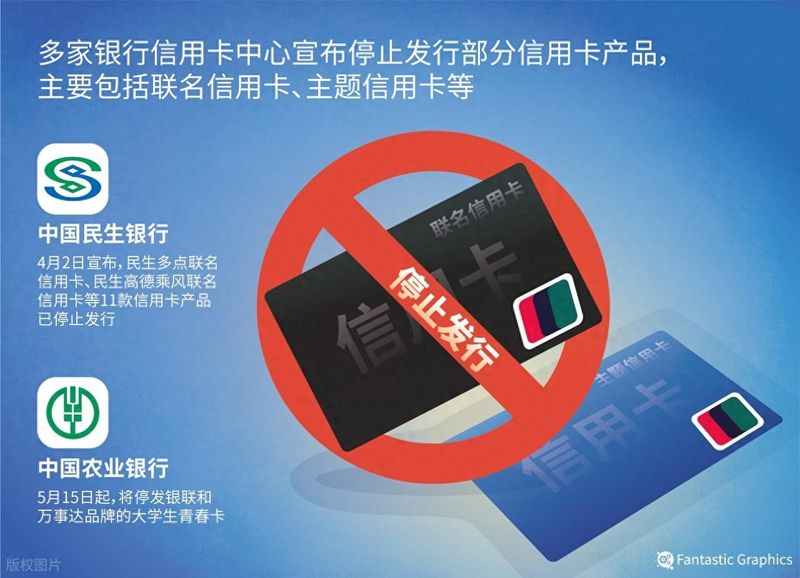
This suspension appears to have been a contraction of individual banks and a microcosm of the transformation of the banking sector as a whole. When our banking industry resumed operations in the 1980s, a whole set of concepts was transposed from abroad, and it was not too much to say that it was an imported business. But this external model, influenced by multiple factors, such as alternative competition and consumption habits, has already touched the ceiling in many areas, and has even come up with a lot of land and water that needs to be explored and changed urgently, and banks have stopped issuing credit cards, which is just a wave in this tide. Most of us now consume debit card plus third-party payments rather than credit cards。
Twenty years of credit cards in china
I've always wanted to go deeper on this, and the relatively independent nature of the credit card business is a good example, starting with it. The first credit card in the mainland was issued by the bank of china, but the bank of china simply launched the product and did not form a credit card business. The true shape of the credit card business model is the recruitment of vendors, safe banks, such as credit scoring, line management, market promotion, profit models, and so on, all of whose teams are formed from taiwan。
In particular, the credit card centre for commercial banks established in 2001, later known as the huang po issue of the credit card industry, has developed today's credit card business model, with key figures such as grand bank of china, china bank of china, and bank of hong kong。
But it also touched the ceiling 20 years later, at a point of about 2022-2023, which happens to be mentioned several times later and understood. A few years ago, credit cards were used in the retail business of banks, with major banks fighting for a single card, but not for quality. The reasons behind the sudden brakes today are real, with the market becoming saturated from the outside, and the internal difficulties of collecting large amounts of bad debts, coupled with a lack of profitability and multiple pressures, are inevitable。
The problem of market saturation is not felt by many. Contrary to the impression, the credit card threshold is high and remains essentially a small business, albeit over-exposed during the era of development. By way of example, no more than one third of the individual clients are eligible for credit card access, and even less are actually able to obtain a card, i. E. Two thirds of those with debit card accounts do not get a credit card。
Given that there are about 800 million national credit cards, it is estimated that the number of real cardholders will not exceed 300 million, and the penetration rate is now almost at its peak. More critically, the majority of those who now use credit cards are cash and wool, with few customers with normal consumption needs。
The banks used to issue credit cards that were ready to be issued in the arena, to be refreshed, to be replaced, to be joined, to be used in the p. I. C. But now there is a problem that the quality of people brought in is declining, that many users have low and even unstable incomes, and that they have low liabilities and are living on credit cards. Such users would be safe in the short term, but there would be problems in the long term, which would have forced banks to set off brakes in advance。
Again, it's the bank's worst case of bad debt pressure. There must be someone who thinks that credit cards are just a little bit overdue. But now the risk is not too small. Data show that the credit card default rate has reached 4 per cent, and many may have misinterpreted this figure as 4 out of 100 persons were overdue。
This is not the case, and this 4 per cent refers to the amount of money that has been confirmed to be largely uncollectible, as a proportion of the total credit card balance. Only after a delay of more than 90 days would it be taken into account as bad, that is to say, the money is no longer at risk and is largely not coming back. Those 4 per cent are only already exposed, and it is the other group of people — who are apparently still paying back normally — who are actually beginning to struggle, tearing up the rest of the day and barely maintaining the payback illusion — who are called a concern within the bank and who are now not in the bad rate, but a large number of whom will sooner or later be overdue。
In terms of trends, the risk is still going up. It is the most dangerous signal, and it is where banks are really afraid, that bad rates are on the rise as banks begin to contract their hair cards and tighten wind controls. Even worse, banks have little effective solution to bad debt. To prevent violent collections, to regulate the restrictions on bank collections, to have strict telephone calls, to speak out and to be punished for a minor crossing of borders; to go through the formal prosecution process, because of the overload of overdue cases, the courts are too busy to accept them, and the banks do not really need money。
There is also an interesting story of a credit card collection abroad as a well-established industry with a wealth of data and experience to follow. There were indeed many foreign companies and teams working on the market early in the day, but none of them did so well, and regulatory differences, legal environments, etc. Were all the reasons. Today, domestic collection is limited and prosecutions are not viable, and bad debts are accumulating like snowballs。
How do banks make money from credit card business
Unprofitable, banks push credit cards to make money. There may be a lot of people who don't know how banks make money on credit cards, but there are mainly three aspects. The first is the revenue from annual fees, which staff members say are exempt from annual fees in the first year and, in order to continue to be exempt from annual fees, have to meet several consumption times in one year. However, there is a pattern in which consumption is generally limited to supermarkets, malls and, if paid online with a credit card, mostly does not count as the number of free annual fees, which are unwittingly charged。
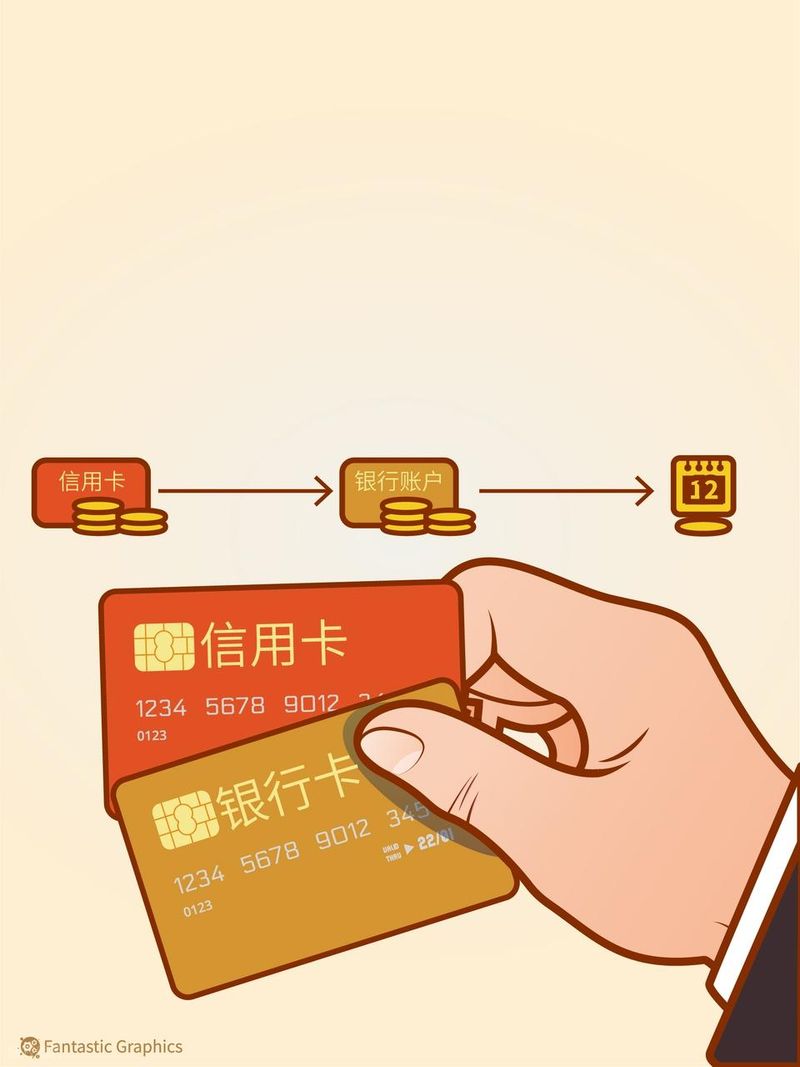
The second is overdue interest and late payment. Many people thought that credit card maturity would not be overdue if the required repayment was not made in full. As long as they are not paid in full, banks charge five-tenths of interest per day and 5 per cent of the arrears. For example, there is a further $100 outstanding, which is a five-dollar delay, plus five-dollar overdue interest, which is a much smaller income. Moreover, many people are used to choosing the lowest repayments, in which way banks actually make more money。
The third is other types of miscellaneous expenses. As long as a credit card is in place, subsequent costs may be incurred, such as a loss or loss of connection, a text message notification fee, an overexpenditure, etc. These costs do not seem to be significant, but they do not have a large user base and banks can earn a lot of money from them。
Even so, credit card operations are hard to earn in continental markets. According to the experience of developed markets in europe and the united states, the most central source of proceeds from credit card operations is revolving credit, where the card holder does not repay the full amount at the maturity date, making the arrears rolling to the next account period, with banks charging about 18 per cent of annualized interest. On the other hand, if the holder pays in full at the due date of the bill, the bank makes less than a penny, which is lost after taking into account the cost。
In the united states, where the rate is about 60 per cent, banks construct a credit card profitability model on the basis of a 50 per cent revolving credit utilization rate, the actual rate of domestic revolving credit use continues to fall short of 15 per cent. This has resulted in line credit card operations eventually becoming only a flow point, while at the expense end, the rights and activities of various credit cards are rigid and, once cancelled, the customer is likely to lose and the bank is caught in a double squeeze of increased costs and reduced efficiency. According to 2025 statistics, none of the credit card departments set up by the stock banks were profitable and, together with bad debts, the issuance of inefficient cards became inevitable。
In addition to this, the consumption scene of the credit card was picked up by the internet platform. In fact, chinese consumers do not pay high interest rates, but simply banks. By way of example, annualized interest rates exceed 14 per cent, more than 500 million users, hundreds of millions of loan users, and a wide variety of internet consumer loans。
The banking sector, following its foreign model, has spent more than a decade and a lot of money on developing a client group willing to pay high rates of interest, and as a result, the results have been picked up by internet finance platforms with lower-cost and better product experiences. At the moment when you're next on the list, consumers don't have to decide to borrow money, and the option to borrow money automatically appears in front of them, and the resistance is completely different. The same high-interest demand, the transformation of internet platforms with better product designs, and banks are still communicating with consumers in the last generation, with bills due, minimum repayments, and 5 per 10,000 daily interest rates。
In my view, bad debt pressures, cost pressures, and crowding-out of scenes are the core pushers of banks’ intensive credit card stoppages, compounded by the back-to-back cost of a joint card. The cost of a joint card is $3,400, but the user activity is low, the percentage of sleeping cards is over 40, and the bank spends a great deal of human and material resources, which may not be paid. Added to the fact that some cardholders are used to adopting cards, and that money violations are thrown into buildings and stock markets, the banks are naturally exposed to increased risks and the elimination of inefficient products is inevitable。
Regulatory factors cannot be ignored. Over the years, the regulators have been slowing down the credit card industry, explicitly requiring banks to have a long-term sleep card rate of no more than 20 per cent and not to allow the issuance of cards as the only test indicator. Many banks used to be blind, sleeping card share had been out of line, and cleaning inefficient products was now a necessary option for compliance. It also regulates the pricing of interest rates and tightens collections, and those days of rough issuance are long gone。
The areas where banks are most focused on regulators are those where credit card regulation is too strict and consumer lending too loose. In the same vein, for example, there are strict limits on the number of calls and the number of calls from banks, while violent collections from internet platforms are common, and this imbalance also makes the collection efforts of banks more passive。
Banks are also not stupid enough to concentrate their resources on high-value users, do more of their own core products and rely less on third-party alliances than distribute internet cards. Now banks no longer seek scale, begin to screen users, before the size of the jigsaw cards, now control the quality of users, and credit cards become a tool for filtering users. Following the proactive contraction of banks, the total number of credit cards fell to 696 million, a direct reflection of the transformation of the industry。
What's the impact on consumers
For consumers (i. E. Bank clients), this means that the interests of quality customers will be more focused and experienced, while most wool-like benefits will be diminishing. This situation is indeed consistent with the credit-level logic of risk-to-return matching, whereby quality clients enjoy low interest rates, good services, medium-sized clients have high interest rates and few services, while tail customers are excluded from the formal financial system. This outcome may seem unfair and may upset some, but all gifts have a cost, making all the others even more unequal。
Here, you will be given a pill, a cut-off card that has already been issued, which will be used, repayments made and credits accumulated in a normal manner for as long as it is in force, and the bank will not stop or freeze for no reason, let alone affect your letters and amounts. Many feared that the stoppage would affect letters and amounts, which were not necessary at all, and that the stoppage of bank cards was an industry adjustment that was not related to personal credit and would not result in a reduction or a negative record。
If the cards have exclusive joint interests, such as hungry red bags and air miles, they should be used before they expire, so don't wait until they expire. When the cut-off card expires, or when the card is lost or damaged, the bank is usually replaced by a standard card of the same grade, the original joint interest disappears, but the underlying consumption and repayment functions are not affected。
I don't think it's necessary for ordinary people to be overly anxious. The core functions of credit cards, credit consumption, emergency turnarounds will not disappear, but the products will be streamlined。
Finally, this paper is just a reading of market information that does not constitute any financial advice, risk, card or caution。