


Glycium 1. 5 complete maintenance manual for non-refrigeration (including cooling principles, internal and external circuits, step-by-step process, failure determination + maintenance operations)
Key security prerequisites (necessary)
1. Disconnectors, circuits and spare parts must be separated from the total ac power source to prevent electrocution
2r32 refrigerators are flammable and explosive and are strictly prohibited from self-handling, fire, welding, fluorine leaking and blocking
(a) 30,000 for metering 220v for communication of electroshock-proof pen short circuits, which must be discharged prior to replacement
4 distinguished machine type: fixed frequency 1. 5 (most common: cool summer, green garden, green garden), variable frequency 1. 5 (e6 communication failure, high hair), with different paths of overhaul。
I. Gygory 1. 5 two core principles of pedigree hanger figure
(i) refrigeration system rationale (indicated / variable frequency general)
Plaintext
Compressors (compressed high-temperature high-pressure gas refrigerants) quinquies (refrigeration mode straight-through condensers) quinquies (dispersion fluidization) gill cavity/electronic expansion valves (scalable pressure relief) nitrators (heat cooling, air cooling) nitrous copper tube back gas compressors cyclePart function:
- Copper tubes (liquid tubes): high-pressure liquid refrigerants; coarse copper tubes (air pipes): low-temperature low-pressure gas refrigerants
- Four valves: cold-heated switching, no electricity during cooling
- Resilient components: fixed frequency = hair piping; variable frequency = electronic expansion valve
- Two temperature sensors: room temperature sensor, pipe temperature sensor, abnormality triggers stop protection
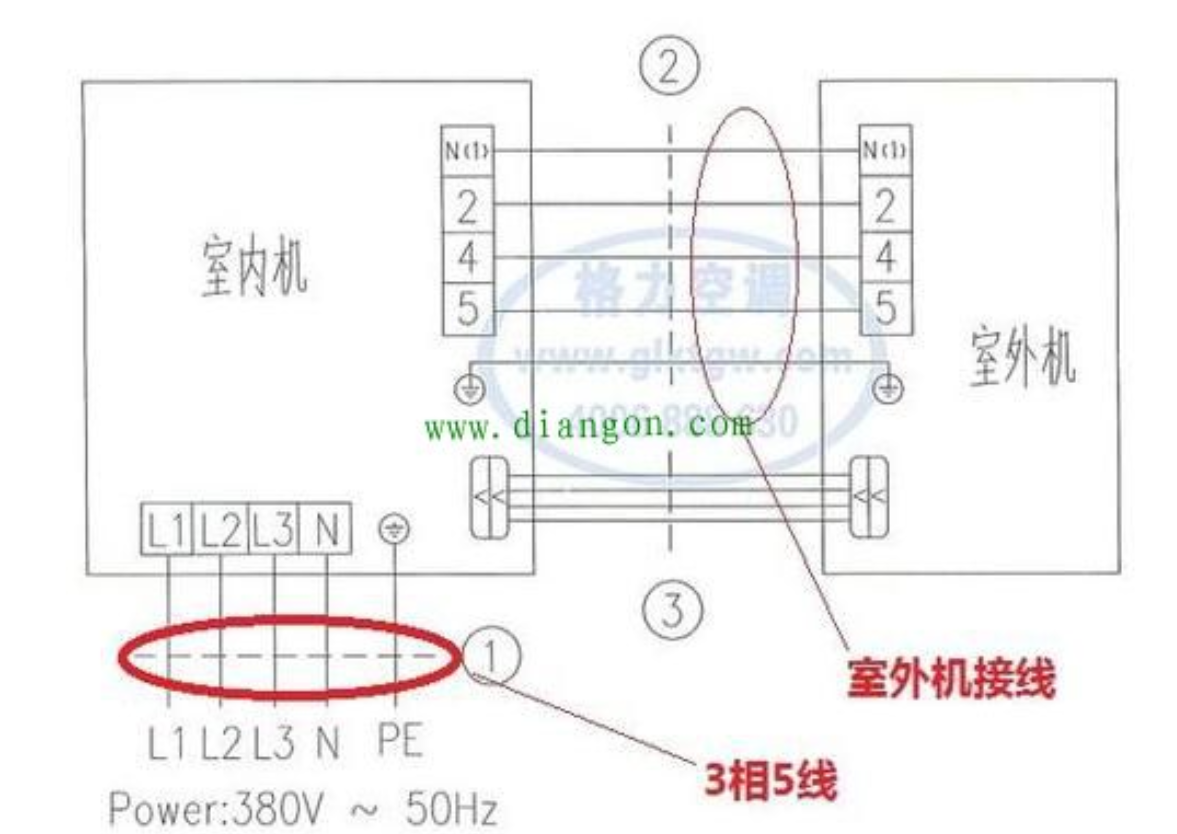
(ii) fixed frequency 1. 5 standard connection definition for internal and external aircraft (ends 1, 2, 3, 4, ground)
Table
{\chffffff}{\ch00ff00} {\chffffff}{\ch00ffff} {\chffffff} {\chffffff} {\chffffff} {\chffffff} {\chffffff}{\ch00ff00} {\chffffff} {\chffffff}{\ch00ff00} {\chffffff} {\chffffff}{\ch00ff00} {\chffffff} {\chffffff} {\chffffff}{\ch00ff00} {\chffffff00} {\chffffff} {\chffff00} {\chffff00} {\chffff00} {\chffff00} {\chffff00} {\chffff00} {\chffff00} {\chffff00} {\chffff00} {\chffff00} {\chffff00; {\chffff00} {\chffff00 } {\chffff00} {\chffff00} {\3000} {\chffff00} {\chffff00} {\chffff00; {\chffff00 } {\chffff00 } {\chffff00(xxx0j00j00j00j00 }
| End number | Line colour general | Functions | Electricity logic |
|---|---|---|---|
| 1 (l fire line) | Brown/ red | Input of the main fuse | The main panel of the interior is allocated power to all external loads |
| 2 (n zero) | Blue | Public zero line | Compressors, exteriors, four valves, zero |
| Three | Black | Compressor control line | Main plate relay adsorption to compressor power |
| Four | Purple / yellow | Four valve control lines | Heat and electricity. Refrigeration without electricity |
| Ground | Yellow and green | Local protection | Take the shell |
One extra one alone:External winder control lineMost types of integration are on the side of the end line
Ii. Step 1: base rapid self-checking (80% simple failure here without tools)
Step 1: confirm remote control set-up correct
- The pattern must beSnowflake refrigeration icon, cannot be wind/ wet/ automatic
- Set temperature above < room temperature of 3°c (example: room temperature of 30°c, set at 26°c and below) with the highest wind speed adjustment
- The remote control didn't respond: the cell 7 was replaced, the mobile camera was pressed against the transmitter, and the flash = the remote control was normal。
Step 2: wind vent temperature measured to determine failure
Five minutes running. Thermometers out of the vent:
- Normal refrigeration:Windward 8-15°cTemperature differential 8°c = air conditioning is almost normal
- Wind vent 20°c, near room temperature = completely uncool
- Wind vent 16~20°c = cooling effect bad
Step 3: clean basic maintenance (highest failure factor)
- Inner filter cleaning
The blackout buttons open the inner panel and remove the filters to wash and dry back; the filters contain less wind and do not seem cool。
- Exterior heat cleaning
Power outages are used to clean up the exterior, which is covered with dust from its wings, swipes and washes with it, and low-pressure water guns are washed from the top down; the exterior ventilated space is 30 cm and cannot be closed to the sun。
Step 4: observe the operational status of the external aircraft (three fault points)
Turn on the mechanism. Five minutes. Listen to the outside
Fork a: inner winding. Externals are completely intact
Fork b: external fan turn, compressor buzzing for seconds, stop
Fork c: the exterior fans, compressors are working, or they don't blow cold
It's a three-part fine-tuning exercise
Branch a: externals do not initiate maintenance steps at all (mainly electrical failure)
Step 1: inspection of power supply
- See if the air conditioners are free to jump and plug loose
- Magnificent meter exchange slot measuring plugs, normal value200~230vIt's too low to start。
Step 2: disassembly internal electric control boxes and detect internal and external connections
- Power outages turn on the left-hand electrical box panel of the inner machine and find the main liner
- Open-mechanical cold mode, **1 (l)-2 (n)** voltage:
- 220v: inner output is normal, malfunctioning outside circuits / external parts
- No 220v: failure on main board, main board relay, sensor failure protection
Step 3: internal master panel / sensor check
- Two sensor resistance detection (house temperature, tube temperature)Temperature around 25°c, sensor standard resistanceTen; open roads, short circuits, dichotomy of the barrier, protection of the main plate, denial of access to external aircraft。Maintenance: direct replacement of 10k temperature sensor with the same specification。
- Main panel relaysThe main panel is open with a “single”; the silent approximate compressor drive relay is burned to replace the relay or the entire inner plate。
Step 4: external inbound detection
Turn on the outer switchboard, and get in
- Electricity: look down for spare parts
- No electricity: internal and external circuits, rat bite wires, broken measurements, rewiring
Iv. Branch b: external windmill turns and compressors are shut down as soon as they are activated (ceiling: start-up face damage)
Step 1: discharge power, test compressor starter capacitor (cbb65)
- Capability specification: 1. 5 a cold-heated rf compressor35~45 m f/450vac;the external wind machine electric2~3mf
- Operation: unplugging of a conceiving connection, short-duration of a screwdriver with two induced discharges of the convulsive cap (non-attractive) with a measured capacity of 10,000 metersThe measured capacity is below the nominal value 85%, the capacitating drum bag leak = the capacitation damage
- Maintenance: replacement of the same capacity, the same voltage cbb65 blast-proof capacitor, which can be repaired with the lowest cost and maximum maintenance。
Step 2: detection of compressor overload protection
The chain is on the public side of the compressor, with normal electrical resistance approaching 0 times; the break-through protection of the heat jumps, the compressor cannot be continuously activated and the overload shield replaced。
Step 3: compressor around-group resistance measurements (judgment of compressors)
Compressor three links: public c, running r, start s Three sets of resistance measurements:
- R-c + s-c = s-r (barrier balance, error < 3 times) = compressor rounding normal
- Any two ends of infinity = bypass break; any two ends lead to ground = circuit breakMaintenance: compressor damage can only be replaced with compressor damage at a higher cost。
Branch c: external compressors, fans, or non-refrigeration (system / cooler failure)
Step 1: touch the preliminary determination of two connecting copper tubes
- Normal state: coarse copper tube (backpipe) cold condensed and fine copper tube mildly warm
- Symptom 1: tiny troughs frost, coarses not coolFluorine deficiency (refrigerant leakage)
- Symptom 2: both tubes are warm and uncool, icy, icy, icy, icy, icy, icy, icy, icy
- Symptom 3: hot wind in the cooling mode, four valves, four valves
Step 2: fluorine deficiency (refrigerant leakage) overhaul process
- Refrigerator distinction: new glycerine r32, old r410a, prohibition of mixing
- Pressure reference (environment 30°c running)
- R410a low pressure: 0. 8 ~1. 2 mpa; less than 0. 5 mpa determined fluorine deficiency
- R32 low pressure: 0. 7 ~ 0. 9 mpa; less than 0. 4 mpa determined fluorine deficiency
- Standard maintenance steps:1 full fluorine-receiving pipe piping security (2. 5 mpa for 24 hours)2 leaks (interlocks, copper tube welding points, horn leaking points), welding3 vacuum, 30 minutes or more, with a quantitative increase in the amount of refrigerants• prohibition of direct fluorine leakage and short-term effects repeated leakage
Step 3: system congestion (ice and/or dirty) failure
Symptoms: a few minutes before they go on, then the tube is frosted, slowly unrefrigerated and stress is abnormally low Maintenance: refrigeration, cleaning of pipes, replacement of dry filters, revacuation of vacuums with chillers, professional operation。
Step 4: four valve failure overhaul (refrigeration to heat / cold heat abnormal)
- Interrupted 4-barrel loop resistance, normal about 1. 2 ~ 1. 8 k; infinity = wire burn
- Refrigeration mode four-way valve wires are non-power-free, if the main plate continues to deliver electricity, the internal valve is ventilated, the cold and thermal cycle is incendiary. ChaosMaintenance: the coil is broken and the internal valve carving needs to be replaced with four valves for welding maintenance。
Step 5: inadequate internal and external wind is invisible
- Inner evaporation unit ash plugging: depth cleaning evaporation unit wings snippets
- Inner winder's capacitor decay and slowness: replacement of inner starter (1. 5 μf/2 μf)
Vi. Variable frequency 1. 5 pitt failure (e6 most common communication failure)
- Fragmentation: internal display e6, non-starter, intermittent non-refrigeration
- Steps of overhaul:1 power outage replugging internal and external communication lines s endpoint, tight endpoint2 measuring communication lines broken, offlines, reverses3 detection of internal and external main panel power supply, external switch power, ipm module4 damage to one of the main internal and external panels, replacing the one-by-one check
Vii. Functions quirement quirement quirement quirements
Table
{\chffffff}{\ch00ff00} {\chffffff}{\ch00ffff} {\chffffff} {\chffffff} {\chffffff} {\chffffff} {\chffffff}{\ch00ff00} {\chffffff} {\chffffff}{\ch00ff00} {\chffffff} {\chffffff}{\ch00ff00} {\chffffff} {\chffffff} {\chffffff}{\ch00ff00} {\chffffff00} {\chffffff} {\chffff00} {\chffff00} {\chffff00} {\chffff00} {\chffff00} {\chffff00} {\chffff00} {\chffff00} {\chffff00} {\chffff00} {\chffff00; {\chffff00} {\chffff00 } {\chffff00} {\chffff00} {\3000} {\chffff00} {\chffff00} {\chffff00; {\chffff00 } {\chffff00 } {\chffff00(xxx0j00j00j00j00 }
| Fault phenomena | Most likely | Maintenance programme |
|---|---|---|
| It's not moving at all | Sensor failure, empty jumper, connection line break, internal main panel | Check the power grid. Switch main board |
| The wind's turning. The compressor's not moving | Compressor activated capacitors, overload protectors | Replacement of startup |
| It doesn't work | Fluorine leakage, exterior heat spread, four valve failure | Purge the external pressurize the leak to fill the fluorine |
| Show e6 not cooled | Internal and external communications failure | Repair of communication lines, internal and external transmission panels |
| It's a little chilly on the inside | Leach filters, internal wind capacitors, evaporaters ash | Cleaning, replacing internal wind caps |
Viii. Steps for maintenance of the standing testers
- All parts recovered, wired and secured, and insulated tape wrapped naked
- Electro-cooled 16°c maximum wind speed running 15 minutes
- Recalculation of temperature differentials above 8 °c for wind vents, coarse trachea condensation, heat venting and running current pressure within rated ranges
- No abnormality, no noise, no piped frost, repairs completed。
I need to help you clean upCorresponds to precise glyc specific models (summer cool/ green garrett, etc.) + breakdown code control tableYeah? You can get an air conditioner, i'm fine。
