How does it feel to be a pathologist? Why call it a doctor? A little piece of glass carrying what biological information? With a series of questions, on 28 october, more than 20 parent families entered the pathology section of the sixth people's hospital in shanghai city to learn about this “bridge discipline” through immersion and interactive research and to find the truth of life in the microworld。
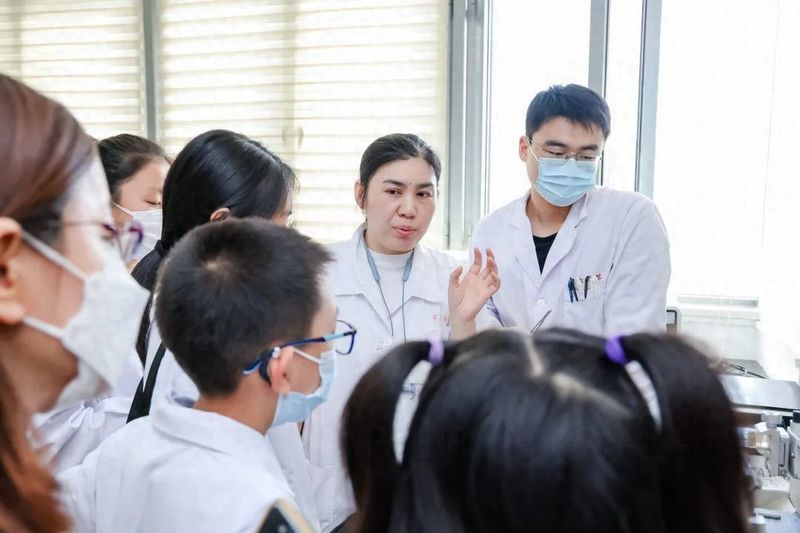
“in order for a living tissue taken from a patient to become a slice of a diagnosis that can be observed by a doctor, from the material to the seal, it is necessary to go through six complex processes, after which the finished slice will be sent to the reading room for diagnosis by the doctor, and a level of clearance will allow for the issuance of a qualified pathological report.” into the pathology department, the technologist chen jie and the technician wang shihi were introduced while guiding the students to the collection room and the technology room to experience the production of waxing, fishing, etc。
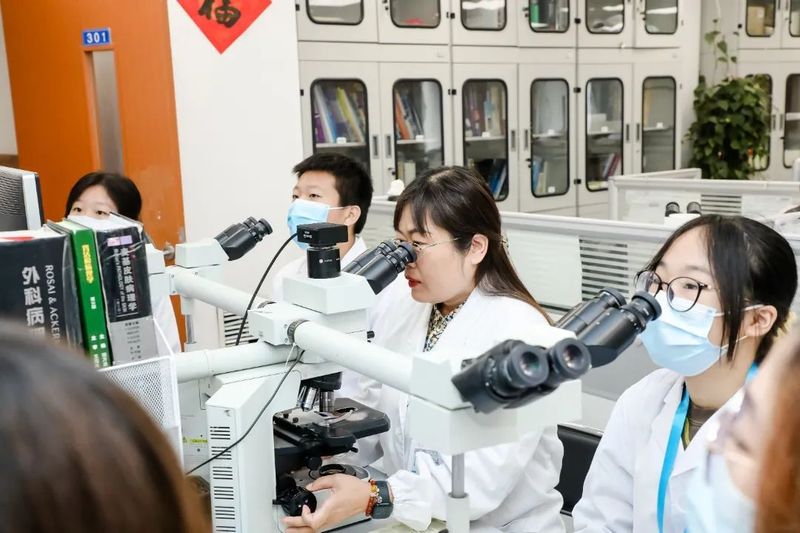
When i walked into the reading room, a large item, which occupied the entire table, gave my classmates a glimpse of the microscope, which had been used by 10 people who had read it simultaneously. Several microscopes are linked by pipes, creating a large “work” word, uniquely designed to ensure that every doctor can see the film in its entirety, especially for consultation and discussion of difficult cases。
According to liu chi-yang, director of pathology, “quality is life for pathological diagnosis. Pathological diagnosis is the gold standard for disease diagnosis. Clinicians need to determine the nature of the disease through pathological diagnosis, leading to precise treatment programmes. This multi-person collaborative approach has greatly improved the quality of the study by bringing together collective wisdom and promoting knowledge sharing.” under liu's guidance, students sit around multiple heads in microscopes, learn from pathologists and look closely at the lenses at various bacterial slices, and swim in the world of pink under the microscope。
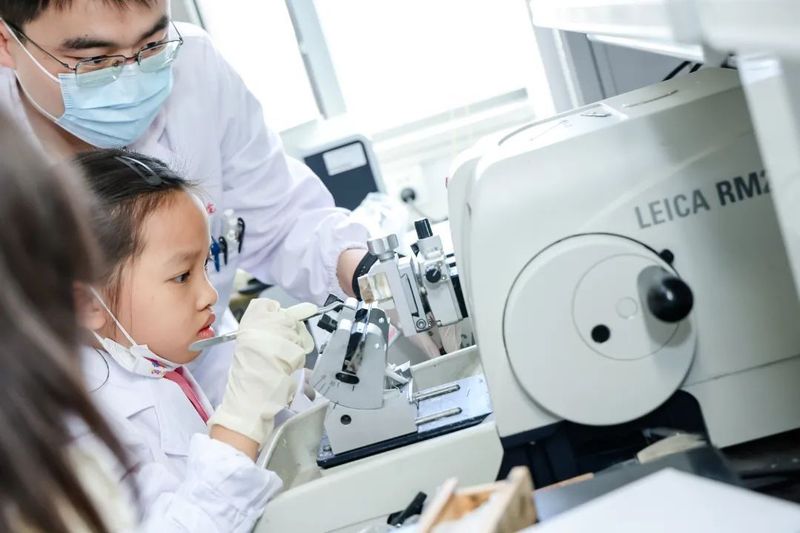
"i can't tell at all that this is a small bone." in the osteopathology lab, a thin glass slice caused discussion among students. A “hard bone” was cut by a hard-organised slicer and turned into a thin piece of about 5 μm thick, which is the routine of the osteopathology laboratory. According to the researcher yin junhui, unlike conventional paraffin slices, hard tissue slices do not need to be decalated, but simply use special slice tools to ensure that they are cut without destroying the original structure and composition of the bone tissue, and facilitate subsequent accurate organizational observations, which are a strong complement to traditional paraffin slices。
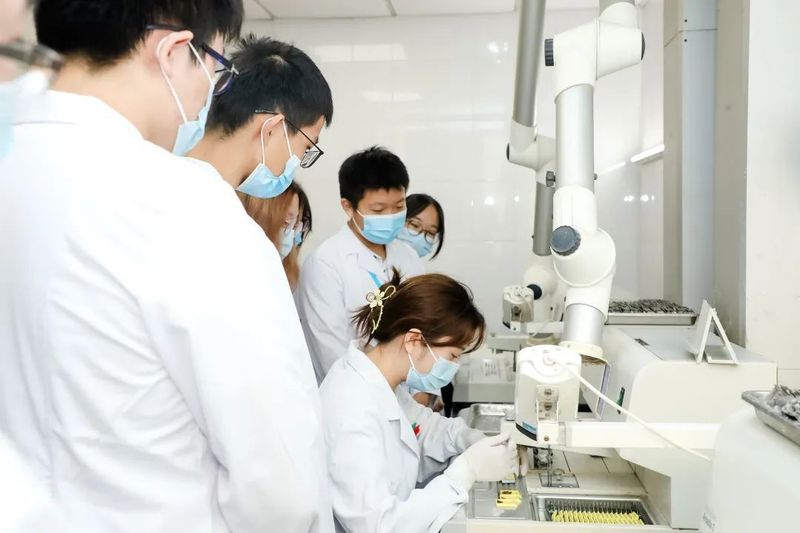
Seeing a little bit of knowledge, looking good. Each general pathology report is backed by the efforts and hearts of countless pathologists and technicians. “the diagnosis is slightly incorrect and the treatment received by the patient is very different.” liu ji-yang said that this was the significance and importance of pathology work, while also urging pathologists to continue their studies and work to improve their level of operation. The pathology section of the future city six hospitals will also seek to provide accurate diagnosis and escorts for patients。