I. Core definitions of fishing websites
Fishing websites, which are essentially false websites forged by illegal elements through technical means, have the core purpose of impersonating legitimate institutions or well-known platforms to induce users to disclose sensitive information (such as account codes, bank cards, identity cards) or to carry out fraudulent transfers. Such websites, like the actual “fishing” trap, reduce user vigilance and ultimately illicit profits by imitating the interface design, domain name structure and functional modules of formal websites. At the legal and cyber-security levels, fishing websites are an important vehicle for cyber-fraud and have become one of the major threats in the area of global cybersecurity, both technical and hidden。
Ii. Technical nature and operational logic of fishing websites
The construction and dissemination of fishing websites relies on two core logics: “disguised” and “inducing”. In terms of technical realization, outlaws usually use:
(a) domain name imitation: registration of domain names that are highly similar to the official website, e. G. By replacing "bank. Com" with "blynk. Com" (replaced with a rectangular character), or by adding prefixes, suffixes to "bank-official. Com" "bank123. Net" to make it hard to visually distinguish users
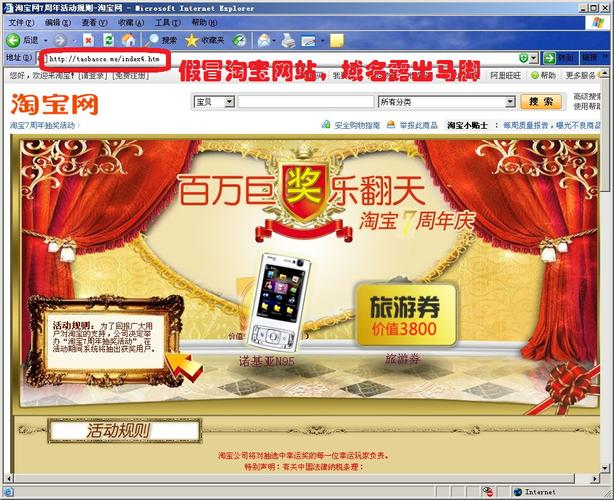
2. Interface cloning: replicating the page layout, logo, colour matching and even functional buttons of the regular website through reptile technology, with some advanced fishing sites further enhancing authenticity by simulating post-entry jumps
Dissemination leads: users are directed to fishing sites by means of spam, false links, personal correspondence with social media, text messaging, etc., common phrases such as “account abnormality requires verification” “time-limited preferential activities”
4. Information theft: when users fill in information or operate on a false website, data are transmitted directly to servers controlled by illicit elements and are used for criminal offences such as the theft of accounts and identity。
Iii. Typical features and common types of fishing websites
(i) core characterization
1. Domain names are irregular: the official domain name system, which is remote from the official website, uses more non-mainstream suffixes (suffixes other than ... Cn), or there are obvious character replacements and redundant characters

2. Crude interface anomalies: some fishing websites have problems with photo blurry, text errors, failure of links and lack of formal website security markings (e. G. Small lock icons for https protocols)
Inducing: the page is full of inflammatory words such as “urgent notice” “last three hours” “click immediate award”, forcing users to fill in sensitive information or directing downloads of unofficial applications
4. Requirements for unusual operations: frequent requests for sms authentication codes, bank card passwords, even for screen sharing, installation of remote control of app。
(ii) common types
Financial fishing websites: counterfeit banks, payment platforms (e. G., payment treasures, micro-credit payments) to induce users to enter bank card numbers, passwords and authentication codes on the basis of “account freeze” “transaction anomalies” “upgrade certification”
Electro-fishing websites: imitation of poaching and kyoto shopping platforms, publication of ultra-low-priced goods “time-bound kill” campaigns requiring users to pay through unofficial channels or to fill in personal information to obtain “subsidies”
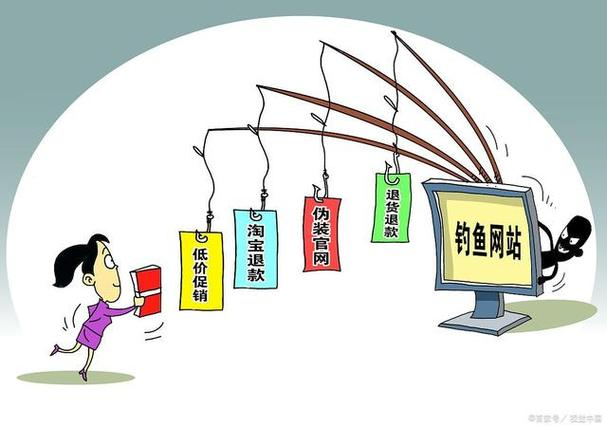
3. Social/office-fishing websites: impersonating the log-in pages of platforms such as micro-intelligence, qqq, enterprise micro-intelligence, or impersonating internal corporate systems (e. G. Oa, financial systems), stealing user account codes to obtain privacy information or business data
Government/service fishing websites: official platforms such as imitating the social security agency, the tax administration, and operators induce users to transfer or divulge identity information under the pretext of “anomalies in social security contributions” “call-to-charge” “annual examination” of documents。
Iv. Harmfulness and precautionary implications of fishing websites
The hazards of fishing websites are direct and far-reaching: for individuals, they can lead to bank accounts being swiped, identity information leaks, which in turn leads to chain problems such as telecommunications fraud and cyber-credit disputes; for enterprises, core business data (e. G., customer information, financial statements) may be stolen, causing economic loss and damage to brand reputation; and at the social level, the proliferation of fishing websites can undermine the network trust system and affect the healthy development of the digital economy。
Therefore, recognition of the nature and characteristics of fishing websites is not only a basis for personal cyber-security protection, but also an important element in maintaining a clear cyberspace. Scientific methods of identification (e. G. Checking official domain names, checking https protocols, rejecting strange links) and developing the habit of carefully filling in sensitive information can effectively circumvent this cybertrap。