


[summary] media channels for mass and interpersonal communication are becoming more abundant as media technologies, especially internet technologies, develop. Information proliferation research in the context of traditional media needs to be reoriented and designed, both in its way of thinking and in its paradigm. This paper presents the changes that have taken place in the network environment through the analysis of commonly used test variables in traditional news diffusion studies, with a view to clarifying the implications of the continuous advances in media technologyThinking methodsAnd the need to study the path for change。
[keywords] network; spread of information; ways of thinking;Path to implementation
A study by the sociologist delbert miller of the news of the death of president roosevelt in 1945 was considered to have been the first to study the phenomenon of the spread of information. Over the following half-century, western scholars have invested a great deal of interest in information proliferation research, producing a great deal of empirical research. In 2000, the american communications scholar everett m. Rogers reviewed 22 western information proliferation research findings, one of the main thrusts of which is to give greater attention in the future to the communication characteristics of the media and the impact of the communications situation on the spread of information. To this day, the ever-changing internet technology is not only widening the spread of information, but is also melting down the boundaries of interpersonal and mass communication, which makes the spread of internet news complex and necessary for research。
Scope of the study on the spread of information and the spread of information online

At the heart of the information proliferation study that emerged in the mid-20s, to the 1990s, were the variables used to test the impact of the spread of information or its effects on the spread of news events. These studies focus mainly on the impact of mass media (mainly traditional radio, newspapers and television) or interpersonal communication on audience news perceptions, and on observations of the time and scope of news spread. In the twenty-first century, scholars began to focus on extending the impact of the spread of information to changes in audience attitudes or behaviour brought about by news awareness, but few productive research or paradigms emerged。
“ society not only survives through transmission, but also between transmission and transmission.” the spread and dissemination of information is one of the fundamental characteristics of human society. According to rogers, “proliferation refers to the process of transmission over time, through specific channels, among members of a particular social group”. In contrast to the emphasis on interactive communication, the spread of information places greater emphasis on its continuity and expansion in time and space. Its “extension” is the increase in the number of communication nodes, and “dispersion” is the increase in the number of effective nodes of communication and the spread of information in terms of communication distance。
From the point of view of informatics, the spread of news on the internet is based on an internet platform, with news messages reaching audiences over time, step by step, and being accepted, adopted and used by the audience, thereby spreading the reach of information from one piece to the other. From a communications perspective, the spread of cybernews refers to the use of different web-based information communication structures and opinion communication structures through the internet to generate awareness of a particular news to a network audience, the increase in related knowledge and the resulting changes in attitudes and behaviour, online or offline。
Research on the spread of news in traditional media uses multiple factors affecting the spread of information as variables to test the effects of proliferation, including, inter alia, the importance of contentSocial networksImpacts, proximity to information and redundancy (repeatity), etc., are, however, in the network environment, either based on the technical characteristics of network dissemination and the resulting changes in audience characteristics, media use patterns that need to be adjusted or need to be further clarified in the study as a result of the social network built by network communication and the evolution of interpersonal relationships。
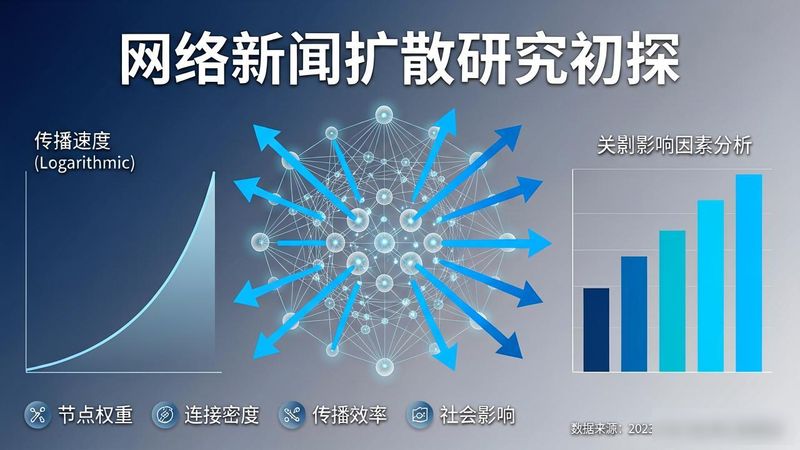
Changes in factors affecting the spread of information in the network environment
In 1960, paul j. Deutschmann and wayne a. Danielson published an important article in the quarterly journal of communication, “the perception of major news events”. This article has been widely cited in information proliferation research and provides a paradigm for other scholars. The main elements of the paradigm offered by the two scholars include: (1) the need to plan a methodology in advance so that researchers can collect data within one or two days of the event, and the ability of the respondents to recall when they first learned about the news, its channels and whether they talk to others about it. (2) the collection of data on several news events in different locations facilitates comparative research and determines the extent to which conclusions can be disseminated. (3) focus on the speed of proliferation, proliferation of mass media and interpersonal channels, secondary flow of information through the media, characterizing news events. After 40 years of this paradigm, everett m. Rogers commented in 2000 that a paradigm in a particular field of research could provide direction for academic research and attract scholars to (specified) related issues. In addition, the paradigm may lead to stereotypical thinking on research issues, limiting the scientific power to be put into the research front。
Numerous studies on the spread of information have shown that the dissemination of information is influenced by factors such as the importance of information, the timing (situation), proximity, visibility and redundancy. In a web-based environment, factors have changed not only in their own sense, but also in their role in the spread of information, which is characterized by complex changes in the communications environment, in a more traditional media context。
First, information-related variables。

The importance of disseminating content. The importance of the content of communication as the main variable of information dissemination research is the first variable to be tested in most information diffusion studies, and its impact on the impact of information proliferation is often expressed as the faster the information of greater importance spreads. However, importance is not an inherent feature of the news, and the media's handling of the importance of the news, with the role of journalists, editors and others, is a major factor influencing the attention and sequencing of the audience. As an important conclusion of the agenda-setting theory, the different subject matter values given to each news by the media will influence the attitude and behaviour of the audience with regard to news events, which is also validated by the findings of most media proliferation studies. In addition, every news event is of potential importance, but the same event is not the same for different audiences. The audience's judgement of the importance of news is also influenced by a variety of factors, including the relationship of interests, the living environment, and each has in his or her heart a “focus of news” that needs to be understood and further discussed among people。
In a web-based environment, the criteria for determining the degree of importance of news are more diverse, with the mass storage of the network enabling it to accommodate more news issues than traditional media, and the non-linear, modular presentation of the network allowing for a better understanding of the importance of news. In addition, media segmentation and media positioning have led to a differentiated treatment of news in the web media, the emergence of different focus stories, and the satisfaction and nurturing of media interest in “small crowds”, which have increased the diversity of audiences' judgements about important news stories. How researchers choose representative news from a rich coverage for proliferation research becomes a priority。
Information release scenario. The circumstances in which major news is released (in previous studies mainly concerned the timing of press releases and the location of the news received by the audience) are also important factors affecting the spread of news, and research shows that major news releases take place (see below). When news is released at midnight or when important news is featured in the programme, for example, it affects the first-time access to news and the speed at which it spreads。
In a web-based environment, real-time updates of news and uncertainty about people viewing the news landscape complicates the testing of the news dissemination landscape. The use of the web-based office environment and mobile multimedia terminals makes it difficult to distinguish between the hours of work and leisure time for a network audience, while receiving news from the audience at different times and on different occasions is a frequent method of many proliferation studies in the past。
The proximity of the information. Journalism studies divide the proximity of news into geographic proximity and psychological proximity. The impassioned nature of internet transmission weakens the geographical proximity of internet users, and psychological proximity is constantly emphasized and exploited. Psychological proximity, which brings together thousands of people in a web platform, discussing news events and re-dissemination, will continue to expand the spread of news. The inclusion of psychonap test variables in web-based news diffusion research is therefore a necessary route to web-based news proliferation research。
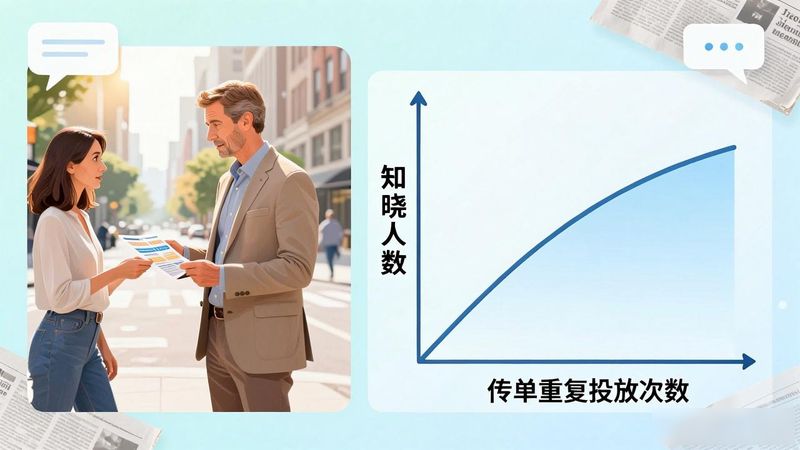
Information redundancy. The united states sociologists, in field trials of the effects of the proliferation of leaflets, found that the degree of duplication of information was directly related to the level of knowledge. The more leaflets are dropped and the more people are known, but when the degree of repetition reaches a certain level, the rate of growth is decreasing and decreasing。
Reproduction and transfer are the main forms of online information flow. Not only has there been a geometric increase in the number of news messages, which have been reproduced over time and over time, but there has also been an expansion in the spatial distribution of information as a result of the decentralized communication structure of networks. For a network audience, the redundancies of information are more closely related to the timing and scope of access to the network, in addition to the information outreach of news websites (e. G., through various technical means such as rss, icq media), which can affect the redundancies of news。
Second, the impact of social networks。
Everett m. Rogers, summing up 22 studies on the spread of information, believes that the spread of information research has a unique advantage in our theoretical and practical understanding of the interrelationship between mass and interpersonal communication. The spread of information research has focused more on the interpersonal transmission of media messages。
The rate of access to information and the rate of conversation with others through interpersonal channels are important indicators of the proliferation effect of information proliferation studies. At this level, “newstory permeates community life — it can be said to spread in the community — to colour it, to change its face, to reach and affect everyone in it in one way or another”。

Interpersonal interaction in social networks is an important way of spreading online news. Networking spreads across time and space and expands space and space for interpersonal interaction, especially as the internet enters the web 2. 0 era, and the forms of network interaction become more diverse. In particular, the development of some web-based communication software has made it possible for hundreds of people to communicate and communicate instantaneously。
The scope and frequency of the web-based discussion of news is influenced by many factors. The visibility of the news, its proximity and its relevance to the interests of the audience were important factors that contributed to the discussion. Unlike the traditional media situation, information and opinion-seeking by news recipients is no longer limited to family, colleagues or friends, but is a virtual internet user. They are gathered in the complex dynamics of a news event, either out of interest in news events, or out of desire to speak, or because of the need for social networking. These web users, who gather together for a given web news, can quickly gather considerable power for the dissemination of ideas, but also disappear immediately after they are “satisfying” with their ad hoc community or group of people, whose mobility and opinions greatly exacerbate the irregularity and disorder in the spread of online news。
Networked communication structures are an important factor in the formation of social networks and the spread of cybernews. Web-based communication structures are the ways in which the relationships between the various elements of network communication, i. E., the mode of interaction between the sender, the audience, the content, the channel of communication, the environment, etc., are organized. Just as all news is based on a fundamental assessment of the facts, the web news is constantly gathering and spreading information and opinion flows as it spreads. Press events have become the trigger for the spread of information, and the judgement, processing and transposition of news has created a flow of ideas in the process of dissemination. Professor penland of the people's university of china divided the information dissemination structure of the network into: the distribution structure of information, the dissemination structure of information and the circulation structure of information. She believed that the spread of information depended on the value of the information itself, its distribution structure, the quality of its publishers and the filtering of its recipients. The web-based physical structure of the internet itself is such that the connectivity between any two nodes can be extremely rich, adding to the complexity of the web-based news diffusion environment, which, in addition to being subject to the interrelationships between news audiences, has a strong relationship with news publishers, news content and channels of communication. The proliferation of opinion streams around news events is more related to the quality of the audience itself and its web site。
Of course, online news is also driven by “individuals of influence” in the spread of information and opinion flows. The american scholar paul lazarsfeld, in his discussion of the “two-tier transmission” hypothesis, argued that the transmission of information was based on a two- or more-level pattern of “media-opportunity leaders-audiences”. In social networks, the status or importance of nodes made up of different individuals or organizations tends to vary, with relatively important nodes often present. In the process of spreading online news, individuals who play an important role in proliferation become “opinion leaders” in social networks, who often directly influence the choice of news and the direction of public opinion of the general audience。



![新闻资讯APP排行,手机新闻APP排行榜前十名,手机看新闻哪个软件好[2026]](https://www.3z0.cn/file/upload/202608/26/1787681122214_lit.jpg)