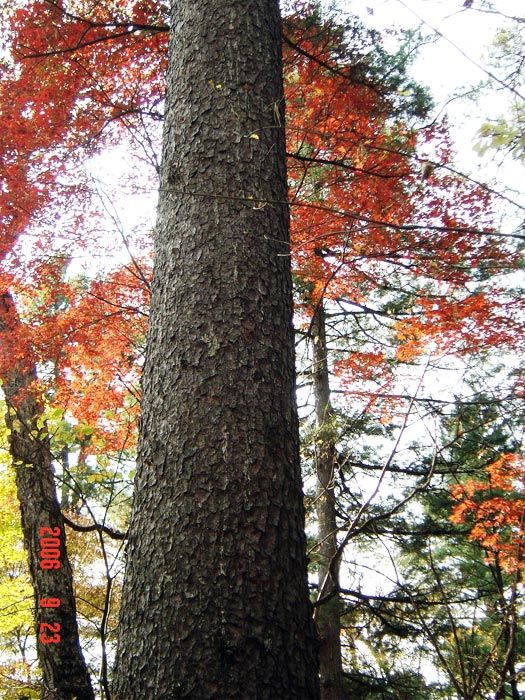
Pinus koraiensis sieb. Et zucc, also known as pine, is a pine plant, with priority for plant protection at the national level ii and the province of heilongjiang. Our country is mainly located in the long white mountains to the xinang hills, and only part of the regions of russia, japan and korea. Red pine is a valuable and ancient tree species, like fossils, which appeared at least 30 million years ago and is known as the “third genre”. Red pine material is light, non-conformable and perishable and applies to buildings, bridges, pillows, furniture, etc. Red pine trees are thick in their trunks, trees are high in the clouds, great banks are raised and are natural pillars, up to 50 m, 1. 5 m in diameter and up to 600 years of life, and red pines are the symbol of longevity; red pines are the symbol of long life; and red pines are the symbol of strength, the cold and the green of seasons。
The broad-leaved red pine forests (also known as natural red pine forests) are located mainly in parts of china, russia, korea and japan, the russian red pine is located mainly in siberia and the far east, the korean red pine forests are located mainly in the northernmost part of the country, in the green river basin and in the upper tumen river, and japan has fewer resources, mainly in the deep mountains of hokkaido. At the beginning of the twentieth century, the area covered by natural red pine forests was 50 million hm2, of which china had 30 million hm2 or 60 per cent; russia had 15 million hm2 or 30 per cent; and korea had 5 million hm2 or 10 per cent。
Our natural red pine forests are concentrated in the mountains of long white and little hing aning (icun), and red pines are the main tree species of forests in the natural forests of the small hing zing, long white mountain forest in the north-east of the country。
Natural red pine forests are part of the billions of years of evolution of the global ecosystem. They have only evolved since the third century (from 30 to 25 million today) to form the zone's highest trajectories that are most adapted to the region's ecological context, become the region's “bottom” forests, are typical representatives of the confluence of temperate needles, and are known globally for their unique species, their rich species diversity and their higher subtropical composition compared to those of the latitudes. The various components of natural red pine forests are relics of the third century, and preserve, to the greatest extent possible, the ancient structural features of the third century plant community, known as the “third century forest”. It is the oldest, richest, most diverse and most biologically efficient forest ecosystem in the northern temperate of the eurasian continent and an extremely important and valuable forest resource for my country。
Among the broad-leaved red pine forests, red pine is the main grouping species, with other conifers and foliages, and with broad-leaved trees, mainly violets, maggots, water willows, spring sprouts, cracks, twigs and twigs, which are representative of long-white plants. Among them are red pines, aqueous willows, sprouts and white sprouts, which indicate the age-old nature of their phytosystems and are part of the occult phytosystem. In addition, some species of the hotsk botanical zone of the south, such as frenzies, as well as some of the typical southern vines, such as mountain grapes and dog date monkeys, are included. Infiltration of these plant species in the north and south has added some subtropical and subtidal features to the forest type。
For almost a hundred years, our natural red pine resources have been depleted as a result of war-grabbing, immigration and prolonged over-harvesting to meet nation-building needs. The previously reckless “red pine sea” can be seen only in a few nature reserves and in the mother forest, except for the red pine forest and secondary forests. At present, there are only 110,000 hm2 of the relatively complete and typical natural red pine aging forest, which is less than 0. 3 per cent of the original area. In the ichun forest area, the natural red pine forest area was approximately 1. 4 million hm2, accumulated around 280 million hm2 and largely in its pristine state. At present, the relatively complete and typical red pine aging forest, in the form of nature reserves and mother forests, amounts to only 30,000 hm2, with an accumulation of about 7. 5 million m3, with an additional 1. 9 million m3 of natural red pine wood scattered in other forests. If strict protective measures for red pines are not implemented again, this part will be completely cut off, and by that time the remaining natural red pine reserves and mother forests will be completely “on-islandized”。
It is the natural endowment of red pine, the economic value of red pine. Compared to other trees, its salient features are light materials, sturdy structures, straight texture, low indentibility, easy to process, and non-fragmentation, which are generally static due to temperature moisture, while being fairly resilient. In addition to construction, it is a good material for shipbuilding, vehicles, pillows and furniture. In addition to the backbone of the red pine, other parts also have a place of use. Threads, barks, roots can be used to make pulp and man-made plates, and pine needles, pine resins and industrial raw materials such as pine oil. The famous red pine seeds come from red pines, and wild pine trees need to grow 80 to 140 years before they begin to grow and mature for about 15 months, so they are extremely valuable. The red pine seeds are full, the nuts taste good, they contain large amounts of fat oil, protein, they have high nutritional value and they are famous nuts of four seas。
The natural red pine forest not only holds many very rich biological resources and has great economic value, but also has great ecological and social benefits whose value and value are incalculable. Red pine blends with other associated tree species, with large amounts of carbon dioxide and oxygen released each year, as in the case of the 1 mm2 broad leaf red pine forest, which absorbs 13t of carbon dioxide per year, with the release of oxygen 9. 5t and the release of large amounts of negative ions, which are several dozen to ten times greater than in urban and industrial mining areas, to the benefit of human health, and the 6t weight of the dead leaves on the forest floor, which during the rainy season allows for large amounts of rainwater to be absorbed into the soil and to slow down, effectively regulating the volume of rivers. Red pine leaf mixed forests absorb 88 per cent of hazardous dust and kill 90 per cent of the fungus. The presence of these animals and plants, which are growing from 370-600 species of high-level red pine forest to over 360 species, makes the red pine forest one of the richest communities in biodiversity and is irreplaceable for maintaining the ecological balance of forest areas. At the same time, raw red pine forests play an important role in regulating the temperate zone and the north-east climate, maintaining the ecological balance of the main water systems and all watersheds, ensuring the ecological security of the agricultural and pastoral industries in the region and improving the living environment in which people produce. Raw red pine forests are the highest stage of natural vegetation development in the region and have a strong self-renewal and sustainability in the face of natural disturbances. During its lifetime (average life of more than 300 years, up to a maximum of 600 years), it completes a generational replacement in 280 years, and it does not self-destruct unless it is artificially influenced。