Recently, the news of a master's job as a nanny has raised social concerns. High education, two foreign languages, overseas work experience, early teaching of professional skills netizens say, “sitters like this, too!” and some say that this is a blow to traditional domestic work。
There is an unchallenged fact behind the debate that people are increasingly in need of support from social services as a result of the ageing of the population, the implementation of the “full two-child” policy, etc. In reality, however, the scale and quality of social services such as home economics, childcare and old age are difficult to meet, and the public is particularly concerned about the emergence of highly educated and qualified workers。
The social services industry involves the well-being of hundreds of millions of people and is also a dynamic industry with great potential for development. In recent years, the state council has made successive policy decisions to improve the quality of domestic service, promote the development of old-age services and promote the development of childcare services. At the end of last year, seven departments, including the office of the minister of education, issued the opinion on education in support of the development of the social services industry and the improvement of the quality of training in the training of the short-deficit, stating that “in principle, there are a number of vocational colleges in each province that offer domestic services and specialties in old-age services”。
So what can education do in the context of the expansion of the social services industry? Journalists have been able to observe the most widely covered domestic service sectors。
A college student doing a little homework
"selection to this profession will certainly not disappoint you." last year, liu shuxian, who graduated from the nimbau institute of health and vocational technology in the field of domestic service and management, opened her door. Despite the impact of the epidemic, this year she managed to jump to the home of a prominent internet domestic company。
Liu shuxiang's position is that of a domestic adviser, who, in short, matches family and domestic workers, “sells the services of an aunt”. “when it comes to domestic work, the first thing you think about is going to work in someone else's house, and in fact there are many different jobs in the company.” according to liu, there are more than 100 members of a team of domestic consultants in her shop alone, as well as training departments, after-sales departments, most of whose employees are undergraduates and undergraduates, although she is the only one of the family specialists。
“mother and child care, breast-feeding, nutrition, cooking, which i have learned at school, and when i communicate with the family, people feel professional and are willing to listen to my advice.” by virtue of his professional advantage, liu's minimum salary increase exceeded 10,000 yuan in the first month of his new post, and “not very difficult”。
“in traditional perceptions, domestic work has been in a state of `scrambling', mainly as a means of subsistence for unskilled labour, and has been understood by some even using the old society's `homeservant' relationship, which makes it difficult to attract and absorb highly educated and skilled people. In fact, however, the domestic service sector has entered a rapid stage of development.” according to lee ho-ping, deputy director of the school cooperation division of the changsha institute of civil and vocational technology, which has a long-standing focus on home economic development。
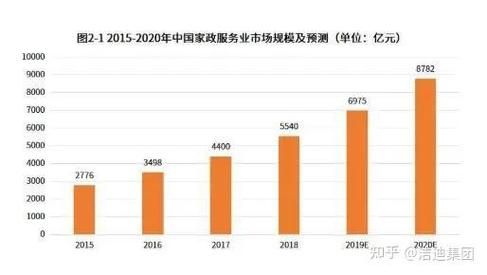
According to the china domestic service development report (2018), 18. 2 per cent of the country's households have care needs for minors, 35. 6 per cent for older persons and 30. 4 per cent for dual care. It is estimated that the demand for domestic service in the country will increase from 45. 6 million in 2018 to 139 million in 2035, with high-end domestic service demand rising in the form of blow-outs. Currently, more than 30 million domestic workers account for 8 per cent of the total。
In recent years, the party central and state councils have attached great importance to the development of the domestic service, particularly since 2019, by issuing, inter alia, the opinions of the office of the state council on the promotion of quality extension in the domestic service, the opinion of the office of the state council on the promotion of the development of old age services, and the guidance of the office of the state council on the promotion of the development of care services for children under the age of 3. Seven departments, including the office of the minister of education, have issued an opinion on education to support the development of the social services industry to improve the quality of training for the needful。
“the policy proposes to focus on changing attitudes and updating the understanding of new business practices, such as domestic work, and new technologies. The national development and reform commission has added `age and childcare services' and `domestic services' to the list of incentives in the directory of industrial restructurings (2019 edition). According to lee ho-ping, “it can be said that the development of the domestic service has reached a critical juncture and that there is an urgent need for the entry of highly qualified and skilled personnel”
“education is so important!” the former vice-president of the china family services association and director of the national mathematics studio, 81890 in ningbo, said, “it is only with a touch that the expansion makes sense, otherwise more people will do it and the people will still feel dissatisfied. The development of the domestic business alone would be a very slow process, and the support of education would make it much shorter.”
What's quantification
“this year a number of schools have declared their home economics and have come to our schools to study home economics.” wu xian, director of the humanities institute (hhd) of jilin agricultural university, said that: as the country's first university with a master's degree in home economics, jilinon university is a source of talent for both domestic enterprises and the training of teachers in higher education and vocational colleges。
Based on a diagnosis of the development of home science and the domestic service market, some schools began to explore as early as the 1990s. In 1993, the jilinon university opened a specialty of correspondence in home economics, in 1998 it opened a full-time college, in the same year it was approved as a master's degree in sociology, with home economics as the main area of research, and in 2003 it became the country's first university in the field of home economics. In the field of in-service education, in 1999, the previous body of the institute of professional and technical studies of home economics, the sanitary school of health, opened the specialty of domestic health services, and in 2007 it became the first public vocational school in the country to be named home economics。
In recent years, a number of general higher education institutions, such as tianjin teacher training university and hebei teacher training university, have also entered. In our country, home economics education forms an initial training chain for middle-level, senior-level, undergraduate and postgraduate students. At present, home economics is an ad hoc subject in the sociology category of the legal profession, and in the middle and higher professional categories it is in the public administration and service category。
“homework is a long chain industry.” lee ho-ping told journalists that, at present, in addition to the domestic service, community management and services, home economics, rehabilitation therapy and so on, there are dozens of subjects in the country that are relevant to domestic service. At a routine briefing on state council policy in july last year, xie ri, deputy director-general of the department of education, stated that there were more than 3,000 home economics-related places in the middle, senior and general undergraduate fields. In 2019, a total of 72 new posts were created for senior domestic service and management, an increase of 132 per cent over the previous year。

“even if the relevant professions are taken into account, school talent development is only in the hundreds of thousands of quantities, and there is still a large talent gap compared to demand and industry development potential at the tens of millions of quantities.” according to lee hoping's analysis, the market for domestic workers is divided into three main categories: first, a simple labour market, which provides basic household care, household cleaning, cooking, etc., and is dominated by agricultural transfers, which account for 67. 7 per cent of the market share; second, a knowledge-based and skill-based market, which focuses on first-line skills services such as nursing, patient care, mother-child care, support for the disabled, etc., and industry access requirements, which account for 31. 6 per cent; and third, an expert-managed market, which is dominated by private customized and advisory positions such as management of clothing, clothing and clothing, household finances, and new business positions such as community service network management, management of home-based enterprises, training in home-based services, development of household smart equipment, etc. “although modest, part iii is probably the most promising and should be the focus of high-level and undergraduate vocational education.” lee ho-ping said。
At the practical level, the higher-level colleges that have been set up in the home economics sector have been developed in a broad-calibre manner, covering the needs of a wide range of jobs, such as skills, management, training, etc., and focusing on their own characteristics. For example, the ningbo institute of health profession and technology has placed the home economics profession in the “technical managers”, while the institute of home economics and the technological institute of expediency have focused more on the training of housekeepers and high-end domestic workers. The vice-president of the institute of home economics of zezawa told journalists that “from the point of view of export, highly skilled domestic workers are in fact highly skilled, and that some executives of the company have come to ask for help through relationships.”
How does the profession and industry develop
Despite policy requirements, social needs and school conditions, journalists have found that most of the institutions offering home economics experience embarrassment at the admission stage. “in the first year, the school was given 100 places, and in the end more than 30 people were recruited.” zhu xiaoquan, director of home economics, ningbo institute of health professionals and technology, said that。
The embarrassment experienced by the domestic profession is not all the reason for social perceptions. Many domestic businesses are micro-dependent and cannot afford social insurance, etc., for fixed workers, so that first-line domestic workers are not employees of the enterprise, but are similar to the relationships between intermediaries and self-employed workers. “family nannies are not subject to labour law, and when problems arise between their work and employers, they can only be dealt with in accordance with civil law.” according to hudolin, “the concerns of candidates and parents are not unreasonable, and it would be difficult to accept that they become self-employed once they have completed first-line domestic service.”
Moreover, there appears to be a paradox in the development of domestic workers. “who is more competitive with students in their early 20s who have no experience in family life and women in their 40s and 50s? After all, experience is important in this field.” according to zhu xiaoquan, “domestic work is a particularly practical profession, which cannot be developed in schools alone and must be developed in enterprises. However, unlike mature industries, the size of domestic businesses is relatively small, and the lack of uniform regulations makes it difficult for first-line domestic workers to train students in practice, making it even more impossible for enterprises to articulate the need for talent development.”
At the threshold of industrial development, it is not an option to wait for an enterprise to take a step forward, and it is important that the home economics profession develop in partnership with the industry. The ningbo institute of health professionals and technology and the ningbo city trade authority (now the ningbo city business bureau) jointly set up the ningbo institute of home economics, which operates as a board of directors to work together on the training of professionals in domestic service. The school of home economics, the first of its kind to be involved in home economics, took into account the needs of local economic and social development and the need to develop human resources. It has set up its own integrated home economics enterprise, the angels of the city of suezé, which allows students to enter and train and graduates to remain in the workforce。
Lee ho-ping believes that school efforts, together with support from industry and education policies, can do much more。
In may of last year, the state launched a high-level recruitment campaign, opening the door to four categories of social workers, and in its implementation programme, it has clearly outlined a focus on the professions that are in urgent need of economic development in the region, the shortage of social livelihoods and the high level of employment. This is an opportunity for the changsha institute of civil and technical sciences to enrol in domestic service for the first time, which, in conjunction with its current graduates, has set up a special course for 45 students, including 7 women and girls. “the group may in the future be placed in a training position in the company and may also bring students to practical training. Their experience, coupled with systematic learning, can make a bigger difference.” lee ho-ping said。
How far are we from high-quality domestic service

So, what's the difference between learning and not learning? Is a paper diploma necessary in a field of experience
Li wenli, a one-year-old sister-in-law of the golden moon, at the changsha institute of civil and technical sciences, said: “on one occasion, she suffered from premature haemorrhage from a client at the time of delivery, after which she suffered from severe depression. I wanted to help her, but i couldn't. Now, i've learned psychology, and if i encounter this problem again in the future, i know how to help her, which will benefit more mothers after childbirth.”
"some of our graduates have already received an annual salary of $300,000." the director of the institute of tourism home economics and the arts of the institute of expedition and technology, rudd, said that “there are more care functions in the domestic service for mothers and children, young children and the elderly, but there are fewer people who can really manage their homes”
“as a result of contact and understanding, students find that domestic work is in fact a university, with its knowledge and professional system.” wu told journalists that in 2019, undergraduate students at the jilin agricultural university school of home economics began to enrol in a large class, and that 120 out of 180 in the sociology majors took the initiative in choosing a home economics profession after a year and a half of professional basics. This is an indication of students ' recognition of professional prospects and ways of training。
“for the time being, home economics is only at the master's level in our country, and in very small numbers, while in japan, the united states and europe, home economics has doctoral posts.” wu xin said, “in the field of practice, this is precisely what high-quality domestic work is called. After all, domestic service is an experience, and the core is human.”
“professional” is the key term repeatedly mentioned in the interviews, with reference to the peak of the world's domestic service, such as domestic service and british housekeepers. “the fact that domestic workers do not eat with their employers is not unequal, but rather adheres to professional norms, and she knows that other families serve. On the contrary, our domestic workers may go to the client's home to pursue the same status as their family members, and even turn back, which is unprofessional.” according to luang, the qingyuan institute of vocational technology hired three university teachers from the philippines for full-time teaching。
For his part, lee ho-ping believes that building a sense of professional dignity and raising the awareness of domestic workers is not achieved by education alone. Following the promulgation of the state council's article 36 on home economics, the national development reform commission, the ministry of commerce, the ministry of education, the ministry of human resources and social security and the all-china women's federation jointly launched an expansion of the “runners” in domestic service. Thirty-two cities, such as jilin changchun, zhejiangzhou, shandong jinnan and hunan changsha, were among the first “runers”, each recommending five or so lead model enterprises and one to two lead schools。
At the same time, the “1+x” certification scheme, promoted by the ministry of education, has also helped to prevent the development of domestic workers from going off the path of practicality and lack of standards. At present, a number of leading home-based businesses such as hunan kim and chinan sunshine, in collaboration with vocational colleges, have introduced three vocational skills-level certificates in relation to home-based care for young children, mother and child care, and care for the mentally retarded. Several senior positions interviewed by journalists participated in the pilot。
“at the moment, the state has proposed that the employment of university students in the community be compatible with the entry into the community of the domestic service network, the management of which is likely to be new. The future is supposed to be a "big housekeeper" concept that will bring in more talented people."