In practice, failure should be dealt with on the basis of specific problems, analysis and adherence to the principle of first-in-first-in, first-in-time, and never blindly。
First: the power supply should be examined: whether the connection is secure; whether the switch contact is tight; whether the fuse has melted; and whether the three-phase power supply is equal. In the case of broken roads, poor exposure, fuses and missing faces, the causes should be identified and repairs should be carried out in a timely manner. Second: to examine whether the pumps are mechanically faulty。
Disorder one. The pump can't be activated
Common causes: overfilling or jamming between the wheel and the pump by piles of miscellaneous items; pumping axes, bearings, rusting of leaking rings; severe bending of pumps。
Method of exclusion: relaxation of fillings and extraction of draining tanks; removal of impurities and rusting of pumps; correction or replacement of new pump axes。
Disease ii, insufficient flow
Reasons for this are mostly pipe leakage, bottom valve leakage, congestion in the vent, insufficient depth of bottom valve penetration, low rate of pump rotation, excessive wear of sealed rings or leaf wheels, excess height of intake, etc。
Method of exclusion: examination of pipe and bottom valves and blocking of leakage sources; cleaning of sludge or plugs in the vents; bottom valves must be deeper than 1. 5 times the diameter of the pipe and increase bottom valves into the water depth; inspection of power voltage, speed up of pumps and replacement of sealed rings or leaf wheels; reduction of installation position of pumps or replacement of high-lift pumps。
I can't breathe
Reasons: air or pipe gas in the pump, or low bottom valve closure, water stress, high leak in vacuum pump fillings, low lock valve or tap door closure。
Exclusion methods:
1. Pressure the water, then fill the pump with water, then turn it on. At the same time, check whether the reversible valves are tight, whether there is a leak in the pipe or the interface, and if the leak is detected, remove it and then put lubricant or paint on the interface and tighten the screws。
2. Check the oil rings on the pumps ' axes and replace the new ones if the wear is severe。
3. Leakage or leak in the pipeline. Maybe the screws don't matter. If the leakage is not serious, cement may be coated at the place where the gas or water is leaking, or the cement mixed with asphalt. Temporary repairs can be done with some wet mud or soft soap. If the water leaks at the interface, the screws can be tightened by the wrench, and if the leak is serious, the pipes must be re-assembled and replaced with cracks; and the length of the stretch can be reduced by pressing the pipe of the pump down to 0. 5 m。
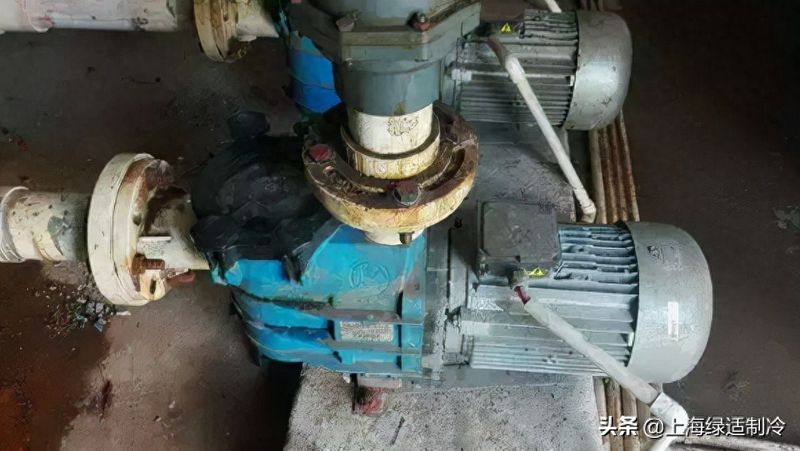
Patient four. No pump
Reasons for failure to fill pump bodies and pipes; failure to move water below pump filters; breakdown of straws, etc。
Method of exclusion: dismantling of bottom valve failure and filling of boiling water; reduction of the installation of pumps so that the filtering pipe is below the moving water level, or so that the water level rises and filters are pumped again; repairing or replacing the pipe。
Disease v, severe vibration or noise from the pump
Reasons for failure or over-equipment of pumps; damage to electric roller bearings; or convulsion of the main axis of the pumps or its different cores and non-parallel, etc。
Method of treatment: steady or lower installation of pumps; replacement of electric roller bearings; rectification of the main axis of the water pump or repositioning of the pumps relative to the electric power。
It's six. It's too power-consuming
Reasons for this are: high rate of rotation of pumps; different or parallel cores of main axes or main axis of pumps and main axis of pumps; inappropriate lengths of selected pumps; inhalation of sand or congestion of pumps; damage to bearings of electric rollers, etc。
Method of treatment: examination of circuit voltage to reduce the speed of the pump; correction of the main axis of the pump or repositioning of the pump relative to the electric power; selection of a suitable long-range pump; removal of sand or congestion; replacement of the ball bearing of the electric power。
Disease vii. Passive axis or electric axis overheat
Causes: lack of lubricants or fracture of bearings, etc。
Method of processing: add lubricant or replace bearings。
These are common causes of “diseases” in pumps, not all of which are used in practice to deal with failures, but also in the light of specific problems, where practical analysis should be carried out in accordance with the principle of first-in-first-in-first-in-first-out principles。
Before analysing water pumps, we must also learn about the use of the universal and mega-meat tables, which are:
1. If it is not possible to predict in advance the size of the measured voltage or current, the maximum range shall be applied once and the scale reduced gradually to the appropriate position, as appropriate. When the measurements are completed, the quantum switches should be dialed to the maximum voltage block and the power should be shut down。
2. When measuring voltage, the numeric tensile meters shall be linked to the detected circuit; currents shall be measured in conjunction with the detected circuit, and no positive or negative polarity shall be taken into account when measuring the direct flow。
3. When a direct current voltage is measured by misusing an exchange voltage shield, or when a direct current voltage voltage is miscalculated, the display screen will show a "000" or a number at a lower level。
4. The exchange of quantities in measuring high voltage (above 220v) or large currents (above 0. 5a) is prohibited in order to prevent the generation of arcs and the burning of switches。
When displaying "batt" or "low bat" means that the battery voltage is below the working voltage。
Question one: emission overload while the pumps are working
The general power plant has a rated operating power, known as the rated power, in watt (w) or kilowatt (kw). This is referred to as overloading if, in some cases, the power of the power plant is actually operating in excess of the auxiliary rated power of the pump. The electrons have several manifestations:
1. Excessive electrical heat
(b) the speed of the electrical revolving has declined to zero, as evidenced by the non-movement of the electric power
3. The electric power has buzzed lows, accompanied by greater vibrations
4. Significant changes in the load of the electric power plant may occur in the event of a glitch in the rate of transmission。
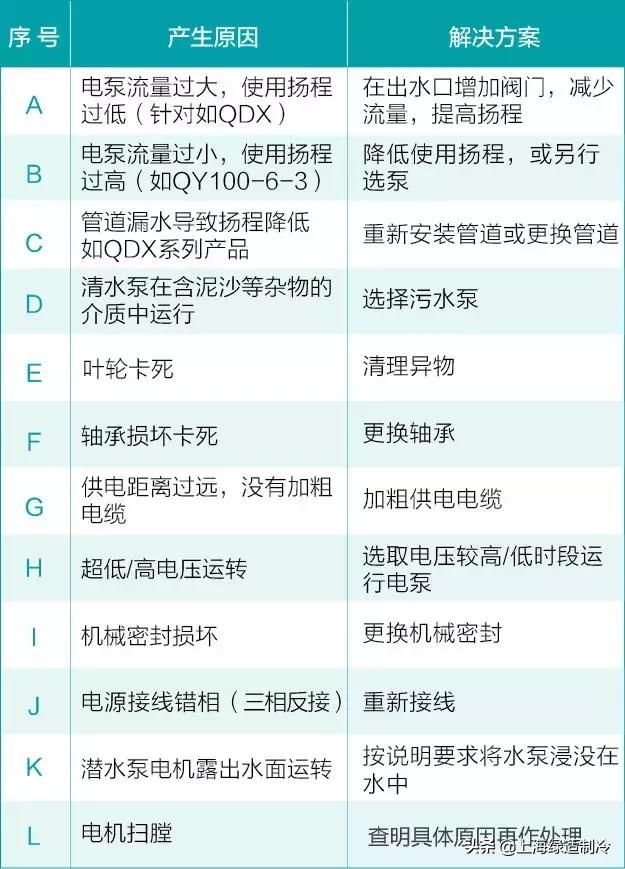
An overview of the causes and solutions
Question two: shortness of three-phase generators while pumps are running
Three-phase power units must be operated with three cable lines providing a power drive to achieve a three-phased equilibrium; if two power lines provide a power source, they can also operate, but the longer period of operation will result in the power plant being burned down due to the absence of one. I'm not sure what i'm talking about
1. Measurement of the voltage of the three power lines using a universal meter, if it is not pressure-free
2. Check if two of the three power lines are blackened and the copper wire of one of the lines is not blacked as it is
3. The cavity of the electric motor is turned on and, in general, the two phases of the three-phased generator are burned and the other one remains the same。
Question three: a sudden power outage from a pump generator
If the associated power shield corresponds to the pump, the shield will not jump under normal circumstances. The main reasons for the protected jump are:
1. Pumper overloading
High temperature of pumps
3. Excessive currents in pumps
4. Pumps are accompanied by excessive power voltage。
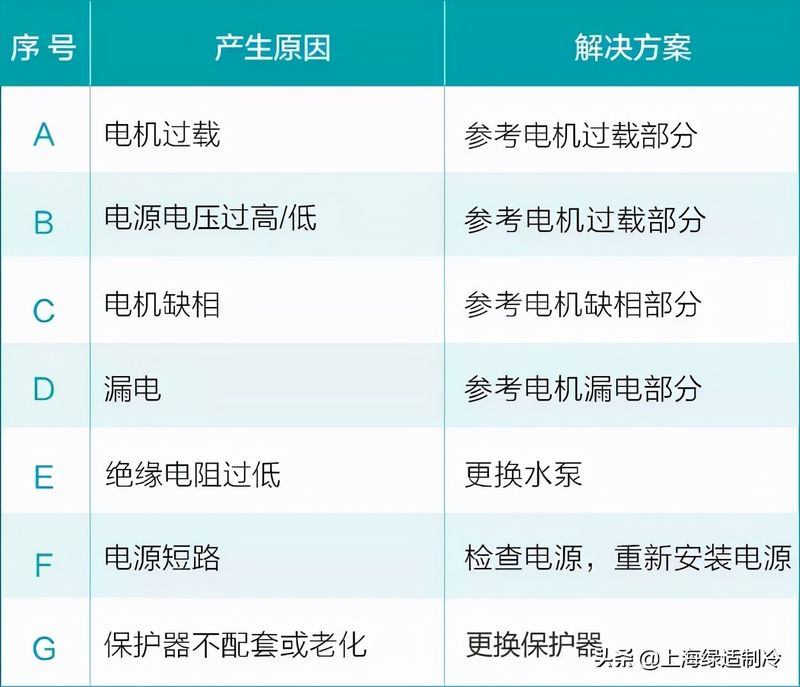
An overview of the causes and solutions
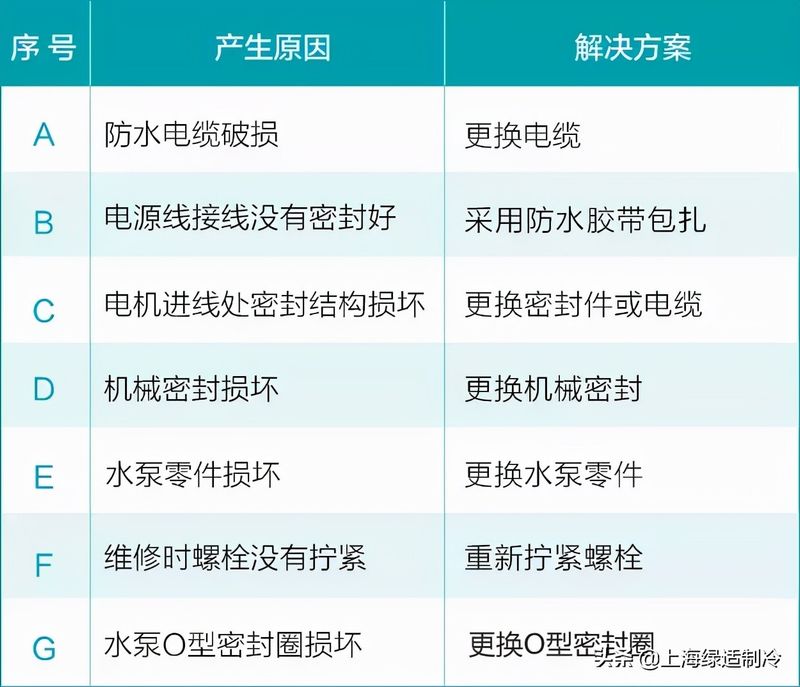
Question four: pumping power in
In general, pumps are not allowed in (except for immersion pumps). There are several types of electrical inflow:
Waterproof cables break into water
2. Pumper power supply wires are not sealed for water
(c) damage to water intake by the sealed structure of the pump engine
4. Mechanical sealing of pumps damaged water intake
5. Water is damaged by the pump o seal
6. The bolts in the seal have not been tightened to cause electricity to enter water
7/ the pump parts were damaged by seepage。
An overview of the causes and solutions
Question five: a leak in the pumps
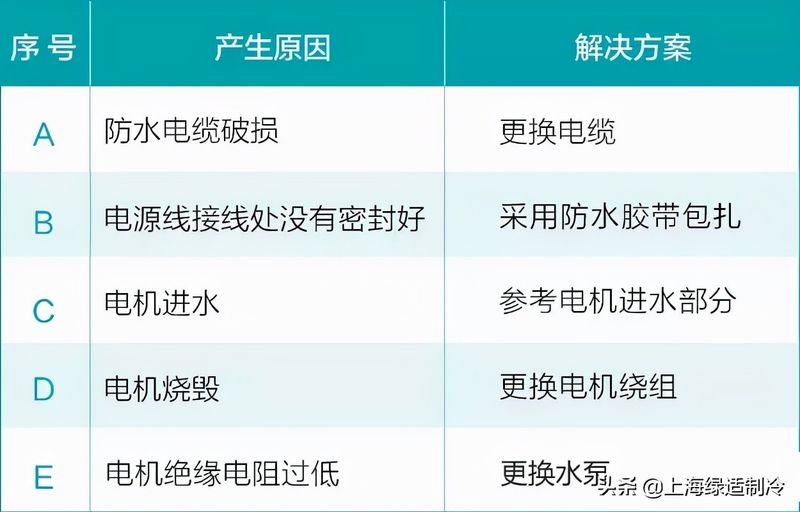
In general, a pump does not leak, but the power is leaked when:
1. Protection against loss and leakage of water cables
2. There is no sealed leak in the power lines of the pumps
3. Pumping machines
4. Power leaks when pumps are burned
5. The low insulation of electrical resistance leads to electricity leakage。
In order to ensure the safety of the personal property of the pumps in the event of an electrical failure, it is essential that the water pump be properly fitted to the ground, preferably with a leak switch。
An overview of the causes and solutions
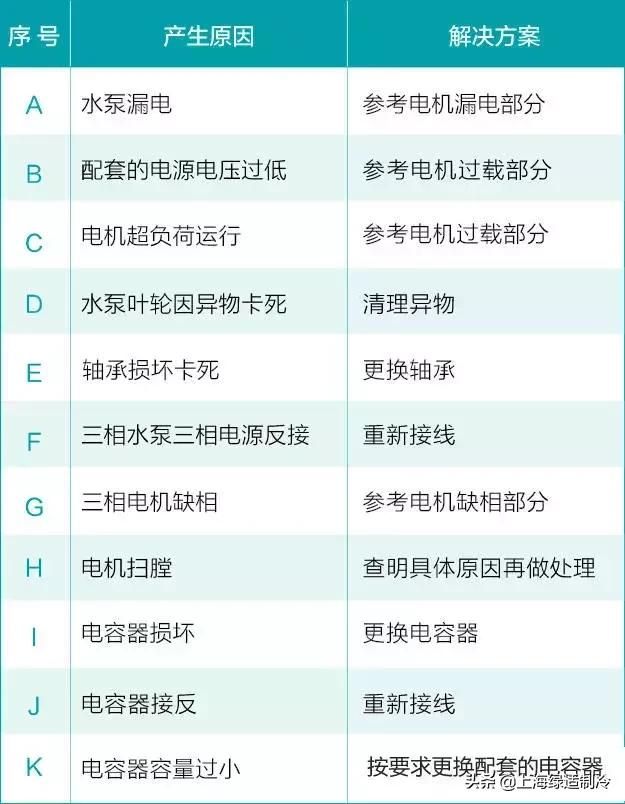
Question number six: pumps cannot be activated
Pumps are not activated (non-rotation or too low speed) generally due to:
Water pumps leak
2. The associated power voltage is too low
3. The death of a pump wheel by an alien card
4. Loss of bearings
5. Overloading of electrical units (overloading)
6 and 3-phase pump reverses
7 or 3-phases are missing
8. Electrical cleaning
Capacitors are damaged, reverse, and are too small。
An overview of the causes and solutions