The amino acid, which is also known as the sheep's belly, is uniquely fragrance, nutritionally rich and rich in a variety of human needs, is the world's well-known medicine for consumption and is popular in europe and america and one of the world's four most famous bacteria. On the afternoon of 18 august 2020, the 39th session of the beijing agricultural hotline “kyoko heenon” conference invited senior agroeconist at the beijing agricultural technology promotion centre, wei jinkang, to explain “the technology for the cultivation of the sheep’s belly in beijing”, promoting techniques for the cultivation of the sheep’s belly and promoting production。
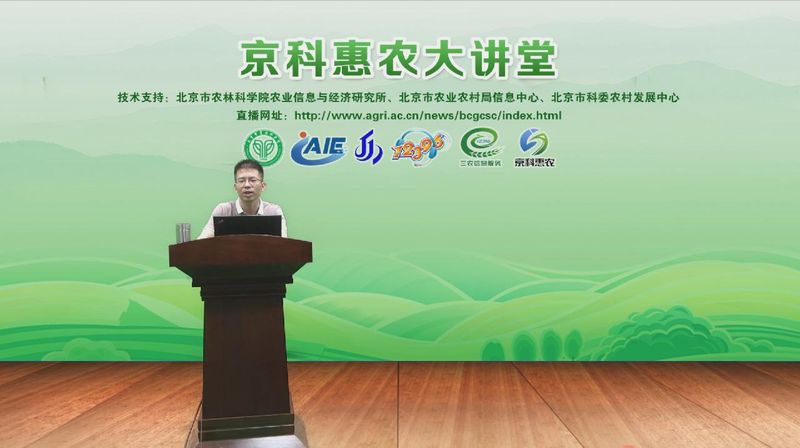
Wei kimcon's senior agronomist is live in the virtual studio
In the course of the live broadcasts, the senior agropastoralist wei kimcon gave presentations on the practice of baptism cultivation in the beijing region, the main technical aspects of solar greenhouse cultivation, problems and proposals for resolution. He began with a review of developments in the beijing region by describing the resources, categories and industrial history of the sheep’s belly, with a detailed presentation focusing on solar-light room cultivation techniques for the sheep’s belly in the context of production needs. In the context of its own practice, it analysed the main problems in the cultivation of the edible bacteria and made recommendations for targeted solutions. In the course of the lectures, users raised issues related to the growth of the sheep’s belly, the stability of the technique, the prospects for market development, the method of purchase of the seed, and the importance of planting it, all of which were answered with enthusiasm by mr. Wei jincon。
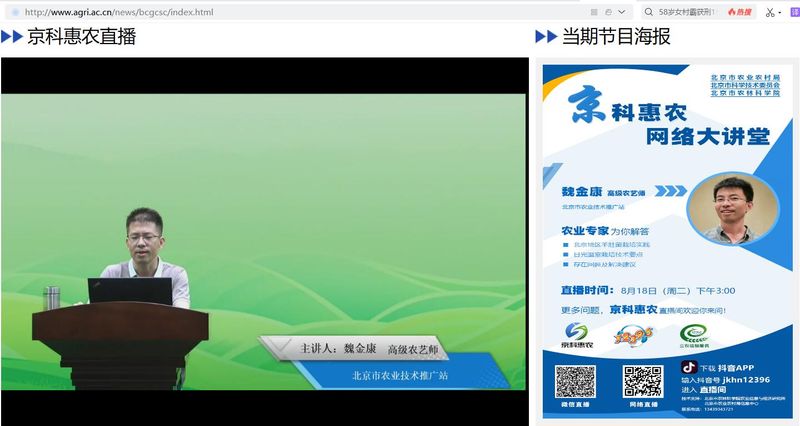
Live classes broadcast simultaneously on topic pages
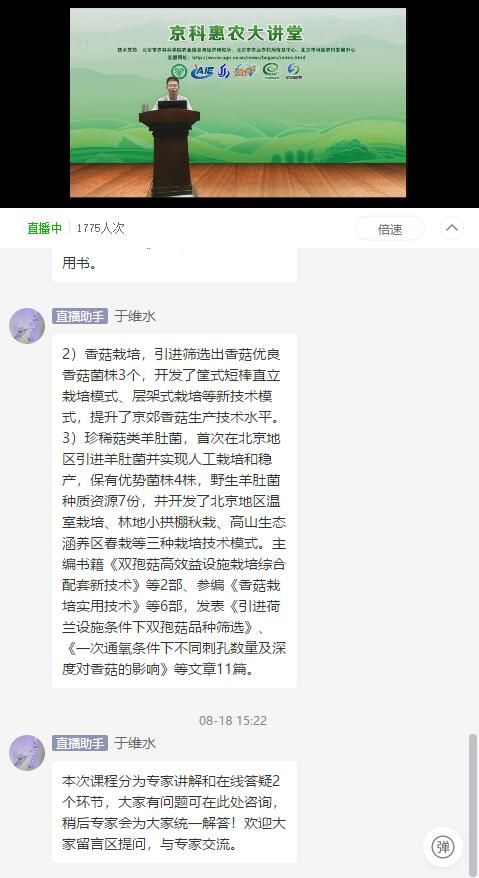
Live classes are broadcast simultaneously on platforms like twitter
The live lectures were broadcast simultaneously on the beijing agricultural information network (jain) thematic, micro-intelligence and shivering platforms, and attracted over 1,900 listeners from the government departments of kyinzu and the surrounding areas, business parks, production bases, agricultural operators, as well as scientific and technical agents at all levels and a wide range of edible bacteria growers. It was indicated that teachers had learned to cultivate the fungus by explaining that there was a clearer understanding of the past and the prospects for industrial development. In view of the technical difficulties involved in the production of the virus, it is hoped that the experts will be able to provide further guidance in the field, help to develop technical details, contribute to the improvement of production management capacity, guarantee the stability of the industry and contribute to the further growth of farmers. Information and economics institute