In recent days, shandong friends have sent invitations, and the purpose of the property industry is to have other paying owners denounce them, shame them and then pay their own property

As a result, the owners who paid the money looked at the fact that so many owners did not pay the money, and the owners who paid the money became the worst. We've chosen not to pay, but we can pay for it. Why should we? And even if we don't pay now, we're better off than the owners on the list, and the owners who don't pay don't pay so much
I have to say, the property manager is so smart that he succeeded in turning a small problem into a big event
According to photographs provided by netizens, this time it was published as a long-term non-payment of property fees. The list is large, and there are dozens of families. It was not known that so many people had failed to pay, and this announcement became a group effect。
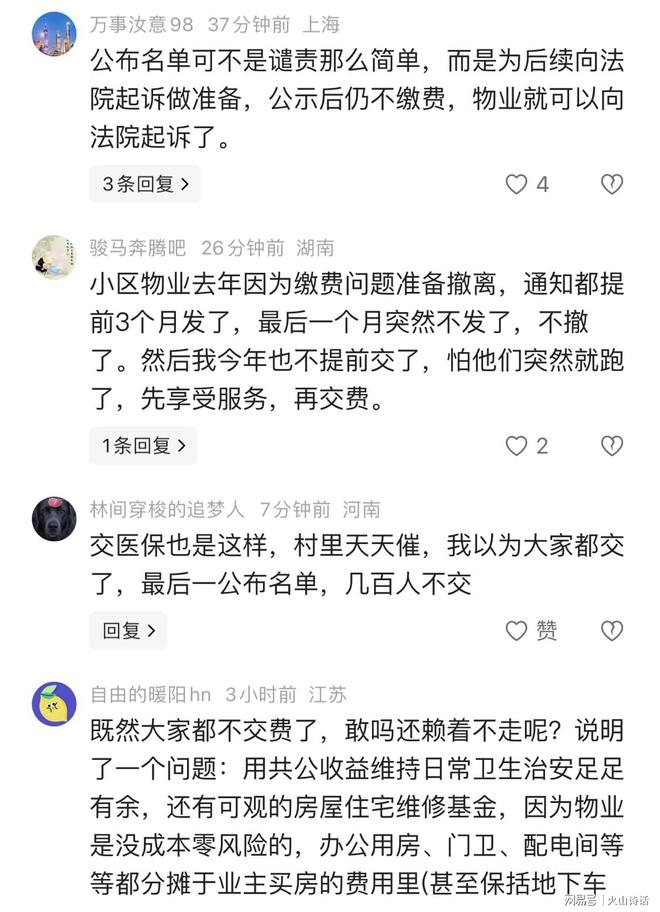
There's a comment on this. Since everyone's not paying, why don't you leave? The problem is illustrated by the fact that there are more than enough public revenues to maintain daily hygiene and that there are considerable housing maintenance funds, as the property is cost-free and risk-free, with office accommodations, door guards, electrical distribution rooms, etc. Being shared among owners (and even secure-ground garages). Property is forced to accept it when the owner buys it, and property fees are forced to accept it
It was pointed out that the publication of the list was not so simple as to condemn it, but rather to prepare for subsequent court proceedings, after which the property could be brought to court without paying a fee。
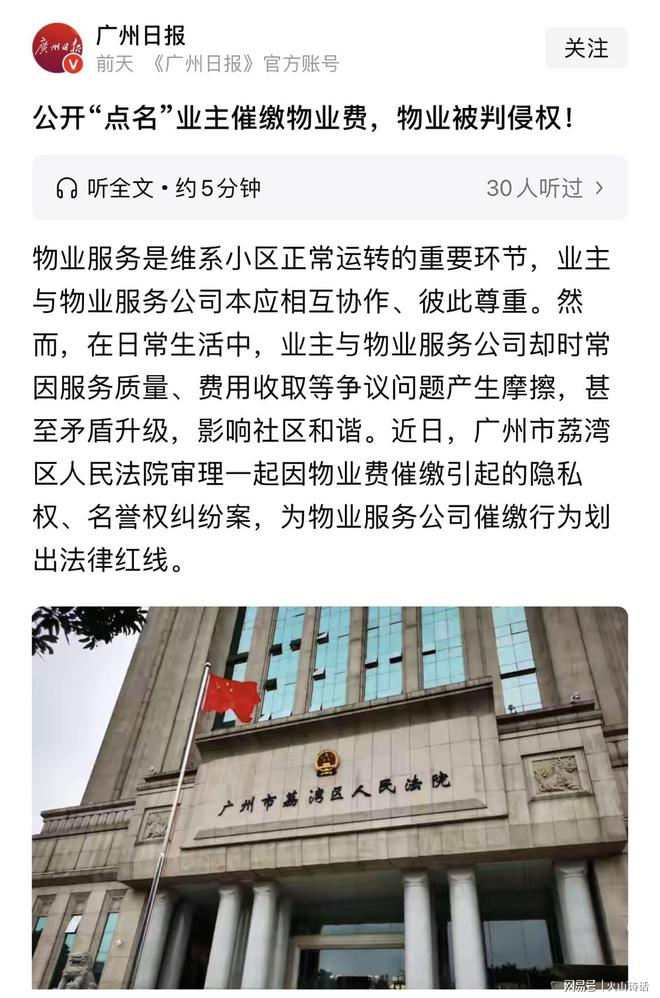
According to media reports, in april last year mr. Qin, who lives in subdistrict a of the bay of guangzhou, suffered this terrible tragedy。
In an attempt to collect property fees, the property company issued the “killer trap” — a letter was posted in the elevator of the building's long-outstanding owner unit. It's just a room number, but it's probably not strong enough to print out mr. Qin's name, the amount of time and money。
This is the size of the neighborhood. This piece of paper is equivalent to broadcasting “mr. Qin owes no money”. Mr. Qin blew up at the time, not just as a reminder, but as a “show” to his privacy on the wall。
What is even more unacceptable to mr. Qin is that this approach quickly provoked debate in the group of owners and even pointed to him. Mr. Qin's petition brought the property to court, demanding an end to the violation, an apology, and compensation for moral damages。
From the point of view of property, they feel that they have reasons. What kind of cleaning, security, greening? The long-term arrears of owners do affect the proper functioning of the districts. In the view of the property, i did not fabricate the facts, you did owe the money, i told them to collect it, how could it be a violation
Many property companies actually have this mentality: if you don't realize it, i'll force you with public opinion. Such methods are simple and brutal and become “conventional” in many old districts。
However, they ignored one of the most critical issues: that debt-servicing is legal, but that the means must be legal. For that $2,000 of property, can you rub the owners' “face” and privacy on the ground
The decision of the guangzhou court of peng bay was passed, not only as a confession to mr. Qin, but also as a lesson to all property companies。
The logic of the court is very clear: one in one. First of all, there is no fault that the owner owes money and that the property does have the right to collect. However, there are boundaries to the collection. The provisions of the civil code were clear and natural persons had the right to privacy. A combination of names, house numbers and non-payment cases is classified as confidential information capable of identifying a particular identity。
Direct “naming of names” in public areas such as elevators clearly exceed reasonable limits and constitutes a violation of mr. Qin's right to privacy。
In the end, the court ruled that the property company was “two steps”: first, to tear the notice immediately; and secondly, to post an apology at its original location and to publicly apologize to mr. Qin。
However, the courts were also objective. The court did not support mr. Qin's claim of violation of his honour and moral damages. The reason for this is also simple: the property is a matter of truth and, although not in a proper manner, it does not denigrate you and therefore does not constitute a violation of honour。
The case awakened the owner, and it would be a real violation of the right to privacy if the property were to hang its name on a wall, not to argue with the housekeeper in the community, and to keep the evidence directly (photo, video)。
Of course, as owners, there is also reason. Access to services requires the payment of money, which can be dealt with through a commission or administrative complaints channel if it is perceived that the property services are poor, and by “rejection of property fees” alone。
It's more of a alarm for a property company. The charge can be made by telephone, by means of microletters, by means of a letter from a lawyer, or even by direct prosecution. But don't even think about "showing the streets." times change, legal red lines don't touch. Otherwise, the money's not coming back, you'll have to go back to the case and apologize。
What do you think about that