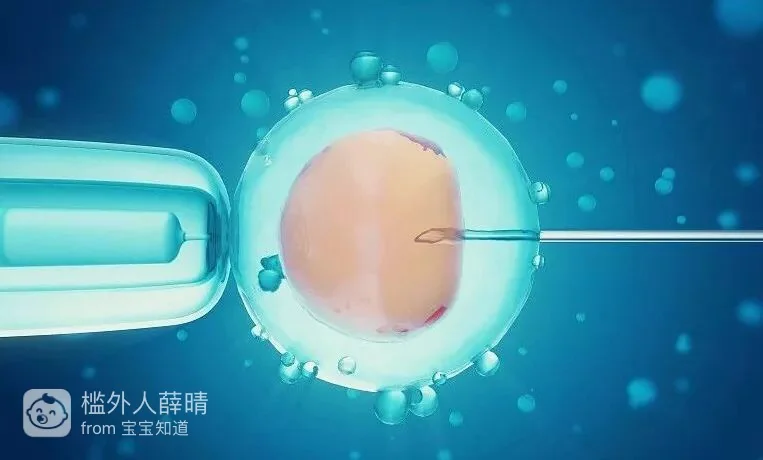
More than 8 million test tube babies have arrived in the world
This is a report published by the international technical control committee on assisted fertility in 2018. Assisted reproduction technology (et) offers hope for a new life for couples who, for various reasons, cannot give birth, but needs vigilance! This new technology may also be being misused。
780,000 test tube babies in five years
He's just a common disease
During one of the clinics, professor deng chunhua, the first hospital attached to nakayama university, received such a 38-year-old male patient。
Five years ago, due to a slight drop in the quality of semen, he went to the reproductive centre of a major hospital for a second visit and was recommended by the doctor as an in vitro baby。
So he put the hard savings of $780,000 into the in vitro baby, and five years later, his wife's stomach was "silent."。
“doctor, i'm out of money and i'm not in the mood to work, so i'm coming to see you and i'm not hoping.” he said to professor dun chunhua at the clinic。
It is surprising, however, that after a series of male medical examinations, it was discovered that the man, who was almost defeated by infertility, had suffered from three levels of semenic veins。
Precision veins are more common among male infertility patients, some of whom can be treated through surgery。
According to professor deng chunhua, the improvement rate of semen after general cipher artery is about 60% - 70%, pregnancy rate 30% - 40%, and quality of semen has improved in most patients from the second half to one year。
The couple eventually gave birth to their own children by natural birth, after a hysterectomy。
Some test tube baby technology
Improper use
Assisted reproductive technology does give hope to infertility couples, but how many of these in vitro patients must do it
As early as 20 years ago, the chief medical doctor of the longhua hospital, affiliated with the shanghai medical university, called on men and women of childbearing age to carefully choose assistive reproductive technology. In his view, assisted reproduction techniques had become widespread in recent years。
“during one morning's clinic, two patients were recommended as in vitro babies in other institutions, and the two patients were simply less dynamic and less numerous”. Professor chi guang chong said that some institutions recommended the test tube only once or twice after both spouses had completed the relevant examination, and it was only when the patient took all his family's property and turned back to the “trace of the roots” that found that some patients had not even taken the most basic steps of diagnosis and treatment and had passed the “judgement” for the test tube
“the threshold for infertility is getting lower.” professor han yuhui, director of the institute of reproductive medicine of the south-east university medical school of xu's medical school, is saying that some informal private hospitals are infertile and unpregnant, inhospitable areas, and that some of them are not only ill-treated, but also worse, such as patients with obstructive and sperm-free diseases, which are absolute microsurgery adaptations and can be used for assisted reproductive treatment, but are forced to undergo many non-effective drug treatments, wasteing their time, money and energy。
Success rate of in vitro babies
Exaggerated and misunderstood
The success rate, which has been the focus of outreach in in vitro infant care institutions, is as high as 70 per cent and 80 per cent of success rates, leaving men and women who are eager to have a baby. However, in the doctor's opinion, the concept of success rate has been exaggerated and misunderstood。
"the success rate is high or low, depending on how you calculate." professor zhuymin, director of the reproductive endocrinology section of the gynaecology and gynaecology hospital, faculty of medicine, zhejiang university, described the “sifting” of patients in some assisted reproductive institutions and the “demeaning” of patients, which naturally increased the success rate。
The calculation of success rates is usually based on the transplant cycle, i. E., the embryo is taken back to the uterus after the patient has undergone an in vitro baby, but there is also a significant proportion of patients who do not have any transplant opportunities, such as infertile eggs, embryos not split or embryo chromosomal abnormalities, some of which are not included in the statistics and the “success rate” is naturally high。
Age is also one of the parameters of success statistics. The 35-year-old woman is usually considered to be a watershed in the ovarian function, followed by a marked decline in ovarian function each year. Thus, when statistical success rates are grouped, the age of women is broken down into those under 35, 35-37, 38-40, 41-42, 43-44 and over 44。
“the success rate at age 30 is certainly different from the success rate at age 40, but there are assisted reproductive institutions that confuse age limits and refer to success rates in general terms. It's not the same. Professor juymin pointed out that the determination and analysis of the success rate of in vitro babies were relevant and could not be generalized。
In the case of such a patient, professor juymin counsels. “in principle, women over 45 years of age are not recommended for in vitro babies, as their pregnancy success rate is less than 2 per cent. It's not like it's gonna happen
In an interview with the media, huang hao, a member of the chinese academy of sciences and dean of the international institute for peace, maternal and child health, faculty of medicine, shanghai university of transport, also suggested that women should no longer have to try giving birth at age 45。
“about 1. 3 per cent of women aged around 40 and almost 1 per cent of women reached the age of 43 are able to give birth normally throughout their biological process.” the ovarian function has begun to decline since the age of 30 for females, giving birth very carefully after the age of 40 and not after the age of 45。
However, over-exploiting the success rate of assistive reproductive technology, neglecting individual factors such as the age of the patient and the history of the disease, has led some patients to act blindly, which is a “failed wife” and failed。
The test tube cost 3 million in 10 years
It's over $100 billion for the nation's treatment
The 2012 study on the state of infertility in china, published jointly by the chinese population association and the national council for family planning, shows that the cost of an assisted reproduction cycle is around 50,000, and that treatment usually takes two to three cycles, for which patients pay more than $100 billion a year。
According to professor juymin, the cost of in vitro babies comes mainly from the costs of examination, ovulation, egg removal, transplantation, freezing, and extra single sperm injections due to the problem of convalescent eggs。
For example, the types of ovulation drugs range from hundreds to thousands or even tens of thousands. “each person's physical condition varies, as does the cost of the options and medications he or she chooses. Generally speaking, women with less functional ovarians and older women will need higher quantities and higher costs of ovulation drugs.”
Ten years of in vitro babies, costing over three million -- it's not all night. Professor deng chunhua was shocked to hear this figure for the first time, despite having seen many men and women who had gone off the road due to medical problems。
Not long ago, he heard from a friend about his cousin's request for medical treatment: 10 years of test tube road, over 3 million people, relatives and friends borrowed it, and last year he finally got what he wanted and gave birth to a fat boy
While the family was happy with this hard-won little life, it found that the child's state of health was in jeopardy: not only the urea cracks, the hidden testicles, but also the two-focused neurosis deafness, along with five congenital heart diseases。
In such a situation, the attending “comforts”: “are there still three embryos left to freeze, or should one be born?”
I'm sorry to hear you say that。
Natural conception is the best option
The test tube technology is just a last resort
On 25 july 1978, the world's first test tube baby was born in the united kingdom. Over the past 40 years and more, assisted reproductive technology has given hope to countless people as a method for infertility treatment. However, assisted reproduction is only a last resort。
Since 2005, the zhejiang university hospital for gynaecology and gynaecology, attached to the medical school of zhejiang university, has been conducting a long-term follow-up visit to more than 5,000 test tube babies for 13 years, with the result that children born through assisted reproductive technology may be affected by their weight and metabolism during their development, and that after a certain age, the incidence of haemoglobin and sugar metabolism will increase, and the incidence of diabetes, hypertension and hypertension will increase more than that of children born of natural pregnancy。
Professor juymin stated that these anomalies were related to the health status of the parents themselves (e. G., ovarian syndrome, metabolic disease, hypertension, etc.), as well as to the imbalance in the levels of hormones in women as a result of the use of ovulation drugs by women during assisted reproduction, as well as to the in vitro operation of assistive reproduction techniques and the uterine conditions。
In addition, according to the 2013 united states-wide analysis of birth defects data, some congenital defects are more common in infants born from in vitro fertilisation, especially in the absence of room spacing (vsd, most common congenital heart disease), lip cracks, oesophagus locks and anal rectum locks。
“how to ensure maternal and child health on the basis of the birth of a child is a more important issue than the birth of a child.” at the fourth academic seminar on assistive reproductive quality control, held in september last year, master huang hae and professor juymin, among others, unanimously proposed a shift in research objectives for assistive reproductive technology from an initial “improved success rate” to a current “birth healthy generation”。
With regard to infertility, doctors agree that it is best to deal with the primary causes of infertility as much as possible, and that natural infertility is the best option by addressing the disease。
Both men, women and men are systematically assessed and receive at least three steps of treatment, basic treatment, treatment of the causes of the disease and empirical treatment, which are considered to be in vitro babies on the basis that all three strategic treatments are ineffective. In vitro babies should be the last option。
Related
What if you find out you're not pregnant
(c) birth at the appropriate age, so as to avoid childbirth at an advanced age. The value of reproductive functions in female ovaries is reflected in the fact that the mother is in the best state of health at the time of the female youth and optimal ovarian function, and that the best quality of the eggs and the best physical and mental care is available to the younger generation。
The normal sexual life of the couple is longer than a year without pregnancy, and the spouses are required to examine which part of infertility bothers you and prevents you from giving birth, after which the doctor will help you with as simple a method as possible and, if necessary, as early as possible with assisted reproduction techniques, so that a healthy baby can be reached with relatively little intervention。
What about test tube babies
In the course of an in vitro baby, the egg is taken out of the ovary by means of a pushative ovulation treatment (one needle, one ovulator). If the egg is premature, the next step cannot be taken. The sperm is then removed from the man, the sperm is integrated in the laboratory and transplanted after two to five days. During the process, the process is phased out, the doctor eventually removes one or more of the embryos from the uterus of the woman, and the rest of the embryos are kept in a liquid nitrogen tank at 196 degrees below。
Fourteen days after the transplant, is the day everyone prays night and night. Because if the woman is not pregnant, the frozen embryo is removed for transplant and if the pregnancy is successful, the rest of the embryo will wait in the liquid nitrogen cans for an “awakening”。