A day ago, the official network of the institute disclosed the response to the letter of follow-up to the board meeting on the application for the first public distribution of shares and listing on the board of business, which was approved for consideration。
Less than $14
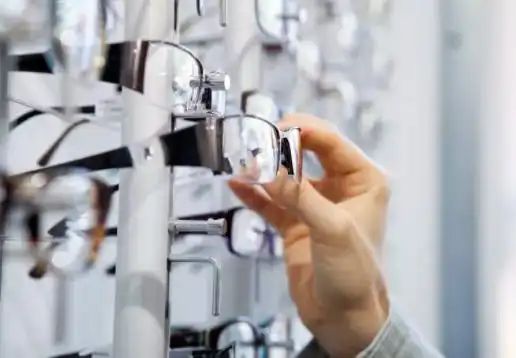
The sharp profits in the eyeglass industry are often acclaimed, but the cost of a lens is very small。
The mirror vendors are about to come on the market, and their equity book reveals the sharp profits of the glass industry -
The actual cost of a pair of glasses is disclosed in the equity book. In 2020, for example, only $6. 77/film. In 2019, the cost of lenses was only $6. 23 per film. The rising costs are accompanied by constant price increases for the products. In 2019, the average price of the lens was 13. 48 yuan/film, an increase of 20. 84 per cent over the same period; in 2020, the average price of the lens was 15. 61 yuan/film, an increase of 15. 83 per cent over the same period。
The average annual cost of a lens in 2020 was $6. 77, compared to $13. 54 per pair, while according to the book of stock, the price of a non-spherical lens with the highest refraction rate of 1. 74 per pair (2 pieces) was as high as $2598。
The māori rate is 91. 7%
According to the equity book, in 2020, the unit cost of the sunglasses was 175. 43 yuan/film and the unit cost was 14. 56 yuan/film, with a maori rate of 91. 7 per cent. At the same time, however, the book of stock calls for a net sales rate of only 15. 11 per cent in 2020, and why is the net interest rate so low when the māori rate is so high
“the ratio of māori to mirror products is relatively high in the electrician's own channels, where the issuer's customers are mainly end natural persons. The issuer, as a producer of upstream lenses, can obtain high premium pricing at the retail level, thus obtaining higher maori space.” the sunglasses explain this。
In addition to the power company's own channels, the mirror also operates an offline experience shop. With their own underground experience shop, the sunglasses also have higher pricing rights. According to the equity book, the unit cost of lenses sold at the underline experience shop was $101. 16 per film, and the unit cost was $9. 96 per film, with a maori rate as high as 90. 16 per cent。
However, it has been argued that, in practice, the end-entity glasses shop, while profiting from the sale of lenses and frames, is required to provide technical and optical services, which, in addition to the costs of rent, utilities and manual management, are included in the costs of the lenses and frames。
The mirror shows that it is upstream in the industrial chain, has a voice and has access to costs and pricing advantages. So the cost of the lenses is very different from the sale price, and the māori rate is very high, and what is the profit that it has eroded? The equity book offers answers。
Over 20 per cent of sales costs
According to the equity book, from 2018 to 2020, the cost of selling the mirrors was significantly higher than their net profit to the mother in the year, at 15. 08 per cent, 18. 80 per cent and 20. 87 per cent, respectively。
In its book, the sunglasses indicate that the distribution cost of distribution has been rising year by year, mainly as a result of the company's efforts to build a leading brand of national mirrors and to increase advertising。
According to the book, from 2018 to 2020, the amount of advertising for the mirror is 24,543 million yuan, 41,178,400 yuan and 46,449 million yuan, representing 8. 26 per cent, 11. 12 per cent and 11. 91 per cent of the total, respectively。
So much advocacy, so how much is the moonglass in research and development? Between 2018 and 2020, the costs of developing the mirrors were $1. 535 million, $1. 626 million and $1. 762 million respectively, representing 3. 01 per cent, 2. 94 per cent and 3. 27 per cent of the total, respectively, and well below the sales costs of nearly 20 per cent. (more news, please focus on the sheep town pie. Ycwb. Com)