In another year, the shrimp season was “eating”, and the lobsters had been widely marketed. At the same time, the topic “the price of lobster has fallen by almost 50 per cent” has been hotly searched. In the beijing market, the retail price of shrimp on-line fresh platforms is already below $20 per pound. However, this is not a minimum price, and industry believes that the price of lobster will decline in the future。
As temperatures continue to rise, the consumption of lobsters enters a boom, but prices are falling. On 12 may, wholesalers at the lobster trading centre in the city of kuangjiang, hubei province, claimed that the price of the chinese and young species had dropped from 42 yuan per pound at the time of their listing to 13 yuan per pound at present。
Since april, the price of lobster has continued to decline. In late april, in the port-west seafood market after qingdao in shandong, fish operators indicated that they could sell more than 100 pounds per day at the beginning of april, while selling around 500 pounds per day. During the same period, the largest volume of medium-size lobsters dropped from 40 to 18 yuan per pound, a drop of more than 50 per cent。
According to the head of the china aquaculture circulation and processing association, the national wholesale price for lobsters was over 35 yuan per pound in january and april of this year, and 19 yuan per pound in may, a reduction of nearly 50 per cent, with prices falling further。
Currently, the retail price of lobster in the beijing market is also less than $20 per pound. Under the umbrella of the united states, the price of the mid-sized lobster is 57. 9 pounds, equivalent to 19. 3 pounds, and the price of the package is 59. 7 pounds, on the basis of which a discount of 5 yuan is also issued, at a rate of 18. 2 yuan per pound。
01. Supply exceeds demand
Industry analyses indicate that the main reason for the fall in the price of lobster is that the supply of the market exceeds demand. On the one hand, there has been a steady improvement in the technology for raising lobsters, a continued expansion of production areas and a significant increase in market supply as a result of centralization in april. On the other hand, demand is affected by some stock backlogs and the diversion of consumption sites。
The analysis and analysis report on the china lobster industry (2025), published by the china association for the circulation and processing of aquaculture, shows that last year some 30 million acres were farmed in china, with a total production of over 3 million tons. In the provinces of hubei, anhui, hunan, jiangsu, jiangxi and sichuan, 15 small lobster seed farms have been built at the provincial level. With the growth and growth of these good breeding grounds and the continued increase in related scientific inputs, it is expected that the rate of seeding self-sufficiency will increase to 80 per cent in the future。
According to the wholesalers of the lobster trading centre in hong kong, hubei province, the amount of lobster sold was approximately 2000-3000 kg/day, and is now 30,000-50,000 kg/day。
In the short term (may-june), the prices of lobsters are or continue to be explored. The market is expected to enter the market in late april in the form of a mass of shrunk shrimp, which will be supplied in the shandong and anhui regions. In the medium term (july-august), high-temperature weather has reduced the supply of shrimp and prices may rebound. In the long run, the industry will speed up the shuffle, with the difference or continued increase between the prices of “precision shrimp” and “prefect shrimp”。
The “pro-civilization” of lobster prices enriches the citizens' table. “liberty lobster” has become one of the most enjoyable consumption experiences of the season, both for family dinners and for night markets. However, industry reminds that, although the price of lobster is affordable, proper quantities are also required for food, while fresh, clean lobsters are selected and cooked to ensure food safety and health。
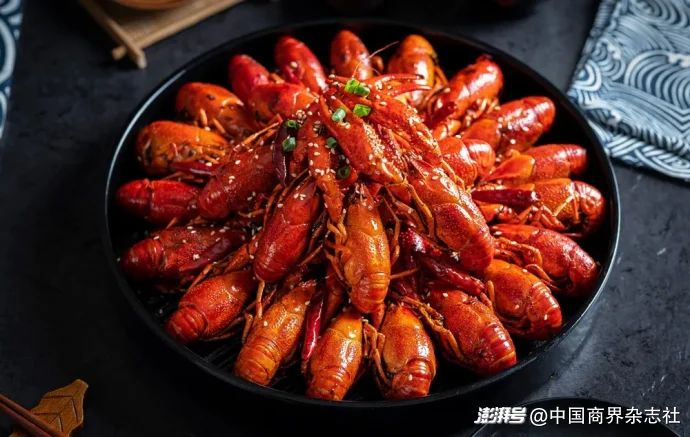
Information diagrams provided by the camera。
02. Related publicly listed company operating savings
In recent years, the decline in the heat of the lobster has slowed down the performance of the relevant listed companies。
The annual report published at the end of april by the federación de aquaculture shows a net loss of about $742 million in companies over the past year, an increase in losses over the same period. Among them, the aquatic food business, which included lobster pre-fabricated vegetables, received $3,232 million last year, a decline of 25. 25 per cent over the same period。
The announcement issued by the federación aquaculture states that it will terminate the "deep processing extension project of the federación alimentarial (iwyang) food company limited". The main products of the project were lobster and fish deep-processed products, for which a total investment of 602 million yuan was proposed. The project will result in an annual production capacity of 153,000 tons of lobster and 297,000 tons of fish deep-processed products。
With regard to the reasons for the termination of the project, the union indicated that the market boom for pre-vegetated vegetables had been reduced as a result of the overall macroeconomic environment in recent years, changes in market demand, in particular the decline in the heat of lobsters and the continued decline in prices. There is still considerable room for improvement in the existing production line capacity of companies, which can meet existing market demand。
At the same time, the performance of another listed company, the well-welled food, has been hampered by the lobster business。
The well food received $15. 13 billion in 2024, an increase of 7. 7 per cent over the same period; the net profit was $1,485 million, a slight increase of 0. 46 per cent over the same period, with a slight decline in the rate of increase in the harvest and net profit. In addition, the company's stock of fast-frozen vegetables in 2024 decreased by 31. 70 per cent, mainly due to the reduction in stocks of lobster-related products。
In the annual report, it was clearly stated that with the fever and even overheating of the lobster industry in recent years, accelerated capital entry and rapid expansion at the supply end, the prices of shrimp tails and lobsters continued to decline, and the pressure on businesses to operate increased sharply. In addition, the fragmentation and fragmentation of fast-moving market channels, including in the frozen food industry, are becoming more visible。
I've been working on this