In the middle, the weather is hot and hot, the rain is so low, many onions in their households look at leafy green oil and look good. It is not until later harvests that they find that they are white, short and thin, and that they break up with empty hearts, that they can't get up, that they can't sell, that they have been busy for six months and that they have lost their earnings。
A lot of people think it's after the fall, but it's not really the right idea。
These 20 days of mimicking are a critical transitional phase in the nutrient transformation of the onions, planting long leaves on one side while also building up the nutrient base for onions。
Feedback from field-based multi-cropping practices can provide a good basis for management in the later stages, and the effect will be significantly reduced if the pits are managed, the roots are damaged and the nutrient supply is disrupted, and when the fall is followed by remediation。
Whether it be on a large scale in daejeon or on a small scale in a vegetable garden, they cannot be lazy for 20 days。
Today, i want to make clear to you three methods of good conduct management, avoiding common faults, helping onions to grow roots, promote onions and improve onions quality。
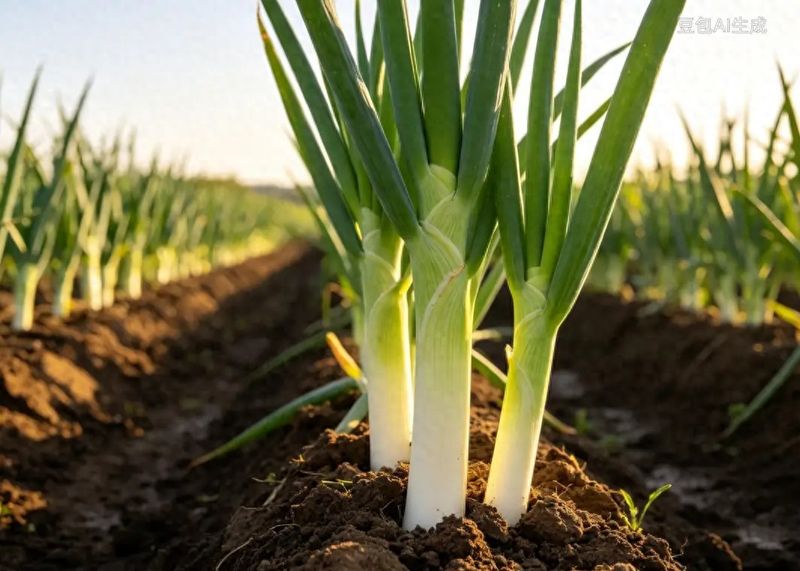
One, water and water. It's fundamental to keep the roots together
The root of the onion is shallow and deep-rooted, unable to withstand persistent drought, and is more afraid of the stifling root system in the field, the erosion of the root system in the middle temperatures, and the waste of any subsequent fertilization management。
Many farmers are vulnerable to two extremes here, either daily flooding and the soil is wet, or they feel drought-resistant and long-term exposure to the soil, which can cause damage to the root of the onion。
Let's start by pouring water, not choosing the hot afternoon。
At noon, high surface temperatures, low water temperature in wells, cold water pouring into hot soil, large temperature differentials can easily damage onions, followed by dry tips, yellow leaves and atrophy。
Water is given preference in the morning or evening, with light water, slowly immersing the soil along the gutter, and not with heavy water。
There is a simple and practical way to decide whether to water it, stretching out of the earth's surface to some five centimetres of ground, scratching a piece of dirt, holding it in groups, spreading it down gently, indicating that the soil is just so wet that it does not need to be watered for the time being; it is dry and hard, and if it does not, the water can be watered; and it is slimy that the water must be managed in time。
Volatile rainfall is concentrated, and the first thing to do after the heavy rains is to plow the field ditches and quickly drain clean water. The onion roots are so long in the water they accumulate, they can easily rot with oxygen, and generally accumulate for more than six hours, they begin to adversely affect the root systems。
After the rainwater is drained, until the surface soil is slightly dry, it can run over the surface, break the soil sheeting and clear the weeds。
It is important not to overwhelm the root of the onion, which is mostly spread in the shallow soil and which can easily be removed directly and counterproductive。
If the ground of the vegetable garden is bare, a thin layer of straw can also be laid in the room, which can reduce surface temperature and water evaporation, as well as inhibiting weed growth, which is a simple practical field management technique。
Ii. Fertilizers do not blindly pursue urea, and nitrogen-added potassium anti-aircraft cores heart
This is the area where most growers are most prone to pitting。
Many of the old people have a belief that growing crops require more urea, and that the yellowing of large onion leaves leads to a single urea to fattening and to the greening of the leaves。
In the middle stage, excessive application of single nitrogen fertilizers can only drive wildly large onion blades, tall and thin, poorly ventilated fields, easily inverted, and can induce all kinds of diseases。
Large amounts of nutrients are consumed on the leaves, the nutrients that feed onions grow less, which directly results in onions being thin, and increases the probability of hollowing and cracking, and looks at green oils on the ground, which are of poor quality and not sold。
This is not to say that nitrogen fertilizer is not possible at all, but rather that it is a critical period of mercuracy, rather than urea alone, with a distribution ratio and a focus on potassium and calcium fertilizer。
Potassium fat allows onions to expand and plant against inverts; calcium is able to strengthen cell walls and significantly reduce onions and crack problems, which work together so that onion weighs closely。
Root fattening, preference for high potassium-type compound fertilizer, combined with the fertility of the home plot, with 15-20 kg per acre in the field, with different soil fertility levels, can increase fertilizer use, small area cultivation, reduced fertilizer use, thin fertilizer application, and no one-time application to avoid high temperatures and burning roots。
Conditions permit, but can also be accompanied by a small amount of fully decomposed organic fertilizers to improve the soil environment。
Time for fatting selects the dark day or evening, and water is poured after application to help the nutrients seep slowly。
It can also be combined with leaf-side spraying, with potassium phosphate and boron fertilizer, and evenly applied to water onion blades on the opposite side, once at 10 days intervals, twice in a row, with supplementary nutrients。
Here, it is recalled that fertilizer use does not have fixed death standards, that soil fertility is different, that the use of fertilizers is flexible, that fertile plots have been properly reduced in fertilization, that soil infertile plots have been reasonably increased, and that blindly increased fertilizer use is taboo。
Three: scientific subculture, softening of the onions, and a heavy burial
If you want to grow white and be white, it's a necessary operation. Onions are white, i. E., the scavengers, and the long-term sighting of the sun makes it green and aging, as well as the rational preparation of the earth, and the creation of a light-shield environment for the base, which can contribute to the growth and growth of the onion, while at the same time maintaining the plant and reducing the risk of later inversion。
But there is a way for many people to get ahead of it, thinking that with more than one burial, they can grow fast, pile up a layer of dust once, and bury their hearts in the mud。
The high temperature of the volts and the burial of the heart leaves, the high humidity of the soil and the poor air of the heart leaves, are very prone to decay and cause the growth of the onions to stagnate and pay off。
The middle voltage remembers the core principle: bounty, tinker bell, can never bury the leaves of the onions, but only the snails of the leaves, in which the freshest leaves must be found above the ground。
The soil is given priority in the selection of the sun and afternoons, and after a day of light, the onion blades become softer and softer, and the onion leaves are not easily broken when they are operated; when the soil is wet, they are not ground-painted, the clay is sticky and the plant is prone to suffocation。
Each time the soil thickness is 3 to 5 cm, the earth blocks must be crushed, with loosely dispersed soil between rows chosen and with no large hard and wet clay。
When the earth is taken, it is taken between two rows of onions, so do not go too close to the root of the onion, and dig too deep, and do not hurt the root of the onion。
During the 20-day gold period, it is possible to do 1 to 2 shallow trainings, without having to pursue a step-by-step approach, and after the autumn it is possible to continue with sub-painting and gradually lift the earth。
The soil is prepared to make simple repairs to the trenches to facilitate subsequent watering and drainage in the rain。
Iv. Synchronization of pest prevention and reduction of plant damage
High temperature, high humidity, high infestation times of onion disease, soft rot, purple, frosty disease, horseback, zenet flies are common pests on onions。
When plants are affected by pests, leaves are damaged, light cooperation is reduced and nutrients are accumulated, and if the soil is fully bred, onion growth is also affected。
Management priority is given to physics, field management and green approach to disease prevention and treatment, and drug use is reduced。
Daily visits to the fields have revealed that already seriously ill plants are brought out in time to clean up the fields and not to remain on the ground to spread the bacteria; venturing is done to avoid over-density and drainage after rain, reducing the humidity of the fields and reducing the probability of many outbreaks。
If field pests have already occurred, there is a real need to use pesticides, strictly in accordance with the instructional ratio concentration, avoid high-temperature application at noon, observe safety intervals and refrain from any increase in the use of medicines。
You can't do these things
(a) first, not to pour water during the afternoon, not to produce soil during the afternoon, and both operations at high temperatures can easily cause damage to onion roots and leaves
Second, no urea, nitrous excess and low white quality
Thirdly, no one should be buried in one-time thickness, which would cause rot
Fourth, fattening is followed by no rain, soil moisture is high and fertilizers tend to accumulate and burn。
The core role of these 20 days is not simply to allow onions to immediately achieve high yields, but to lay the foundations, maintain the roots, regulate the nutrient supply, and reduce all kinds of damage, until after autumn, when the temperature differentials between day and night increase, when the onion rises rapidly, and when the bottom is up, the onion can reach its full growth potential。
It is also important to take an objective view that the quality of the final production of onions is related to the selection of varieties, the timing of seeding, soil conditions, the later climate, the management of the whole package, which cannot be determined by 20 days alone, but to a large extent by the final production。
So, my friends, how are the onions you planted this year? How many practical lessons do you have? The comment section is welcome to share。