


High-impact practices for planting under the forest
Mount du hong and others
0 introduction
Panax japonicus is a multi-year home-grown grassland plant of five gadgets, alias bamboo verse 37, bamboo verse 7, bamboo ginseng, white verse 37. It is located in the north-east of china and in yunnan, guizhou, shaanxi, hubei, sichuan, hunan, jiangxi and zhejiang provinces, as well as viet nam, nepal, myanmar, japan and north korea. A dry tuber is used to stop bleeding, swollen pains, coughs, and strength. It is used for coughing, damage, coughing and weakness. It has long relied on wild resources, which are scarce as a result of over-exploitation and destruction of habitats. To supplement the scarcity of wild resources, emphasis is gradually being placed on the cultivation of bamboo. In recent years, with a view to stabilizing food production and saving arable land resources, the cultivation of bamboo symbiotic plantations has gradually shifted from field to forest plantations. The rational use of forest land resources and the promotion of efficient cultivation techniques under bamboo symbiotic forests contribute to the conservation of forest resources, the enhancement of forest quality and the healthy development of the bamboo symbiotic farming industry。
1 picking and cropping
1. 1 choice of mother species
Good breeding is a prerequisite and basis for strong seedlings and productive production, and therefore good motherhood should be chosen. The mother-planting plant shall be selected from a well-growing area of 4a of the age of 4a, according to the following steps: 1 in the plot of cultivation shall be selected as a candidate for each 1m2 of the thickest, largest crowns, most abundant leaves and no insecticidal strains, which shall record the path, size of the prospective mother-plant; 2 shall calculate the average terrain, mean crown size; 3 in the plot of cultivation shall be chosen as the mother-planting plant, with a size greater than the mean earth, average crown size, and number。
1. 2 quarrying
When the fruit matures into half red and half black in september, the fruit is harvested from the harvest mother plant。
1. 3 modified and seed storage
The harvested fruit is rinsed, the skin removed, pure seed obtained, disinfected with 0. 3 per cent potassium permanganate solution or 10 per cent ff solution and washed with water. Cleaned river sand 5 cm at the bottom of the storage containers (wood, foam, etc.) and then mixed clean river sand and seed with a ratio of four sands for one seed, followed by five to six cm sand. Wetting during storage。
2. Selection and collation of woodlands
2. 1 forest selection
Wild bamboo swaths are distributed at 800 ~2,400 m above sea level in the humid sub-forest, preferring cold and wet weather conditions with an average annual temperature of 10 ~ 15 °c, an extreme maximum temperature of < 35 °c, an extreme minimum temperature of > 12 °c, an annual activity temperature of over 2,700 °c above 10 °c and an average annual precipitation of 1,400 mm. The fertile soil is micro-acid brown, yellow, yellow, and especially ferocious. Under-forest plantations, where the environmental conditions are compatible with their ecological conditions, must also avoid forest lands that are prohibited by the state or all levels of government. The following conditions should also be met: slope < 35°, easy to transport, air quality to meet the requirements of the environmental air quality standards (gb 3095), soil to meet the requirements of the environmental quality of soils, risk control standards for soil pollution in agricultural land (temporary) (gb 15618), and irrigation water to meet the requirements of the irrigation water quality standards for agricultural land (gb 5084)。
2. 2 forest area allocation
Cultivation should be divided into small areas of 4 hm2 of continuous area according to the current situation, with more than 30 m of reserves to be retained between the sub-areas to protect native vegetation。
2. 3 forest clearing
Under-forest farming should be implemented as a forest management measure, and clearing of forest land requires two objectives: first, the accurate improvement of forest quality and, second, the facilitation of wood-covered under-forest cultivation. Therefore, woodland clean-up should be carried out in accordance with the requirements of the target tree operation method。
2. 3. 1 forest classification. Forest trees are first divided into target trees, auxiliary trees, jamming trees and other trees. Targeted trees are trees that meet the objectives of a forest operation and are free of pests and pests, no mechanical damage, straight trunks and full crowns. The number of targeted trees should be determined according to the objectives and target diameter of a forest operation, typically 8-15, with an appropriate small number of broad-leaved forests, an appropriate number of conifers, an appropriate small number of tree crowns and an appropriate number of small tree species. Auxiliary trees are trees that contribute to the growth of the target tree or that have special ecological effects, such as the habitat of wildlife, the protection of the national plant and the protection of the national habitat of flora and fauna. The jamming tree is a wood that affects the growth and development of the target tree and is mainly a wood that exerts pressure on the top or side of the target tree. Trees other than target trees, auxiliary trees and jamming trees are all trees。
2. 3. 2 determination of logging and logging patterns. The jamming trees are harvested, the target trees, the auxiliary trees are not allowed to be harvested, other trees are determined for logging according to the objectives of the forest operation, as well as the requirements of the bamboo section, and only the jamming trees are kept in the belt and not the other trees. The intensity of harvesting is calculated after logging, with nursery harvesting being used in juvenile, middle-aged and near-advanced forests with less than maximum fertility intensity, and harvesting is used in juvenile, medium-aged and near-advanced forests with more than the maximum allowable fertility intensity. Attention is drawn to the fact that eco-public interest forests do not allow for logging, and if the intensity of harvesting exceeds the maximum allowable fertility strength of eco-public goods forests, logging needs to be reoriented until it meets the requirements of eco-public goods. Low-yielding and inefficient forests can be converted to harvesting using low-yield (effective) forests。
2. 3. 3 forest land clean-up. In accordance with established logging patterns, logging is carried out after a legal logging permit has been issued, after which the remaining parts of the area are cleared, bushes and grasses are removed from the areas under cultivation, dead branches are cleared and stacked as required, without prejudice to the whole area and cultivation. The shrubs and grasses in the retained band are not permitted to be removed。
2. 4 land as a whole
It's june-october. Cultivated areas below 25° slope can be fully grounded, and plantations above 25° slope should be horizontally grounded along the contours. The whole area is cleared of miscellaneous items such as branches, stones, etc., which have an impact on cultivation and which can be used to cover the fallows of the planting bed, which can be set aside next to the subdistrict. The cleaning of the groceries is followed by the application of particles or powdered insecticides, which can also be applied evenly, with a deep roll of 30 ~ 35 cm, a long roll of 10 ~ 30 days, with 2 ~ 3 ploughs when sufficient time is available, and organic fats such as 30 000 ~ 45,000 kg/hm2 cow dung, pig dung, sheep dung, etc. The following points should be noted throughout the land: (a) local steep slopes in areas under cultivation, bare rock, national protected plant and animal habitats, etc., should be preserved; and (b) target trees should be protected, with 50 to 100 cm of the target tree base, which cannot cause mechanical damage to the target tree。
2. 5 beds
Beds are made before seeding or planting, 100 ~ 120 cm wide, bed 25 ~ 30 cm tall, ditch 30 ~ 35 cm wide, and if the whole land is not fertilized with fertilizers, which can be fertilized by bedside measures and combined fertilizer 0. 1 kg/m2。
2. 6 shacking
The nursery grounds can be built in front of the seedlings, and the planting grounds should be built before the planting. Reserved wood is used as a fixed stake, which is laid at a level of 3 m x 2 m in the middle of the forest, which is buried at least 50 cm below ground level and above 2 m above ground level. A grid of 8 # (or 10 #) fixed in a well font at 2 m above the ground, with anchor hooks around it, and a shade net laid on it, covering about 70%. Forest lands with a density of more than 0. 7 do not contain shades。
2. 7 built a shelter
The shelter is a small arch, designed to prevent the direct dripping of tree water on bamboo luminum, and also to prevent the infection of the fungus from the canopy to bamboo luminum along with the tree water. The first of these is a fixed stand of 1. 5 or 2 m between the sides of the planting bed, which is buried in the ground at least 30 cm and above 60 ~ 70 cm, provided that the height above all pillars is consistent. Then fix the arch on the stand, and the arch is 30 to 40 cm tall. Finally, plastic film is laid and secured on the archer, which is laid on the top of the archer and is fixed on both sides at a height of 40 to 50 cm。
2. 8 soil disinfection
A mixture of 50% more fungus and 70% more zinc in 1:1 for three to five days before seeding or planting, which is then distributed in the planting bed at 8 g/m2 and then mixed into the surface soil。
3 plantation techniques
3. 1 cultivation
The seed seed collected in the year and stored in wet sand was sowed in october-november with 0. 3 per cent potassium permanganate solution or 10 per cent ff solution impregnated with 10 min, followed by 150 ~ 250 mg/l cactin impregnated with 24 h, before being dried up. On-demand range 5 cm x 5 cm. The seedage was 0. 04 kg/m2 and spread evenly on the nursery bed. The seeding is around 1 cm of the dust, suitable for the absence of seeds, and then covered by a needle to keep it wet. Just keep the bed wet before the seeding. The seedlings began around april and were managed mainly for irrigation wetting, water prevention, weeding, fertilization and pest control. Weeding is based on the principle of early eradication. The seedling can be followed up with human and animal dung water, marshes, calcium perphosphate, compound fertilizer, etc., in amounts ranging from 7,500 to 15,000 kg/hm2, and calcium perphosphate 150 kg/hm2 or compound fat 75 kg/hm2. Two more attempts were made in mid-may and mid-july。
3. 2 deplantation
Soil disinfection by 3. 6 before planting. The transfer time is 10 to november, with the selection of healthy pest-free 1-2a seedlings, 1a seedlings can be planted 15 cm x 15 cm, 15 cm x 30 cm or 30 cm or 30 cm x 30 cm, 2a seedlings can be planted at 15 cm x 30 cm or 30 cm, 15 cm x 15 cm in the second year of planting, and 30 cm x 30 cm in the third year of shifting the strain to other planting beds. The bamboo section is so shallow that when it is planted, the head grows up, covering about 4 cm and covering the root system. The planting bed is then covered with pine needles or leaves to keep it wet。
3. 3 non-sexual reproduction
Choosing to grow strong, disease- and pest-free bamboo swaths, cut off in october at the scavenger, decontaminating first with more than 50% of the fungus of 5-10 centimetres immersed with more than 1,000 microcorms, extracting grass-grain or lacerator after drying and then planting 30 cm x 30 cm by row, or planting 5 cm x 5 cm before planting. Pre-planting should be graded according to the age and size of the sprouts, and different levels of stalks should be grown separately. Covered with pine needles or leaves to keep them wet。
3. 4 field management
3. 4. 1 prevention of soil erosion. Covering the bed with pine needles or leaves in seedlings or planting beds, and placing shaded nets in ditches, can effectively mitigate surface erosion caused by runoff。
3. 4. 2 weeding. Weed removal is done in a timely manner in accordance with the principle of early eradication。
3. 4. 3 irrigation drainage. Timely irrigation, maintaining soil moisture of around 40 per cent. Drain drains are purged to prevent water accumulation, which is checked during the rain and found to have been removed in time。
3. 4. 4 fertilization. Fats are pursued twice a year for may and july, with downblended human and animal faeces ranging from 30,000 to 45,000 kg/hm2 and combined fertilizers ranging from 300 kg/hm2. A winter fertilizer is applied once, first the covered pine needle or leaf is lifted, the decomposition of the manure is fully fined and then evenly distributed over the bed, with a fertilization of 30,000 to 45,000 kg/hm2, and then recovered with a pine needle or leaf。
3. 4. 5 cut flowers. Cut flowers in order to prevent flowering from consuming nutrients. The 1-2a plant has sprouts and must be cut off in time. 3a has a plant of about 1/2 or more, but seeds are often underdeveloped and need to be cut off. Seeds can mature when more than 4a plants are grown, and they can be cut from the buds of the plants other than the plants and from the side buds of the plants when they are grown according to 1. 1。
4 pest management
The main diseases of the bamboo section are diseases such as disease, deadness, root disease, anthrax, asymptomosis, etc. The main pests are plasters, tigers, platinum, golden needle worms, termites, aphids, etc. The pest control is based on a precautionary and integrated approach, using integrated agricultural, physical, biological, chemical and other measures to reduce the incidence of pests and diseases and reduce the damage caused by them. Agricultural measures have focused on strengthening the quarantine of seedlings, setting up belts, deep soil reclamation, selection of good species for disease-resistant breeding, adoption of good seeds to grow strong seedlings, maintenance of reasonable planting density, ventilating of the fields of cultivation and strengthening of management of water fertilizers. Physical control consists mainly of the removal of diseased strains for harmless treatment and the use of false death of pests, lighting, wetting, etc., for artificial killing, black light lamps or enticing sugar vinegar. Bioconservatives can spray biological pesticides such as 300-500 times the hatz mucus, 20 per cent of the fungus fungi humid powder 1,000 times the fluid, protect predatory natural enemies such as beneficial birds, and place parasitic enemies such as parasitic bees. Chemical control consists mainly of the substitution of non-hazardous pesticides such as 50 per cent more than 50 per cent more than 1,000 times the humid powder and 70 per cent more than 800 times the humid powder of methyl tobuzin。
5 harvest and post-harvest processing
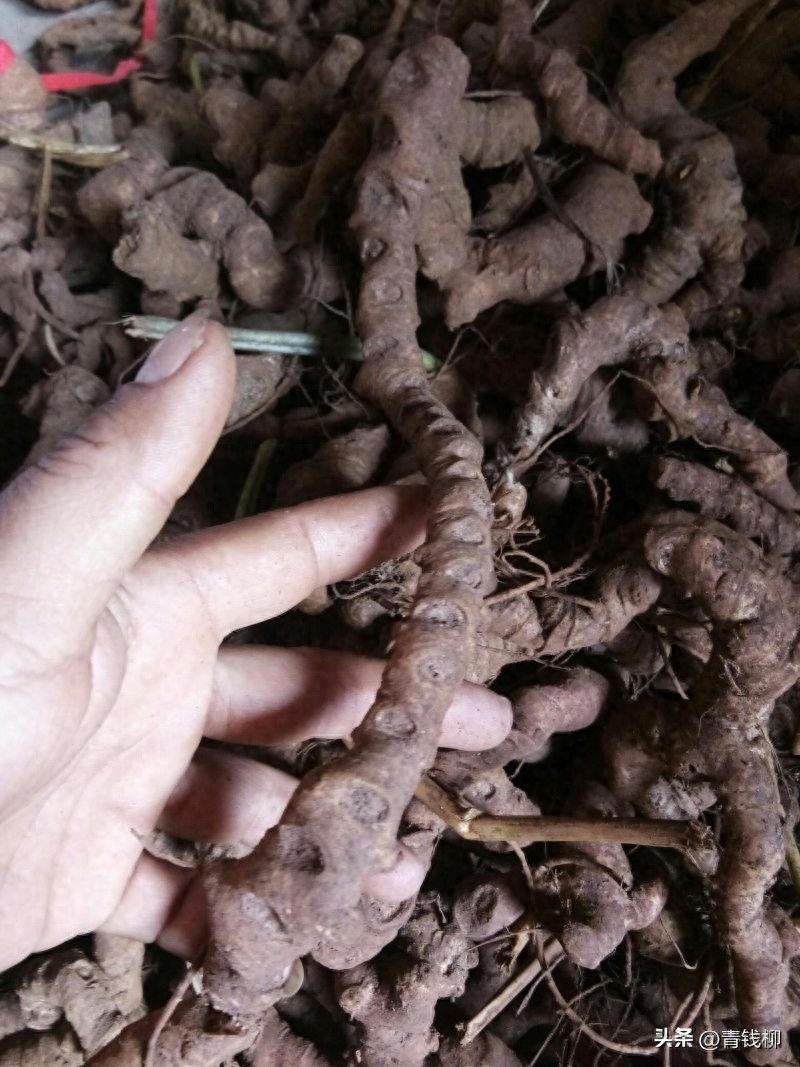
The main chemical ingredients in the pedestals are bamboo saping v, bamboo sapting iva and bamboo saping iv. The levels of the three septings are higher in 1st and 2nd years, decreased in 3rd and 4th years and highest in 6th year, so that the sepsis is collected at 6a. In the autumn of september-october, digs along both sides of the planting bed or to the lower side along the planting bed slopes, digs out the roots, ensures that the roots are free of mechanical damage, removes the roots, buds and remaining earth-dubs, washes the mud with clean water, drys or drys, and, by large, medium and small grade, is stored in a cool, dry, ventilated, luminous and luminous place。



