With the overall easing of travel policies, many people this spring opted for homecoming and a year of tourism. In order to save their hearts, the home-based “poachers” have opted for foster care or home-based feeding services to solve the problem of children eating and drinking on holidays。
Sos learned that some pet shops have become “full” because of the strong rebound in demand for pet foster care and home feeding this year. Moreover, due to the market situation of oversupply, the price of services in some pet shops has increased by 50 per cent compared to normal prices, and there are even thousands of dollars a night's “luxurious pet suite”. But behind the flames of pet foster care, can businesses really make money
It's a big deal. Squawk is willing to pay
Young “stackers” working in the diaspora, an essential task before the spring festival is to secure their pets before embarking on a train home. Since public transport such as aircraft and high irons are generally not allowed to carry pets, some will choose to ship, but longer shipping times, high prices and the risks that may exist in the process have led many to abandon this solution. Relatively safer and more reassuring pet foster care and home feeding are options for most people。
Currently, foster care and home feeding services are provided mainly by pet shops or individuals. Of these, pet shops often become the core provider of pet foster care because of their operation in pet washing, retailing of pet supplies and the usual accumulation of customer resources. There are also individuals who take care of themselves but do not plan to go out on vacation and who publish information on the provision of foster care services on social networks. However, most young people, on the basis of safety and professional considerations, choose to foster their pets in a pet shop or to opt for home-based feeding. The total warming of the demand for return and travel during the spring season also led to a general increase in the price of pet foster care and home feeding。
“on average, the cost of a day's foster care is around $120, and this spring suddenly increases to 160 and 180, at least 50 per cent. On the basis of the seven-day leave, foster care costs range from $1,100 to $1,300, which is the cost of meals for my cat for two to three months.” yoon, who worked in beijing, told the institute that she had her own cat foster care in a pet shop near the district last september at a price of $330 for three days, “i think it's acceptable, so she also intends to foster care this year. I just didn't know that prices had so much gone up and that the resources for foster care were so tight.”

*registration forms/visitees for recording foster care requirements
According to yoon, there were three pet shops in the vicinity of the district she rented, two of which had an area of over 130 square metres, but the merchants stopped taking orders one week before the spring festival. According to yoon, as early as the first month of spring, customers had come to consult with pet foster care services and book cages for pets, whereas this year's demand was two or three times higher than in previous years, so the order for spring was almost full and it was too late to wait until close to vacation to find foster care. “the owner of the pet shop said that it would not be empty until the first five. I couldn't wait, so i had to send the cat to my local friend's house for a while."
Demand is hot. Can pet foster care make money
In addition to the price hikes resulting from the surge in demand, the pricing principle for pet foster care is linked to the specific service content offered by pet shops. In the foster care environment, for example, customers who want their own cats to have an independent space to move, choose a “cat house” with a cat climbing and a “toilet”. There are also many pets in the family and customers who want their pets to stay together, and the pet shop provides a vip room that can accommodate three pets at the same time。
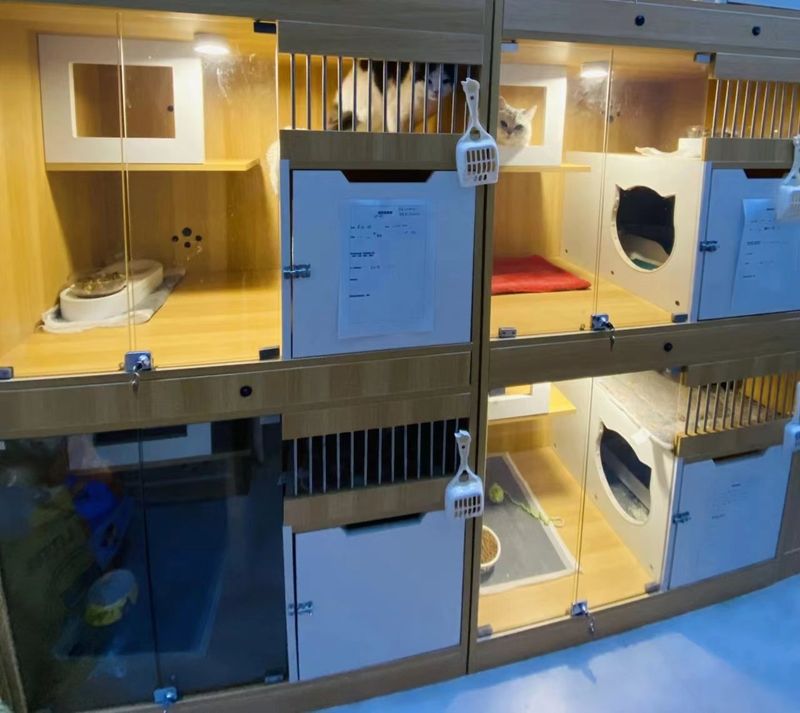
:: cathouses/visitees in pet shops
Andy, who runs a pet shop in shanghai, told the institute that pet foster care is not just about securing children's daily food and drink, but also includes a range of services such as cleaning of excrement, cleaning and disinfection. According to andy, during the spring festival he and the staff at the shop would be present at the shop on time every day to clean up the faeces for the pets, clean and disinfect the cathouses and the dog houses, then check the temperature, humidity and pet state of the room and record the data in the corresponding table。
In addition, the pet shop offers some differential services. “we interact with pets in shops, we walk dogs outdoors, and we film them to customers. For some customers who want to increase their pet sport, we also bring pets to the park for more extensive activities like titleball, flying discs, etc. In addition to this, remote surveillance is also installed at the door shop, where customers can view their pets in real time through the internet at any time.”
With regard to the general increase in the price of pet foster care during the spring festival, it is true that in terms of cost structure, the increase in labour costs is an important factor in the increase. Since the number of cats and dogs in pet shops is relatively fixed, and in situations where there is a particularly high demand for basic care, the number of foster care can be expanded by temporarily increasing the partitions, so there is little room for hardware to increase. However, differential services and the additional labour costs associated with the special period of springtime are key reasons for the overall increase in service prices。
Andy disclosed to the institute that the average labour cost per person per day during the spring festival was around $400-$500, while the first to the first three would have to be paid three times, and the labour cost for the seven days of the spring holiday would have amounted to $4,000-$6,500 without calculating the figure. On this basis, staff hours are also fixed, while the provision of pets directly increases manual hours. As a result, the price of pet foster care services has increased。
Also due to the problem of labour costs, home feeding is often more expensive than foster care. “in terms of industry averages, home-to-door feeding is generally 1. 5 times more expensive than foster care in a store, mainly because it requires specialized services, and commuting factors lead to time on the way to and from the service, which takes more time and labour costs.”
The pet store doesn't make money from foster care
The potential for the development of pet foster care services appears to be visible only in the case of spring seasons when the market is short of demand and when there is a collective increase in commercial prices. Andy also told the institute that he operated a 180 m2 door shop, which could receive 40 cats and around 20 dogs in full capacity, with an average foster care income of $5,000-$6,000 per day. However, not all customers are “seven days full”。
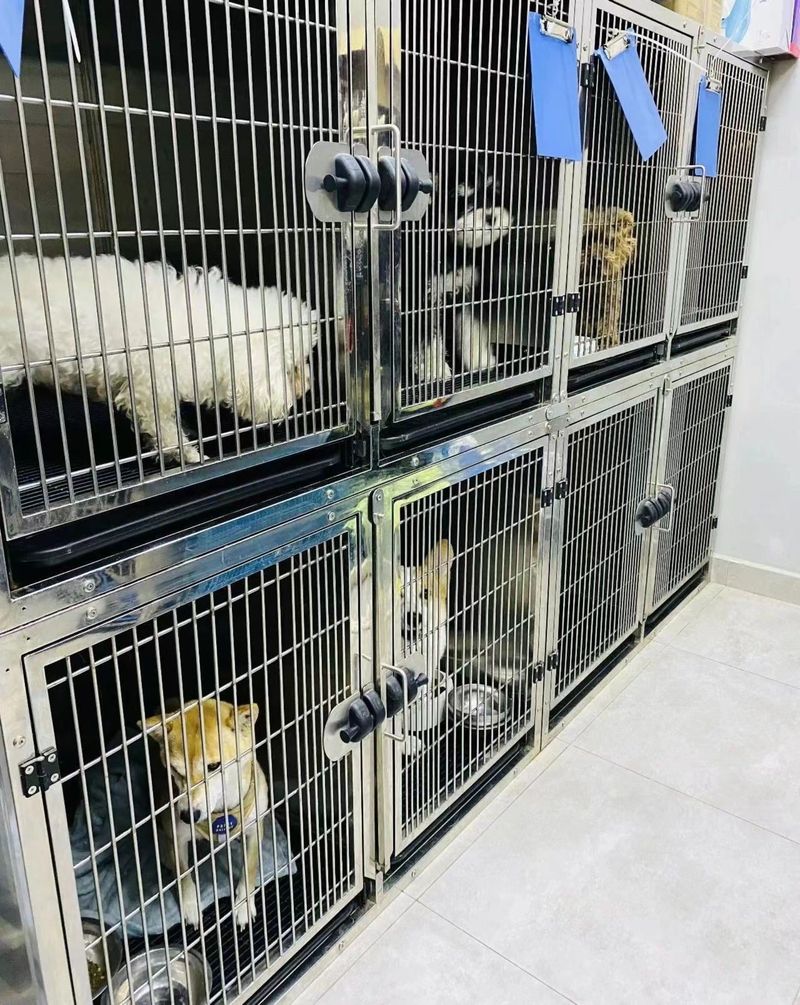
*attendance of dog houses/visitees in pet shops
In practical terms, the selection of foster care for four to five days is not a small number, and therefore, although full capacity has been achieved at peak demand, as the holiday draws to an end, some returning customers will take their pets and their income will decrease accordingly, but the basic labour cost has not decreased. So it's not that easy for a pet store to earn money through pet foster care。
According to industry analysis, this year's spring pet foster care services have been so hot because many people have been forced to spend the last three years, while the number of people returning home this year, travelling through the past year, and returning home earlier, has resulted in the release of pet foster care needs from around the first month of spring. This “compensatory” consumption, however, is difficult to sustain later。
At the same time, pet foster care itself has a strong cyclical character. There is a large demand for pet foster care on annual “51st” and national holidays, while the choice of pet foster care by consumers depends on the duration of the leave. The vast majority of consumers tend to opt for pet foster care during the extended leave period of five to seven days, with little need for foster care on holidays of about three days. In this way, the time when the need for foster care actually arises each year is only three important points: spring festival, the “51st” and national day. Therefore, the income generated by pet foster care can only be a supplement to the collection of pet stores。
In fact, as a particular downward pattern, pet washing, the retail sale of pets and the sale of live animals are the more central outlets of the pet shop. Common pet shops include community shops and mall shops, where the share of income from the retail sale of pet washing and pet supplies is around 1:1, and mall shops are more focused on the retail sale of pets and live sales. There is a clear difference in the ratio of income between the two, mainly related to the business environment。
Patient washing itself has a special nature of offline services, and pets are not easily accessible to public transport because of public constraints. So many consumers who are new to their pets, for reasons that they do not want to wash, are closer to them, choose to use a door shop within 3 kilometres of the community for their pets — a central business advantage of the pet shop. In terms of basic services, there is also room for a rise in the development of high-end pet washing by increasing the number of service lines and improving the service experience. According to tony, “the higher cost of upgrading services can be exchanged for higher per capita prices, so high-end conversion has now become an important means of increasing profitability in pet shops”
In addition, some pet shops, when serving consumers, display products such as pet staple foods, snacks, and pet toys in the store. “sometimes when the staple food is finished, the e-mail is not received, customers come to the store to buy a small bag of pet food as a transition.” andy supplement. On-line services are more likely to result in purchasing behaviour, whether through the proactive marketing of pet shop operators or through voluntary inquiries driven by curiosity。
As for the sale of live animals, although apparent profits are considerable, there is also a high operating risk behind a profit margin of up to 50 per cent. Especially for smaller community shops, when cats and dogs are handed over to customers, changes in the environment and other unknown factors may lead to the death of the human body. “in such a case, compensation is also required for a new living body to the customer, which is not only not earning money, but also, most likely, losing money. So ordinary pet stores rarely focus on this business."
As a sign of the economic recovery under the line, this spring's pet-care market is also on the rise, along with the booming tides of homecoming and tourism, which have raised expectations for 2023. But with confidence, we should also see the limitations of foster care services that have not yet created a stable income in the actual downwards。
After a cold winter, facing the coming spring. We still need to remain calm and look at the new changes that have taken place in every industry from the perspective of the closest to the truth。
:: in order to protect the privacy of the interviewees, the above is a pseudonym