Now, takeout has become an important diet for many people, especially young people. However, many consumers are not aware of the safety of the delivery process, or of the possession of health certificates. On 3 july, the director general of the food and drug supervisory authority of guangdong province, luo wen zhuang, went to guangdong's “people's voice hotline” on the line and stated that, as a result of last year's renovation, a significant proportion of the out-sale brothers had not obtained a medical certificate and that special focus would be placed on the issue this year (the times, 4 july)。
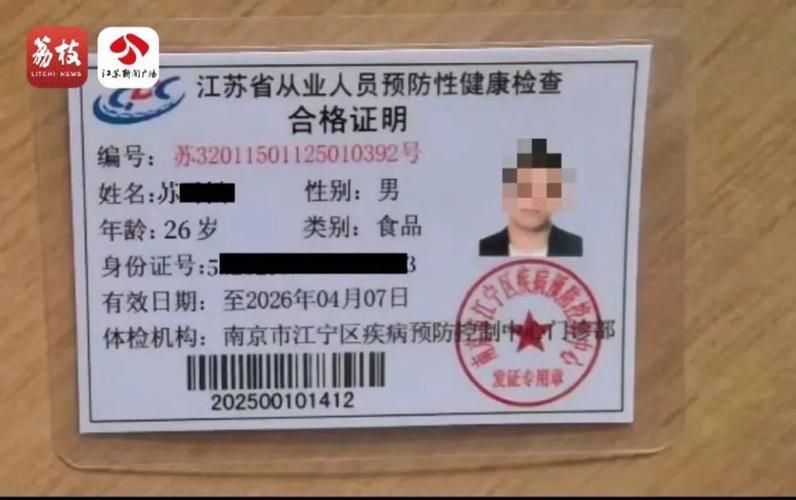
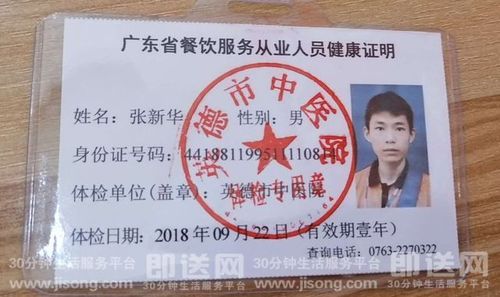
In guangdong last year, the health certificate of the expatriates reached 91 per cent. In other words, about one out of the ten out-sellers has no health certificate. Article 45 of the food safety act clearly states that “the food producers who work in contact with the directly imported foods shall undergo an annual health check and obtain a health certificate before they can be placed on work”. The failure of some expatriates to obtain a health certificate is not only suspected of violating the law, but also poses a major risk to the safety of food deliveries。
This phenomenon reflects a lack of responsibility for the delivery platform. Through a web-based survey conducted by the public voices hotline journalists, six different firms were hired as distributors for the two mega-platforms of the out-market market, and it was found that only half of the companies explicitly requested a health certificate, one company indicated that the company could obtain a health certificate, one clearly stated that it could go to work without a health certificate, and one was reminded of the need for the applicant's health after repeated inquiries by journalists. Although in april last year the ministry of finance and the national commission for the development and rehabilitation of health certificates abolished fees for medical examination and provided free of charge, if some platforms did not have mandatory requirements, it would be less natural for more candidates than for those suffering from food safety disorders, as prescribed by the state council's health administration。
Currently, the caterers consist of three main components: the self-builders of the platform; the distributors who commission third-party logistics; and the packs, where social workers are registered to join the food delivery team. Of these, the third category has the worst implementation of health certificates. Previously, media journalists had experienced the idea of downloading the app and entering a mobile phone number, name, identity card, as soon as possible, to become a deliveryer without having to certify a health certificate. The distribution model of crowdsourcing itself has helped not only to expand the size of the market, guaranteeing timely distribution to orderrs, but also to provide social workers with flexible employment opportunities, free working hours and available platforms。
However, the platform cannot “pack” its own management responsibilities while promoting crowd distribution. It is true that, unlike the full-time distribution teams of the various platforms, the distribution teams are loosely linked to the platform in which they are deployed, more like a guerrilla unit, which is more difficult to manage. But the more difficult it is to manage, the “people eat first and the people eat first” and there is no reason to shirk responsibility for the delivery platforms。
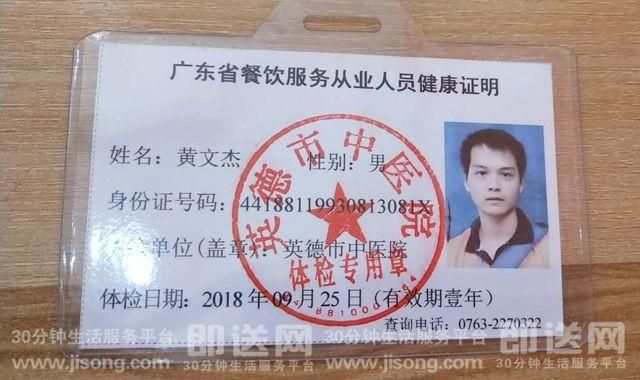
In this regard, the authorities are focusing on strengthening the primary responsibility for implementing the delivery platform. Under the food safety act, the food producer arranges for persons who have not obtained a health certificate or who suffer from diseases that hinder food safety, as prescribed by the department of health administration of the state council, to work in contact with the directly imported food. “the food and drug supervisory authority of the people's government at the county level and above shall order a correction and give a warning. Increased law enforcement checks are needed to enforce the corresponding penalties, to make delivery with a health certificate a rigid constraint, and to eliminate the risk of diversion. At the same time, the pedagogical department may wish to establish a “law-abiding operating record” by regularly publishing information on the implementation of health certifications and other relevant systems on out-of-home platforms, and by exerting due diligence on them. In addition, the cdc may explore the sharing of information on health certificates and facilitate the examination and verification of applicants ' health certificates on the delivery platform to prevent falsification. (zhang jun ye)