You see, two years of talking about houses, the easiest thing to argue about is, "does the house price rise or fall?" by 2026, however, the issue itself might have been wrong. According to data published by the national statistical office for 70 cities and cities in june 2026, the price of new houses in beijing declined by 0. 3 per cent and in shanghai by 0. 7 per cent, while in second-hand houses, beijing and shanghai increased by 0. 3 per cent and 0. 2 per cent respectively in february。
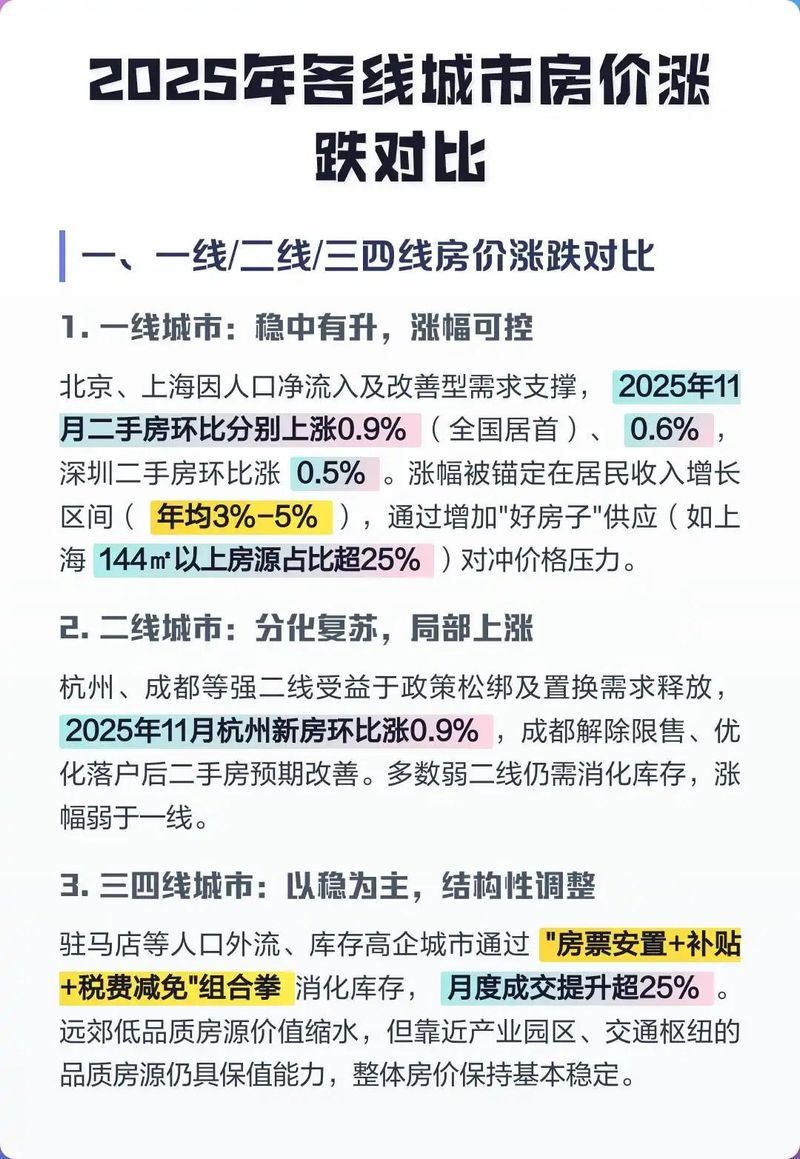
According to the central institute of studies and research on the first half of the year, second-hand residential exchanges in the 20 cities have increased by about 6 per cent each year, and the core cities of beijing, shanghai and shenzhen remain relatively hot. In other words, markets are not simply “comprehensive warming” or “comprehensive decline”, but are becoming increasingly visible in the same round of adjustments。
This is the change in the city of 2026 that deserves to be understood by ordinary families: the way in which the house is to go is becoming increasingly more and more dependent on its location in the city, the surrounding population, industry and real trading activity. To put it bluntly, the debate is no longer “will house prices rise” but “what houses are more easily picked up”. Do not interpret the “core zone dynamic” as a “comprehensive rebound in house prices” to clarify a phenomenon that is easily misinterpreted。
In the first half of this year, used rooms in the core cities were indeed more active than in previous years. According to data from the institute, in the first half of 2026 there were approximately 760,000 second-hand homes in the 20 cities, representing an increase of about 6 per cent over the same period; in june there were approximately 130,000 units in the same month, representing an increase of about 13 per cent over the same period. Beijing and shanghai trade in june continued to increase by 5. 6 per cent and 23. 8 per cent, respectively, over the higher base。
Beijing is expected to be three months in a row of almost five years, and the second-hand room in shanghai is expected to grow for four consecutive months. A lot of people started to get excited when they saw it, "look, the core is rising." the problem is that it's not the same thing at all. Take the market for example. The fact that people used to sell vegetables only sell 10 baskets a day, and now they can sell 15 baskets a day, means that the customers are back, but that does not mean that the price of food has increased。
So is the house. The rebound may mean that the buyer feels that the price has fallen to its acceptable level, or that the landlord is willing to give the price, and the buyer and the buyer have finally found a new balance. This is also why, as of june 2026, the price of secondary-hand homes in mid-century cities was still 0. 42 per cent lower, with only 12 cities rising and 88 cities still falling。
Shanghai and shenzhen increased by 0. 1 per cent and 0. 03 per cent, respectively, but this is more aptly described as “some of the core cities emerge in a steady phase”, rather than re-energizing the national building market. Data from the national statistical office do not support the term “comprehensive reversal”。
Between january and june 2026, national investment in real estate development decreased by 18. 0 per cent over the same period, sales of new commodity houses by 11. 6 per cent over the same period and sales by 13. 6 per cent over the same period. At the end of june, 763 million square metres remained to be sold. So just listen to what the web says about "the core zone has taken off." what really happened was that a good house in the inner city was starting to be easier to find
However, the price is not higher, depending on the size of the plate, the size of the sector, or even the household type. The two must be separated. The first pillar behind it is not really “does the subway have it” or “does it have it” or “does it have a school district”, but rather is something more simple — whether there are people or money that are going on here. It's not the old house that scares the real estate, it's the unaccepted。
If there are stable jobs, a sustainable young population, a mature mix of hospitals, schools, businesses, public transport, etc., then housing needs are more likely to develop a cycle: people come to work, rent, marry, improve, buy a house; someone buys a house, someone sells it, someone takes it, and the house is naturally more mobile. On the other hand, if an ex-urban block depends mainly on a 10-year-old plan, a future industrial park, an unopened subway, then the question arises: who lives now
This is what many people can easily ignore when they buy large houses in the suburbs. A $1 million house seems to be much cheaper than the core area, but if only a small real deal is made in a year and a six-month card is not necessarily sold, then the real question is not to be cheap, but whether it can quickly turn into cash when you need it。
It's called mobility. Mobility is even more important for ordinary households than book prices. Because most are not fund managers, there are no dozens of houses to spread the risk. When a family really needs money, it is often precisely when changes in work, children go to school, the elderly go to the hospital, change houses or the business needs turnover。
At this point, you'll find that a $1 million house, if you want to cut the price by 5 per cent, might be more useful than "a theoretical value of $1. 3 million, but no one buys it for a year." this is also why, following the restoration of second-hand homes in the core cities in 2026, the market has become increasingly oriented towards low gross prices, small household sizes and mature plates. According to data from the central institute of research, the share of second-hand houses below $3 million in the core cities of beijing, shanghai and shenzhen has increased, as has the concentration of small-household deals。
It's not like people suddenly don't like big houses. It's the people who buy a house who care more and more about one thing: i buy it today, and can i sell it in a few years? A further roundup: mortgages are cheap, not the pressure to buy them disappears, but there is also a clear shift in the cost of loans that are already considerably lower than in periods of high interest rates。
The lpr for the five-year period or more, published on 20 july 2026, was 3. 5 per cent and the lpr for the one-year period was 3. 0 per cent. Individually, the interest rate on commercial housing loans depends on bank pricing and borrowers, but the overall financing environment is clearly different from the past. Let's make a simple estimate。
A family loan of $1 million is assumed to last for 30 years, at an annual interest rate of 3. 5 per cent, equivalent principal repayments of approximately $4490 per month and cumulative repayments of approximately $1. 617 million over 30 years, of which interest is estimated at $6. 17 million. That figure seems to be a lot easier than it used to be. But when you really buy a house, you can't just stare at $4,490. Assuming the total cost of a flat of $3 million, in addition to the down payment, there may be tax charges, maintenance funds, renovations, furniture, household electricity, property charges, as well as the cost of commuting after the purchase of the house。
For improved families, there may also be an occupation of funds for “old houses that have not been sold and new houses purchased first”. It's like opening a shop. The rent is only part of the fixed cost, and what really determines whether the shop will survive is whether it will survive with all the monthly expenditures added up and whether there is any cash flow。
The same applies to home purchases. It's much more important than whether the bank can grant loans. One household earns $20,000 a month, $5,000 a month, and one family earns $40,000 a month and 10,000 a month, although the share of monthly income is 25 per cent, but the actual security cushion may be completely different. The former may also have to raise children, support the elderly, pay rent or bear fluctuations in income, and there is not much real cash left。
As a result, the market policy is now being optimized to lower the transaction threshold and does not represent a risk for the family. For example, in february 2026, shanghai further eased the purchase of housing, while increasing the maximum loan line from $1. 6 million to $2. 4 million for the initial housing reserve; and in shanghai, non-residents were also more eligible for housing。
The policy is clearly designed to better meet the demand for hard and improved housing. But a policy that gives you more room to buy doesn't mean you have to use all your purchasing power. Don't mix these two things. The true division is also hidden in the “intra-city” houses, where many people used to line up by city: first-line cities first, second-tier, third- and fourth-way。
It's getting thicker now. Because within a city, resources are being redistributed themselves. For example, hangzhou, close to the core industry, mature commercial and public services, and the new peri-urban city, may differ completely in terms of population density, commuting efficiency, second-hand room turnover and rental demand. The same applies to beijing and shanghai. You can't accept that all houses in beijing have the same property attributes because this is beijing
Nor can it be “shanghai” that all sub-regions will follow the core plate. It's like buying stocks, it's all in the same business, and the basics of different companies can be 18,000 miles away. Houses especially. Ministry of natural resources, natural resources, march 2026 [2026] document no. 38 provides for the establishment of a mechanism to link new construction land to stock-building land, giving priority to new construction land for major projects and livelihood, and not in principle for operational real estate development, while emphasizing the promotion of urban content and the prevention of disorderly expansion。
This policy cannot be simply translated into “none of the suburbs after”. It is truly noteworthy that it reveals a clear direction for urban development: land supply, urban construction and resource allocation will place increasing emphasis on stock pooling and efficiency rather than on past expansions of the pie-sharp form to the periphery。
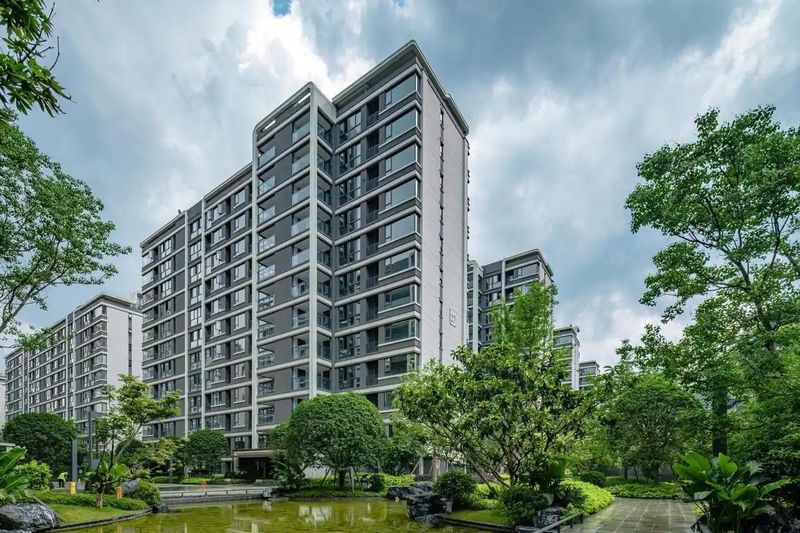
In the past, the city went to the foreign minister, there were new boards, new schools, new businesses, new plans, and buyers were willing to gamble on the future. Families are now increasingly willing to pay for what has already been delivered. The school has been there, the hospital has been there, the subway has been opened, the business has matured, the industry has developed and many people have lived around。
This certainty is worth a lot more today than a beautiful planning map. Three categories of households, faced with the same market, have completely different answers to those who already have a core house and do not have to sell it because the data for a month are not good. In particular, short-term price fluctuations do not necessarily amount to a fundamental change in long-term values, given the stable population of the housing region, the concentration of employment resources, the maturity of the living mix and the fact that housing age, property and products themselves are not poor。
But do not use the word "core zone" as a talisman. If the house is very old, difficult to sell, poor property experience, difficulties in parking, and new rooms in the same area are being upgraded and future buyers are increasingly being selected, then what really needs to be considered is “whether to change better” rather than mechanically。
For the holders of remote suburbs, the reverse should be calm. Don't ask “how much it used to sell”. Four things to ask: whether there has been a net inflow or a net outflow in recent years? What's the real deal with the neighborhood for the last six months? How long does it take to get a deal? Can rent cover property, interest and maintenance costs? These issues are more important than the “plan for the future” in the mouth of the property broker。
With regard to the need to buy a house and to improve the family, there is no need to consider “a nuclear rather than a suburban house” as a new iron bar. If work, family and children's education are in the outer suburbs, it may be a legitimate need to buy a large house in the outer suburbs; in turn, the quality of life may decline if two hours of cross-city travel are to be purchased only for an additional 20 or 30 square metres。
So the real priority is whether you buy a dwelling or a long-term asset. If they live alone, the cost of commuting, school, medical care and living must be accounted for. If there are obvious asset allocation purposes, mobility, population, industry and future interface needs must be put ahead. The most easy pit for ordinary families now is not to buy expensive, but to buy the wrong house, instead of asking for the unit price。
Finding out the real sources of the last three to six months of dealing with the sub-districts, it would be better to look at a few real cases in a row, rather than using the listing as a market price. When buying a new house, information such as developers, pre-sale projects and financial supervision is verified through formal channels such as the building sector; salesmen say that “market rises” “and this is the city centre” “the metro is sure to get through” and that no one listens to verbal promises。
When buying a second-hand room, it is more important to see that the deal is actually made and not to be taken away by a set of high listings. Families preparing loans are advised to recalculate their cash flow before signing a formal contract. After the down payment, at least a contingency fund is set aside and the deposits cannot be pushed into the bricks. This is particularly true for households with unstable incomes。
Another detail is often ignored: replacement. If you have to “sell the old and buy the new”, then find out how much the old house is worth and how long it might be sold. The old house is not valued at its own psychological value, and the “unpaid money” is used to determine the budget of the new house. When the building was divided, the most expensive was not to make less money, but to keep the money locked up in a house that could not be sold。
This is the real risk that many families need vigilance. The 2026 building market has become less and less like a single issue of “buy now or later”. Data from the national statistical office tell us that the national market is still being adjusted; data from the institute suggest that the core cities are indeed recovering their trade dynamics. The two sets of data are viewed together, and the answer is even clearer: the market is not simply back into the boom, nor is it continuing to fall everywhere, but is moving in the direction of “good boards in good cities, better houses, easier to deal.”。
So, what really deserves the attention of ordinary families is never a “rise or fall in house prices”. It's the house you've got, there's no real housing needs in three years, there's no one who's willing to take over in five years, and if it can be sold when the cash is most needed。
The prices of the properties can fluctuate without moving and the population and industry will not appear empty because of a sales poster. In your city, is it easier to make a deal in the core, or is it getting longer in the suburbs? Is there a real offer for your suite in the last six months or is it only the agency that keeps dropping your price