In that year, there was something worth more than a note. It was a food ticket. At that time, the national food coupons, which were “hard currency” in the food coupons, just as the dollar could circulate around the world。
After dropping out of circulation in the 1990s, the food stamps became a popular and cold category in the collection. Food stamps, coupons, coal tickets, etc. Are collectively referred to as ticket collections, with low thresholds, easy for ordinary people to buy and low price for individual items, but because they carry memories of a certain age, the number of collectors is small, compared to cold doors。
The most important point is that food stamps remain invisible in the market for the circulation of collections, because of their excessive variety, excessive distribution and the fact that changes in the price system have not always been obvious, and because so-called rises and drops are just individual business accounts, it is very difficult for businesses to favour them。
Food bill collection
It doesn't have to be worth more
It depends on three key words:

Small circulation, high destruction and no longer available
Chiang huai-feng, a well-known collector of food tickets in hangzhou, who was a food designer of the zhejiang food agency, designed the country's only set of raw food stamps and moved many of hangzhou's attractions, such as the six tartars, the temple of yue, the west indies, the yellow dragon hole, among others, to the zhejiang food stamps. “there were millions of people who bought all my food tickets, but i didn't do it.” chiang huai-feng said to the press during an interview。
So, how much is the food ticket worth now? Journalists have found that food stamps, although similar to stamps, do not “smelt” on the market. Sometimes we describe something as very valuable, using the word “priceless”, while the food ticket, on the contrary, is “marketless”。
The circulation of food stamps in the collection circles is often three ways of exchanging between collectors, trading in secondary markets and trading in certain ticket collection sites. In the collection market, food stamps are often traded as a “sideside” collection and placed in the corner of stalls such as stamps, coins, etc. The food coupons that flow from merchants are relatively “roads” at a lower price of $1 or $2 a large price, but the real good is still on offer。
"there are few people who have bought them, who have not heard of food tickets rising or falling, and have been stable." one of hangzhou's 200 big collectors in the market for food stamps says。
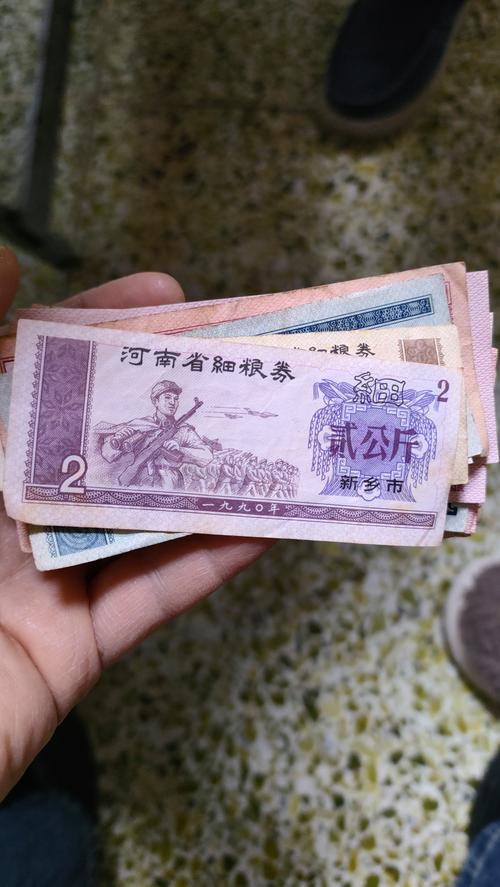
In some certificate-based websites, only vendors are often seen for sale, but few are seen as real buyers, some of them often talking about “negotiated prices”。
A circle of people told journalists that the reason for this market environment was simple, because tibetans collected it and kept it at home and could not create a state of circulation。
There's a very small market volume of food stamps
The collection of food stamps is not necessarily as old as it is, and its space for appreciation is directly related to the scarcity of food stamps themselves, their artistic nature and the historical and cultural background they carry. This is related to the historical background of the food stamps, which were issued in china from 1955 to 1993. In addition to the national food stamps, food tickets have been issued in various provinces, regions and even in individual towns and villages, in a wide variety and in large quantities。
The pre-1960 food stamps were of high value from time to time. Most provinces and cities issued their first food coupons in 1955, and these “opening tickets” are of very high collection and market value. The criterion for the collection of “required goods” remains valid in the certificate category, and the value of the grain ticket collection depends first and foremost on its existence. The food stamps were recovered and destroyed by the government after they were phased out in the 1990s. Food coupons, which are small, destroyed and no longer available, are considered by collectors as “the treasure”。

For example, the food agency of the north-west region pre-purchased food certificates (a 1954 edition with a nominal value of 50 pounds), which are said to have been available in the country for only a few dozen times, at a price of more than 1,000 each two years ago; and the guangdong east river column gangpei valley bill (a 1944 vertical edition with a central picture of black and white hair) which had been sold in 2006 and had been sealed as a “nod price”。
In general, the national food bill is a focus of such collections and a relatively large volume of transactions in the market. The provincial food stamps are well known in the collection community for their variety and difficulty in collecting them, especially in the early days of the provincial food coupons, which were favoured by investors in the tibetan market and whose prices continue to rise. Some precious varieties are admired。
A professional has revealed that the food stamps are collections that are forbidden to be held blind unless you know very well. In general, one or two sets of food tickets are sufficient to enjoy and collect them. Because the current market for the collection of food stamps is uncertain, it is likely that if there is a one-time build-up, there will be an empty basket。
In addition, journalists have found that there are individual traders on the internet who sell food stamps, often “similar” food stamps, all of which are newly printed, at a price of just a few cents, which is “nostalgic”。