At the end of august, the summer heat of the shandong complex remained warm, while the temperature remained constant in a seventh-generation shed at the agricultural science and technology park in shinto. Walking into the shed, only one four-foot robot was patrolling the gutter slowly. It stops in front of a few chili, “watching” a moment later, the camera sends the image back to the cloud, and a self-study model is taking out nearly 40 years of planting experience and the wisdom of more than 260 earth experts ... A few seconds later, the system judged that the chili is in good shape。
More than 30 years ago, it was still a land awaiting awakening. The first winter-heated shed was planted in zhu village in 1989, ending the history of the non-production of fresh vegetables in northern china during the winter. The farmers wouldn't have thought that the planting of vegetables would one day be written into algorithms. Even less so, they are beginning to think that this small mountain town's “groom garden” is creating an ambitious narrative of national strategy: from “selling products” to “selling technologies”, from “selling sheds” to “selling standards”, from “products exports” to “systems outing”。
The reverse of a seed
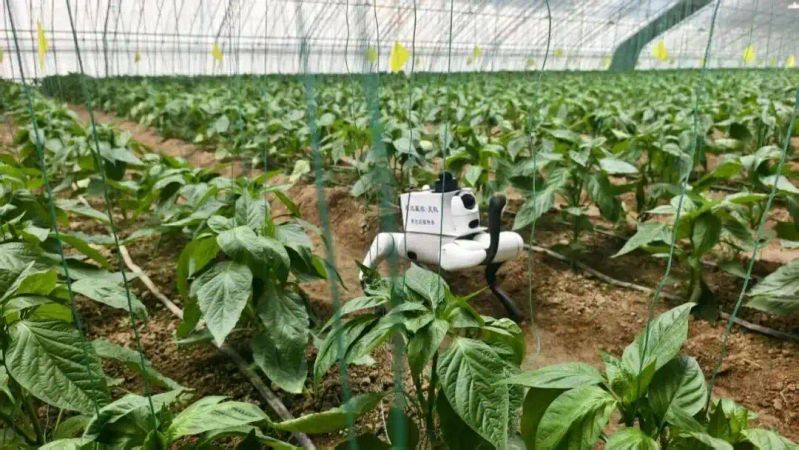
In a seventh-generation shed in the agricultural technology estate of ardenda, a machine dog is patrolling along the gutter slowly。
“the world's leading industry, bayer, basff, rickswan, had the test field in the early days.” the agricultural technology extension researcher of the rural rural department of suu kyi city, speaking out loud, said: “this is the high point in the production of vegetables for the world's facilities, which is highly competitive, and we are under great pressure.”
Pressure is real. In those years, cedarless tomatoes and cucumber-free cucumbers were cultivated in the light of their birthday, and “ocean seeds” once accounted for 70 per cent of the market share. The vegetable farmers were anxiously waiting for the seeds from abroad to be put on the market in august, but by late july the seeds had not been heard. Wang lo yi, father of the vegetable sheds, had a heart attack: “in those years, the vegetable farmers had to pay for the $1,200 or even the more expensive seed, a gram of seed and a gram of gold.”
The physical pain of being subjected to them has given rise to a “jedi fighting back” of the radiant native seed industry. Liu treeseng, chairman of the board of directors of the three tree saplings ltd. Of the city of sunlight, was the first domestic seed distributor in the 1990s. He had first-hand experience with the market for seeds such as tomatoes and peppers that were swallowed by foreign products。
With more than 30 years of deep cultivation, the three-wood seedlings, from distributing foreign seeds, have gradually been transformed into a national “plough integration” enterprise, with over 260 new varieties of guacamole selected on their own. Lifelight autonomously cultivated "bolo 1" tomatoes, perfectly replenished the qi products' short panel against cold and ill. In the past, the country had sold a bag of similar tomato seeds at $380, and now only $150 was needed for national products, at an annual cost of $26 million to growers。
From 2013 when the national centre for innovations in the modern vegetables industry was set up, 12 “national names” platforms, such as the life light vegetables research and development centre of the chinese academy of agricultural sciences, were effectively operational, and 26,000 seed resources were collected from the largest vegetable stock in shandong province, with 315 of them, or about half of the province。
What is more exciting is the revolution in breeding methods. Fan guo said that they were accelerating towards ai smart breeding: “it may have been 10 years before, but it has now been reduced to 5 or even 2 years”. At the centre for life light vegetables and development of the chinese academy of agricultural sciences, the whole genome selection technology reduced the breeding cycle for the “middle-life” series by 30 per cent. In the light of life, breeding is no longer a long wait for food from heaven, but it is becoming a race against time, a deep-seated conversation between technology and land。
When the "earth solution" meets the "black technology"
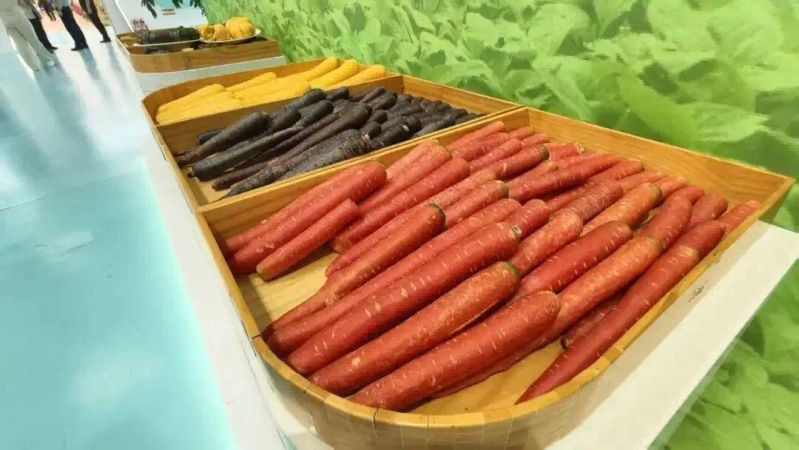
All the colors of carrots bred by birthday light。
If seeds are agricultural “chips”, the shed is its “bones”。
The 7th generation shed of lifelight has already subverted the imagination of “planting”. A home for thermal heating, with only one third of the thickness of the back wall, which is a traditional greenhouse, inhaled by day and at night, and is naturally a “heating room” that breathes. “the earliest traditional huts, with less than 50 per cent land use.” according to the latest data, senior agronomist li guangcheng of the rural bureau of suu kyi city has increased the land use rate of the new solar greenhouses by 5 to 20 per cent, with a useful life of up to 20 to 30 years, an intelligent equipment rate of over 85 per cent for the new sheds, a 30 to 50 per cent increase in the utilization of water fertilizers, a 30 per cent reduction in the use of chemical pesticides and a 20 to 30 per cent increase in the combined benefits。
China temperature agriculture (shangdong) group limited went further. They launched a two-storey heating room, with a back wall thickness of between 7 and 8 metres “skinned” to less than one metre, and a land-use rate of more than 95 per cent. The china-win group, led by the new farmer after 90, has exported products to more than 30 countries and territories worldwide。
“in lifelight, growing food, safety is no longer our primary concern. Now we're thinking about how good it is." the words of fan-ling sound as if the wind was light, but they were so loud。
The bottom line is a secure network: 28 grids, more than 50 full-time checkers, each with a serial number, and no safety check will fall. "healthy food is grown and managed." lifelight has issued 21 national and industry standards。
Even with such harsh standards of life-lighting, challenges remain in view of china's agricultural export landscape as a whole. Agricultural trade rules are changing. In addition to traditional barriers, such as tariffs and quotas, our agricultural exports need to address new rules, such as green low-carbon, environmental compliance. Carbon markers have been used by developed countries as a new type of green barrier that profoundly reshapes the pattern of international trade in agricultural products. Domestic agricultural export supply chains still have problems of “decentralization, difficulty of standardization and high costs”. There are 157,000 huts in the space of lifelight alone, and this game is just over if we are to have every shed meet the international market entry threshold and if we are to have the “china standard” match to the “world rules”。
From global selling to global growing
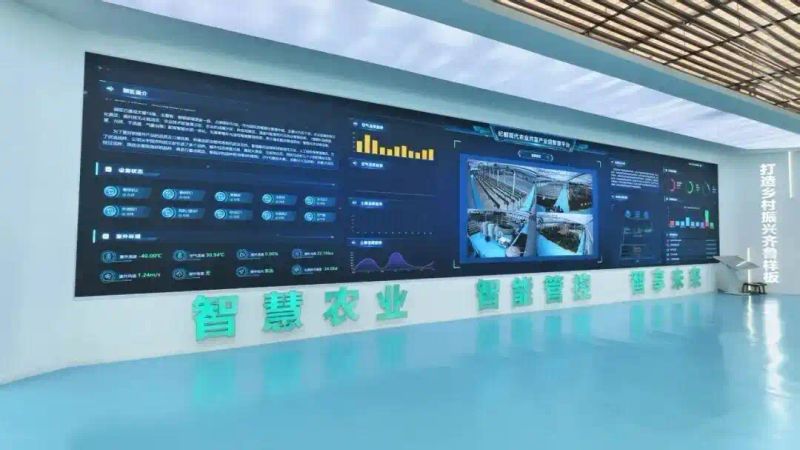
All the colors of carrots bred by birthday light. From selling vegetables to selling sheds, from selling sheds to selling schemes... – lifelight is being completed as a profound leap from “product output” to “system output”。
At present, more than 30 businesses and cooperatives are operating abroad, and more than 300 plantations have been built in more than 40 countries and territories with an annual turnover of nearly $3 billion. From the tomato greenhouses in uzbekistan to the winter fruit and vegetables sheds in romania, from the desert greenhouses in saudi arabia to the earthless cultivation base in new zealand... .. The green map of lifelight is on the map of the world。
In the sil river region of uzbekistan, a modern smart greenhouse constructed by the shandong lisent agricultural science and technology company ltd., the integration of water fertilizers has resulted in an average of six times the income of tomatoes. In bukhara, the farmer, gary, can control temperature in the greenhouses remotely with a small mouse。
“the journey to sea is not a simple reproduction of the `sustained room', but is tailored to local conditions.” the head of lisent said that. With the hot weather in central asia, the team changed the traditional solar greenhouse to a two-sided, back-walled “two-sided greenhouse”. Lifelight enterprises have also created the “world climate laboratory”, which simulates extreme environments in different regions and customizes the shed programme for each country。
From the selling of vegetables to the selling of sheds, from the selling of sheds to the selling of programmes, lifelights are being completed, a profound leap from “product output” to “system output”. As reported by liu yongxiang, a member of the national political consultative council and chairman of the new hope group, the country's agricultural industry is now moving from product exports to “systemic access”. A group of high-quality chinese enterprises have come out in a “structured” manner to promote the overall layout of the upstream and downstream industrial chain。
Central i of 2026 explicitly stated that “support for the expansion of niche agricultural exports”. The plan for accelerated agricultural power building (2024-2035) provides for “further deepening of agricultural external cooperation to foster new international competitive advantages in agriculture”. On 1 july 2026, the foreign investment management scheme was officially introduced as the first special administrative regulation in the field of foreign investment in the country. An increasingly well developed policy system provides a clear direction and solid institutional safeguards for agribusiness to “go out”。
As a province of agriculture, shandong has worked together to build more than 80 platforms, such as joint laboratories, overseas agricultural demonstration bases, good breeding centres, and has trained more than 10,000 agricultural technology cadres abroad. In june 2026, the shanghai cooperation organization national union for agricultural science, technology and innovation, launched by the agricultural institute of shandong province, was inaugurated. “any new idea of agriculture can be supported by a more sophisticated technological industrial chain in the light of life.” liu chunxiang, senior agronomist and chief of the vegetable technology promotion section of the rural rural bureau of suu guang city, said。
According to zhang fook, a member of the chinese engineering college and a professor at the chinese university of agriculture, agricultural production is outside the country to build a new model of dual-cycle industry, namely, science, technology and innovation and technical standards. This may be the ultimate form of china’s agricultural access to the sea: not to remove land, but to send out standards, technology, brand names and trust。
More than 30 years ago, the first generation of squatters in the village of zhu, bent on their backs and sweating, planted the hope of subsistence into the earth. Today, hopes are written into codes, loaded in containers, crossing the mountain sea, growing new fruits in the sun of uzbekistan, in the pastures of new zealand and in the desert of saudi arabia。
From “going out” to “going in”, from “chinese manufacturing” to “china standards”, from “product output” to “systems going out of the sea”, the path given by shun yujiang is to plant roots deep in deep mud, to carve standards into the rules of the world, and to look into that vast and deep starfish。