Market price negotiations are a major marketing challenge. Customers often question prices, like "you're too expensive!" this is not only a headache for shopkeepers and shopkeepers, but also a key link in sales. Good handling increases customer satisfaction and facilitates transactional outcomes. How, then, can this dilemma be effectively addressed and not be plagued by “price” problems? Next, we will discuss together the techniques and strategies of price negotiations。
011. Market price negotiation techniques
Stay calm
The saying goes, "the buyer doesn't have a seller." in the course of the sale, customers often instinctively cut prices because of a lack of understanding of the cost and profits of the product, and, regardless of the explanation given, refused on the grounds of “too high price”. Such customer buying habits may cause some psychological stress for the buyer. The key, however, is how we respond, not being shaken by such habits。
Rational response to cut prices
In the course of the sale, shopkeepers are sometimes dissatisfied by the arbitrary price cutting of customers. However, we need to understand that consumers are often not aware of the true price and cost of the product. Therefore, their arbitrary price-cutting was not motivated by bad faith but by a lack of relevant information. So, as salespersons, we should treat such behaviour rationally and avoid excessive complaints。
Price confidence
Price responsiveness is an essential skill in the marketing process. Exporters need to have confidence in product prices by fully understanding the value inherent in product prices, and by becoming familiar with the unique selling points of the products, their significant advantages and their distinctive characteristics vis-à-vis their competitors. This build-up of price self-confidence needs to be reinforced through a combination of product costs, peer products and themselves in hardware, software, service attitudes and product quality。

Make a shop image
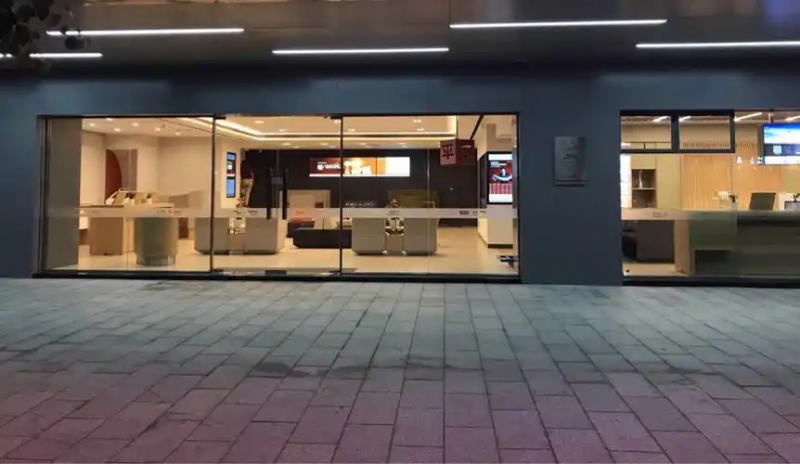
In order for the customer to feel “excessive value”, the store itself must first be given a sense of value. This is reflected mainly in the header image, where the shop must be renovated in order to give the impression of professionalism and quality. At the same time, it is important to keep the door and shop clean, to present the samples in an orderly manner, and to have the light and the soft suit as appropriate to create a warm home. In addition, the spirituality of shopkeepers is crucial, and they need to demonstrate a positive attitude that allows customers to feel enthusiastic and professional。
Professional image of shopkeepers
The key to making shopkeepers look “value-worthy” to their customers is their spiritual appearance and professionalism. The shopkeeper must show a positive and positive spirit, which directly affects the feelings of the customer. Secondly, the level of specialization is also an indispensable link. In the eyes of customers, the professionalism of shopkeepers is often measured in a number of ways, including expertise, appearances, the use of props, speech skills and smiling services. Therefore, shopkeepers need to upgrade their capacities across the board to create a credible professional image。
A soft fit with a sense of value
Softly fitted combinations are not just an art, but rather a process of creating “living” experiences. Among them, the smart use of lights, the attraction of pops posters, the clever design of piles, the rational layout of china island and the proper matching of propagandistic elements are key techniques for enhancing the sense of value of soft-packing。
Props to show product value
Shopkeepers should be good at marketing with proprietors and increase the attractiveness of sales by effectively matching and certifying the value of products by putting product manuals, displaying client messages and praises。
It's a clever trick
In the marketing process, the use of rhetoric is crucial. By ingeniously employing “special, advantageous, proficient” speech techniques, products can be shown more effectively to be unique, superior, beneficial and probative, thereby increasing the attractiveness of sales。

Price strategy
Prices are often a sensitive and critical factor in the marketing process. The mastery of some operational strategies can help us to deal with the price problem more skilfully and to improve sales effectiveness。
Ensuring satisfactory prices
In the marketing process, shopkeepers can use this strategy when the customer first comes into contact with the product or refers to the price if the product is not known. By answering “to ensure that prices are satisfactory to you”, shopkeepers can skilfully direct their customers to turn their attention to the product itself, not just to the price. The advantage of doing so is that it avoids the sales impasse that may result from premature discussion of prices and leaves room for subsequent product presentations and sales negotiations。
Deep value-building
In the marketing process, successful value formation can significantly increase customer satisfaction and thus the likelihood of a deal being made. Shopkeepers can convey information on product overvalues to customers by emphasizing unique outlets for products, exploiting information asymmetries or other value-added factors, such as product sophistication, visual authentication, and specially tailored features。
Getting the pace of negotiations
In price negotiations, shopkeepers should remain calm and avoid a premature rush. For example, if a product is priced at a price of $1080 and actually can be reduced to $800, the shopkeeper can reduce the price by a gradient, if it first falls to $880, then to $830 and finally to $800. The pace of the negotiations could be controlled by a small margin of concessions at the initial stage, which could then be gradually reduced。
Show me the hard work
During price negotiations, shopkeepers are required to convey to customers the impression that they have done everything they can to avoid a sense of ease on the part of the customers, thereby triggering further bargaining。
Treatment of different objections
It's very expensive
Some customers, while acknowledging the product, still consider it too expensive. This is essentially a question of recognizing the value of products. Faced with such dissent, shopkeepers need to craft value-forming to highlight the unique selling points of products in order to change customers ' perceptions. In cases where value-formulated customers still feel high prices, shopkeepers may consider providing small gifts or additional services as compensation。
Picky and compare
When customers display a nuanced selection of products and are keen to compare current products with other brands, this usually means that they are analytical customers. In the face of such customers, shopkeepers should adopt a strategy of in-depth communication with customers on the basis of facts, and duly citing data to support their views. In the process of comparison, shopkeepers should avoid denigrating other brands and instead seek to identify and highlight the uniqueness of their products。
Price
In the event that the customer has shown excessive fixation on the price issue during the selection process, the shopkeeper should clearly inform the minimum price of the product, while maintaining the mood of the customer, and may consider the gift of a small gift as a appeasement。
Old client demands a price reduction
In the face of further price reductions requested by older customers, shopkeepers are flexible in ensuring their own interests and shop policies. If conditions permit, consideration may be given to granting a certain level of preferential service and other cooperative conditions may be attempted, such as encouraging customers to introduce new customers, a strategy known as tied sales。
Gifts instead of price reductions
In some cases, customers demand that gifts be abandoned in exchange for lower prices. In such cases, the shopkeeper should remain firm and not compromise easily. Price reductions may raise issues of equity among older clients. Shopkeepers should make it clear to customers that the selection of gifts is actually more advantageous, as gifts are unique benefits that are tailored to specific clients。