In cross-border electricians and traditional foreign trade industries, logistics costs tend to account for 20-40 per cent of total product costs. However, many newcomers and even former cross-borderers remain in a state of confusion when they receive offers from their agents。
"why is my cargo only 18 kilos, and the courier charges 20 kilos?"
“why is the shipping bill based on formulae, and the billing is much larger than the actual volume?”
Today's novel explains the logic of calculating international freight charges for the dismantling of international couriers, aviation and maritime transport。
I. What exactly is “heavy”
It is important to understand the core principles of international logistics fees: space and weight, which is more expensive, and whichever。
The carrying capacity of an aircraft or container ship is limited. The ship is overweight if it is full of nails (heavy) and if it is full of cotton (bumble) it is filled and drifting light. In order to balance the benefits of both, the logistics industry introduced the following concepts:

Actual weight: the actual total weight of the goods, including overpack. Volume weight (volumetric weight): the physical volume of the goods is the virtual mass converted by a specified “volume factor”. Countable weight: ultimately multiplied by the weight of freight at unit prices。
Core rule: weight vs weight, weight by weight
Ii. The core formula and the decomposition of the war, and what are the freight costs
1. Foundation: what does cbm mean
The first step is to convert centimetres (cm) to cubic metres (cbm) regardless of the channel。
Based on “kilograms (kg)”: air transportation, couriers, seaborne, etc
In such channels, we need to calculate volume weights through volume coefficients。
Field cases 1:
You have a shipment to america, 20 boxes. The box size is 50 cm x 40 cm x 60 cm, and the single box weighs 18 kg. The freight forwarder gave a sea-based price of 5. 8 yuan/kg (coefficient 6000)。
Calculates the size of a single box: 50 x 40 x 60 ÷ 6000 = 20 kg. Comparative determination: single case weight 18 kg
Fees based on “m3” (cbm/mixture): traditional sea cases (lcl)
In the sea case, the quotation is usually presented as “$xx/ts”. However, maritime transport also has a “heavy demarcation line”, i. E., a double-poll ratio. American line (u. S. Line): general bulk ratio 1 cbm = 363 kg
Field cases 2:
The above goods (20 boxes, single box 18 kg, size 50 x 40 x 60 cm) are still being shipped to the united states via the traditional sea-miggle, with a forwarding offer of $1,000/cbm。
Calculated actual volume of goods: 0. 4 x 0. 5 x 0. 6 x 20 boxes = 2. 4 cbm. Conversion of weight to volume: 18 kg x 20 boxes = 360 kg. Converted to american line: 360 ÷ 363 ≈ 0. 99 cbm. Comparative determination: actual volume 2. 4 cbm > weight converted volume 0. 99 cbm. The shipment remained light and costed to a high volume of 2. 4 cbm. Calculated total freight cost: 2. 4 cbm x $1,000/cbm = $2,400。
Note: if this shipment is iron and weighs as much as 1000 kg, then the weight converted volume is 1000 ÷363 = 2. 75 cbm. At this point, the freight forwarder will collect your freight at 2. 75 cbm。
Iii. Rules for place deeping
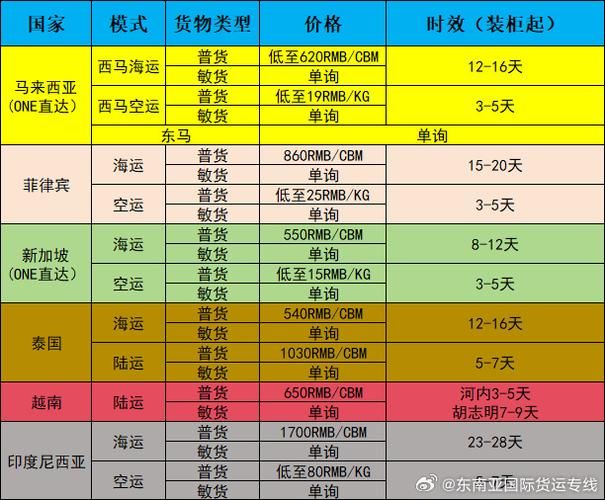
1 ️⃣ unconditional advance: international courier/empty is not rounded
If ups delivery is less than 0. 5 kg at 0. 5 kg and over 0. 5 kg at 1 kg
If a package weighs 10. 1 kg and weighs 19. 05 kg, charge weight: 19. 5 kg
Make sure the weight is contained
2 for destination port miscellaneous expenses: when lcl is quoted, it may be “maritime charges” only. After the arrival of the goods at port, the charges for unboxing, customs clearance, port charges (purpose port charges) are the biggest ones! Remember to keep the freight forwarders safe
If you need to ship, you're welcome to consult with the great forest logistics