The tea mushrooms, commonly known as tea mushrooms, are excellent, tasted, fragrance and spicy, and contain 18 amino acids and a variety of mineral elements. The chinese medicine considers the fungus of tea and mushrooms to be humid, urea, spleen stomach, etc., one of the most delicious and rare fungus of the time。
The biological characteristics of tea, mushrooms
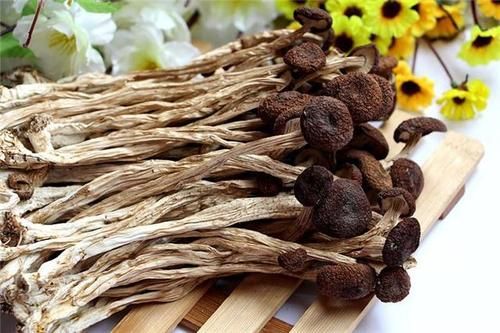
1 temperature: the fungus is growing in temperate to *** belts, so that the fungus is more resistant to high temperatures. Its fungus is growing normally at 5-35 °c, with a maximum temperature range of 18-28 °c. The fungus is a constant-temperature, non-temperature irritation is not required to produce mushrooms, with a sub-entity formation temperature of 13-28°c, which is most suitable for 18-24°c, with a high rate of mushrooms at 20°c。
2 water: the amount of water contained in tea mushrooms can be contained at about 65%, growing faster, and if the nutrients are dry or wet, it is not conducive to mycous filament. When the sub-entity is formed, the relative humidity of the air is required and the growth process is lower, so maintaining the relative temperature of the air at 100 per cent during the mushroom period and decreasing to 85 per cent after the mushroom is produced will facilitate the growth of the sub-entity。
3 air: tea mushrooms are aerobic fungus, and fresh air is guaranteed during the filamentary stage of the fungus, so the culture of the planting bags must be well ventilated. However, the requirement of a slightly higher co2 concentration during the growth phase of mushrooms and sub-entity is conducive to the extension of mushrooms and bacterial handles, thereby increasing yields, and thus the appropriate reduction of ventilation in the development of the sub-entity, a phenomenon similar to that of golden needle mushroom cultivation。
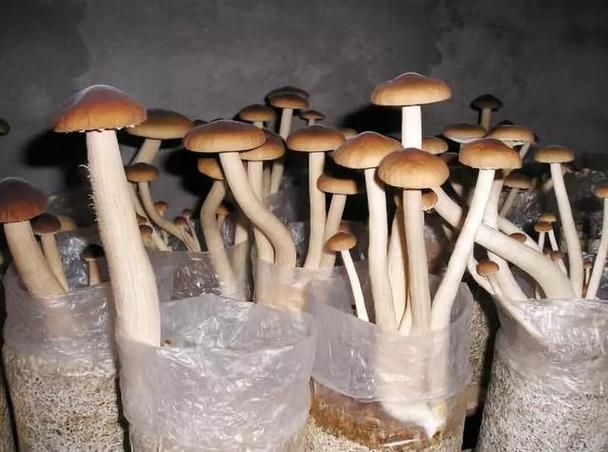
Nutrition: tea mushrooms are wood fungi, often found on oiled tea stakes or decayed parts such as willows. Because of its insect-free paint-enzyme activity, the use of wood is weak, but protein-enzyme activity is strong, protein-enabled, carbon ammonia is the most appropriate 60:1 and an increase in the proportion of organic nitrogen (e. G. Wheat skin, rice corn powder, pie fat) in planting materials is conducive to increasing production。
5 light: the tea mushroom fungus swirling process usually does not require light, but its sub-entity is clearly photogenic, and both foundational formation and sub-entity development require a certain amount of dispersive light, so stronger dispersive light is required in the mushroom production room for both foundation formation and sub-entity growth。
6 ph: the tea mushroom stimulant is growing in an acidic environment, the ph values are normal for meths of 4-6. 6, the most suitable for ph of 5. 5-6 and poor growth in a neutral alkaline environment, so natural ph values are generally used for planting, but not for upper alkaline。
Questioning the cultivation of tea mushrooms
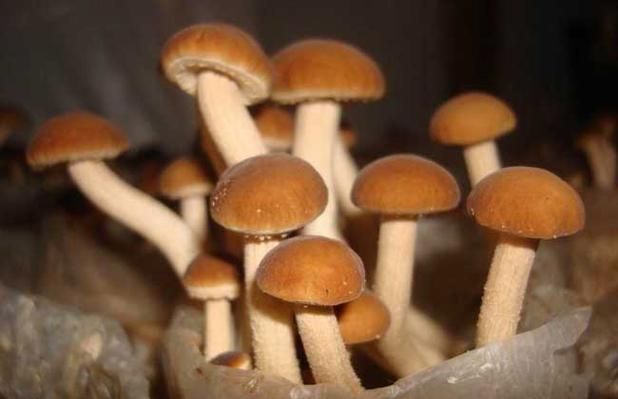
1. What are the nutritional conditions in which tea mushrooms grow? Tea mushrooms are a wood fungus with less capacity for woody and cellulose decomposition. Wild tea mushrooms are born only on oily tea trees and, after manual adaptation, can be used as planting material for broad leaves, such as oil, maple trees, willow trees, eucalyptus trees, and bean trees. However, the crumbs, which are looser in quality and have less mononin, are better adapted to the growth of tea mushrooms. It can be fully exploited as a nitrogen source. In addition to the use of crumbs, casserole, straw, cotton seed shells and grass can be provided as carbon sources. Single and double sugar are the best sources of carbon, and the use of starch, cellulose, etc. Is weak. If the formulation of the plant contains only glucose, the fungus grows loosely and is matched with a small amount of sugar, it grows dense and flourishes. This indicates that mineral elements are needed during the growth of the fungus. What are the temperature conditions for the growth of tea mushrooms? Tea mushrooms are medium-temperature edible. On pda culture foundations, spores can grow 24 hours later at 26°c and, after 48 hours, microcosms can be seen in the eye. The most suitable temperature for the growth of the fungus is 23-28°c, more than 34°c, which can be preserved for three months at below zero. The temperature range of the sub-entity's original base is 12-26°c, the most suitable temperature is 18-24°c, and the lower or higher temperatures delay the original base level. The temperature is low and the sub-entity is slow to grow, but the tissue is strong, the mushrooms are larger and of good quality; the temperature is high, the umbrella is easy to open and thin-stamped mushrooms are formed. Three, what about the moisture for the mushrooms? Cultivation of tea mushrooms should have a water content of 60-65 per cent, i. E., hand grabs a culturer, presses it hard, sews it wet between fingers, drops it but doesn't fall down, looses its fingers and breaks it apart. However, there is a slight difference between the different types of wood crumbs and the finer, which should be managed flexibly. The relative humidity of the air is required to be less than 70 per cent when the fungus grows; the developmental period of the sub-entity is 85-95 per cent, with appropriate long-term reductions to extend product preservation. 4. What is the air, light and alkalinity of tea mushrooms? The tea mushrooms are gaseous, large fungi, sensitive to co2, and have a high concentration of non-gasic co2, which can lead to slow growth of the fungus, coarse strains of the nuclei, small enzymes, early umbrellas, malformations, etc. Tea mushrooms are light fungus, the sub-entity has photogenic growth properties, and proper irradiation is necessary to complete a normal life history. During filament culture, they continue to grow without light, but do not form sub-entities. The sub-entity does not have light and cannot easily be divided. The suitable light strength is 50-300 lei. Tea fungus filamental acidic environment, least ph5. 5-6. 5, ph below 4 or above, is thin and slow. What are the forms of tea and mushroom cultivation? Tea mushrooms are grown in springs and autumns on a seasonal basis. In the spring, suitable temperature protection is required for the filament culture phase, which increases the temperature of the sub-entity in the later stages of its growth, is fast growing, is smaller in size, is relatively low in quality and is vulnerable to pests; and in the autumn, after vaccination, the filament culture is more appropriate. Sub-entities formed at lower temperatures are larger, better-quality, less contaminated, more biotransformation and more economically efficient. Plantation sites, either indoor or outdoor, are organized in the form of layered bags, walled bags and bed-covered earth. Local choice is available. What's the formula for the tea mushroom culturer? Formulation 1: 76 per cent of wood crumbs, 20 per cent of beryllium skin, 20 per cent of sugar l per cent, 1 per cent of calcium perphosphate, 1 per cent of calcium carbonate, 1 per cent of plaster l per cent; formulation 2: 68 per cent of wood crumb, 15 per cent of beryllium skin, 15 per cent of tea cake powder, 15 per cent of sugar, 1 per cent of sugar and 1 per cent of plaster powder; formulation 3: 58 per cent of wood crumber, 20 per cent of cotton seed shell, 20 per cent of bellow skin, 1 per cent of sugar, 1 per cent of gypsum powder; formulation 4: 60 per cent of wood crumbage, 20 per cent of corn chips, 19 per cent of plaster and 1 per cent of plaster; formulation: 60 per cent of water content, natural ph, which should be added to 0. 1 per cent - 0. 2 per cent of more funguilism; and 10 per cent of tea seed powder in the tea-planted area, which can be used to improve production. 7. How to select and disinfect indoor bags? Indoor bags can be planted using greenhouses, mushroom houses and empty houses, and spontaneous fungus to mushroom cultivation is done in the same premises. Indoor bags of small ambient climates are easily man-made, manageable, accessible, high-quality, productive and suitable for plant cultivation. Places used for indoor bagging require clean, hygienic, distance from workshops, warehouses and poultry farmhouses, with a good temperature and light. Pre-plantation must be preceded by a full-scale insecticide and disinfection, first by cleaning up and spraying it with 500-800 times more dichlorvos and, after three to five days, by fumigation with sulphur or formaldehyde so as to prevent the growth of the fungus. 8. How does an indoor bag plant mix up the fungus? According to the selected plant formulations, the various raw materials are said to be taken, and the water mix is applied to cover up to 60-65 cetacean, and the polypropylene condensed bags containing 17 x 33 x 0. 005 cm by hand or by bagging machines are loose and flat, the fabric is flat, the contents are at an altitude of 13-15 cm, and there are no cotton covers or sheaths. The constant pressure of 100 °c is maintained at 10 hours and the night-over or high pressure of 0. 138 mpa at 1. 5 hours. 9. How do indoor bags grow inoculation? After the fungic cooling of the material bags, a person is vaccinated under sterile conditions to plant the plant with no lids or rims. As far as possible, the bacteria are in block form to avoid overcrumbing to prevent death. The inoculation bags are placed on an indoor shelf for 45 to 55 days at 25i 2°c, so that the fuses can be full. During the fungi, the interior stays as dark as possible. How do you collect tea and mushrooms? Tea mushrooms are not only edible, but also have a very small bile, which should be collected together. When the sub-entity grows, the bacterium covers and spores are collected when they are not available in large quantities. A one-time harvest can also be carried out in batches using small, old and small harvests, with care to protect the mushrooms. In general, 3 to 4 batches are collected, producing 60 to 70 kg of mushrooms per 100 kg dry. After harvest, the sub-entity can cut the root and the impurities attached to it, and can be freshly sold, dried, packaged, sold out, frozen or processed into water cans. What are the technical indicators for tea mushrooms? (1) sensory indicator colours: light yellow to yellow, thicker lid centres and clear soup juices; tastes, odors: a tea, mushroom cans should taste and smell, smell clear and smell free; tissue form: mushrooms should be basically complete, fungus caps flexible, allowing for a small number of cracks, no serious malformations, blistering of the fungus, consistent lengths in the same can. (2) sterilized indicator solids: not less than 5% of net weight; salt water concentration: 0. 8% - 1. 5%; microbiological indicator: no fungus and f. B. Due to microbiological effects。