In a recent communication from the zhejiang provincial commission for the protection of the rights of the child (zhejiang province), it was stated that consumers had indicated that, when using the “foundable transport +” micro-mail public delivery, it had been discovered that the company had provided a fee-added service, called “sign confirmation”, at a cost of $1 for the purchase of the value-added service, which the recipient had to sign on the basis of a sign-off code sent by him or on his identity card, and that the consumer considered that the provision of the value-added service was in violation of his legitimate rights。
In response, shun fong responded that this value-added service is a common practice in the current express delivery industry, and that the choice of the service by the user has no effect on the regular delivery of the delivery of the express。

The beijing youth reporter experienced the "slow-to-flow +" micro-clinic and found that the "slow-to-fix" page would appear after completing the receipt address. There are two additional tickable options for “signature confirmation” “privacy protection” on this page, with a “recommended confirmation” fee of $1. One of the receivers indicated that, if the above option was selected, the additional costs would be charged to the courier for pick-up。
Does the fee-paying business violate consumer rights? In the “value-added services” section of the official website of hhunfung, the “signature recognition” service is described as follows: “`signature confirmation' means a value-added service that requires confirmation of the customer's information or requires the recipient's customer to sign in person, and may provide a certificate of receipt to the customer in the event of a dispute between the recipient and the sender.”
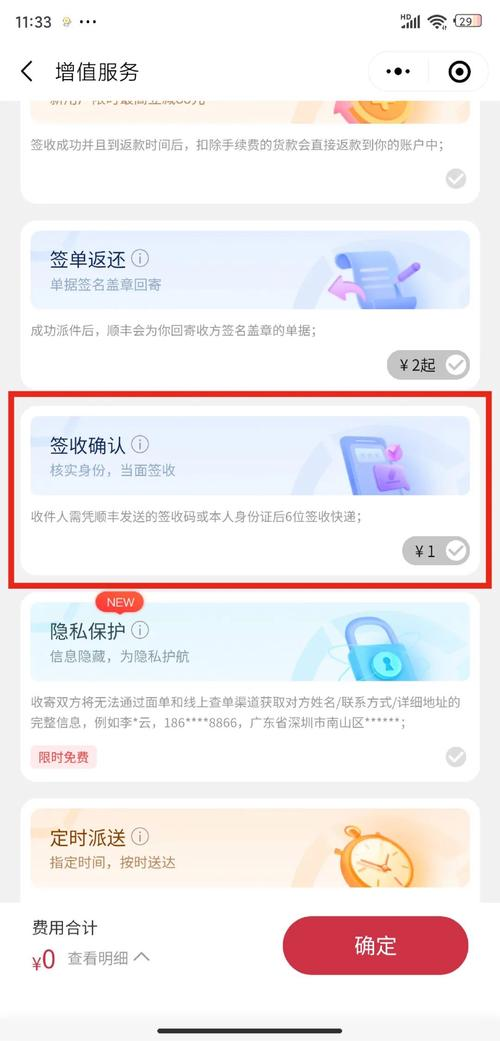
On the mainland of the country, shun fung sent six signers to the recipient's client via micro-mail or text message, and the sending link required the recipient's customer to present the signer to check the identity information。
According to the zhejiang provincial protection commission, the value-added service “signing recognition” introduced by the fast transport is a statutory obligation of the express delivery company. The unauthorized separation of “sign confirmation” from the content of the statutory services to which it belongs is suspected that the introduction of the value-added service at the speed of the shipment is prejudicial to the legitimate rights and interests of consumers; it can easily lead consumers to assume that if the service is not selected, the “sign confirmation” service may not be provided at the speed of the shipment and is suspected of misleading consumers。
The head of the zhejiang provincial commission for the protection of the rights of the child (zhejiang province) has made it clear that all sending enterprises must provide and optimize their services in strict compliance with the relevant provisions of national laws and regulations, so as to increase consumer satisfaction。
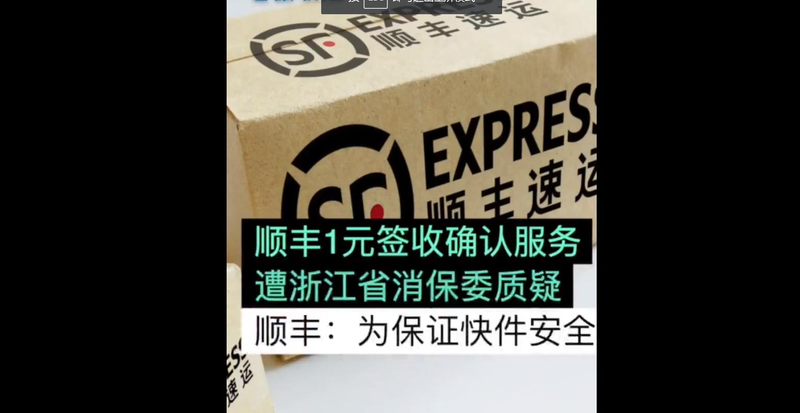
In response, he responded to north qing press that such value-added services were first derived from the special needs of customers of jewellery, 3c electronics and luxury goods, who, in addition to regular delivery signatures, wanted to be able to provide value-added services at the time of delivery to verify six password messages or six places after the recipient's identification number, in order to ensure that the prompts were signed by the recipient's designated recipient and to avoid misdelivered or settled transactions. For example, in the case of short copies sent by luxury customers, incoming customers are often met with couriers who indicate that they are travelling in the field, entrusting their colleagues with receiving or requesting them to be placed at the front desk. When an accident occurs, the recipient customer may not be able to accurately recall the commissioning process or whether it has been commissioned, and the password for receipt of the password must be forwarded by the recipient client to the client for payment, thus effectively avoiding such a dispute scenario。
It was further explained that this value-added service is now common practice in the express delivery industry。