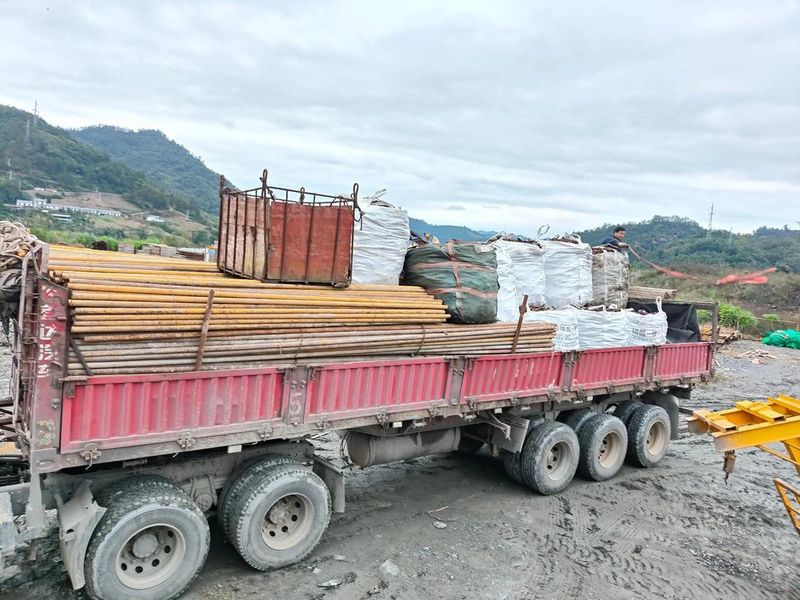
“vehicle hanger”: silent confrontation of the owner (point this week)
People's network - market report 2006. 11. 2401:10
“hands out of the country, drives local cars, takes local roads, earns local money and does not pay local taxes.” this phenomenon is referred to as “vehicle hangers”. In response to recent media reports that jiangsu province loses taxes and fees of up to rmb 1 billion each year due to “car hanging”, the province's transport authorities will concentrate on this phenomenon by encouraging the “home home” registration and registration of the outside vehicles and punishing them for failure to return voluntarily to jiangsu, in addition to paying the required adoption fees and withholding money。
The phenomenon of “vehicle hangs” is not unique to jiangsu province. In recent years, “vehicle hangs” have been overhauled in many places, from north to giling, liaoning, south to sichuan and yunnan, and claims that local taxes and fees are lost several billion yuan per year due to “vehicle hangs”。
In fact, the reason why some of the owners of cars are in trouble is to check their registrations and take off their plates, but to pay a little less for their maintenance. The phenomenon of “vehicle hangs” is exacerbated by the large differences between the current inconsistent standards for the collection of road charges, with a high of 200 multitons per month and a low of several dozen yuan per ton per month。
The question is, is “car hanging” a violation? Does the transport sector have the right to impose penalties on vehicles hanging outside the country? According to the regulation on the regulation on the collection of road maintenance fees by the ministry of transport, the national price authority, etc., the levying of road maintenance fees is based on the “one pay, one pass and the whole country”, i. E. A vehicle can travel the country as long as it has paid the cost in any province or municipality; and it is provided that vehicles travelling across the province or city are “required for adoption by an agency of the country of origin and may not be retried in the field”. This means that the vehicle should pay maintenance fees at the place of its “origin”, which means the place of registration and registration of the vehicle, and not the place of domicile of its owner。
It is clear that there is no violation of the “vehicle hanger” and that, even if a car was travelling on site a for a long time, it would not have violated the relevant provisions if it had delivered the cost of the road to site b, where the “vehicle” is located. On the other hand, there is no legal basis for the imposition of penalties in the transport sector for “car hangers”. “vehicle hangers” result in the loss of taxes and fees in a certain area, which is not the fault of the owner of the vehicle, who merely drilled the “empty” of the relevant legislation. In fact, where there is a high standard of maintenance, there will be a large number of vehicles “on the outside”。
Behind the “car hangers” is a dispute between local transport authorities. Although there are “two lines of income and expenditure”, the revenue is in the hands of the provincial transport authorities, and the maintenance fee becomes the “heart” of the provincial transport authorities, which are not allowed “to walk my way without paying me”. In fact, in some locations, the transport sector has only fixed the “outside” of local vehicles, while the “inside” of field vehicles is tacit. In jiangsu province, for example, as a result of the close to $40,000 fees paid in shanghai for the processing of motor vehicle licence plates in shanghai, many shanghaiers buy their cars and travel to jiangsu, so that the annual cost of road maintenance is naturally “inflowed” into jiangsu, and the annual “lost” taxes in shanghai are likely to be substantial。
Indeed, as long as road maintenance fees remain and standards vary from place to place, the phenomenon of “vehicle hangs” will be difficult to eradicate. The most fundamental way to address the “vehicle hanger” is to replace road maintenance costs with fuel taxes. From this point of view, “vehicle hangers” are in fact a silent confrontation between the owner of the car and the current policy of road maintenance。
晏