Having learned about seo definitions, basic concepts, etc., we speak of an important link in seo — the keyword。
Keywords refer to the term used by the user in searching for the relevant information as the keyword。
Categorization of keywords:
1. Classification by heat:
The so-called heat classification actually refers to classification based on the search volume of keywords。
(a) hot keywords: mainly search for better terminology, such as beauty;
General keywords: generic search volume terms such as beijing beauty;
Cold-door keywords: user searches are very purposeful, but search volumes are very small, such as beijing hairdresser phone。
Categorized by the relationship between the keyword and the enterprise:
Brand words: primarily corporate brand words;
(a) text: key words for the enterprise's owner's product or service;
People words: search keywords for enterprise user groups。
3. Classification by length of keyword:
We can divide it into generic and long end words
The usual keywords are four or six words
Long end words are usually called long end words more than six words, and the search volume for common keywords is typically between 100 and 500
Long end words, very small search volumes, usually below 100, are followed by long end words search, which are precise, competitive and easy to rank. So we have to choose a lot of long endings in order to optimize the website, which is usually a layout。
4. Other categories:
There is also a special category of keywords called generic keywords, so-called generic keywords refer to words that represent an area of an industry, such as clothing, finance, property, education and health care. Keywords such as this suggest giving up options because you can't opt out。
Selection of keywords:
Keywords may be selected on the basis of the company's main product or service。
2. The selection of keywords requires that the key words you choose must match the subject matter of your own website. What kind of business is your web site, so you're asking for the key words of the industry。
3. Analysis of competing keywords
If we meet websites in jobs that we are not familiar with, then it is necessary to analyse competitors and look at what key words are used in competition websites。
The key word for the analysis of competitors is not simply to look at what it uses, but to focus on the effect of the key word for the competition, the ranking of the key word for the competition, and whether the key word brings in traffic, so we can try to select the key word for the competition。
The analysis of competitors ' websites is not a mere analysis of one website, but of three or five competitors ' websites。
4. When choosing keywords for the website, we can also think from the point of view of the user and see what kind of word the user will search for when searching for services or products related to your website, so that word can also be used as a key word for your website。
5. We can also use some relevant words or synonyms when choosing words。
Because many products or services may have a variety of aliases, the north and south of china, and the search habits of internet users are not the same, we can also expand the key to different aliases to meet the search habits of more users. Word
Bicycles (trips)
6. The choice of keyword for the website must be of commercial value. The term so-called commercial value refers to a term that can easily be transposed。
7. When selecting keywords, we can also refer to the 100-degree drop-down box and related search words。
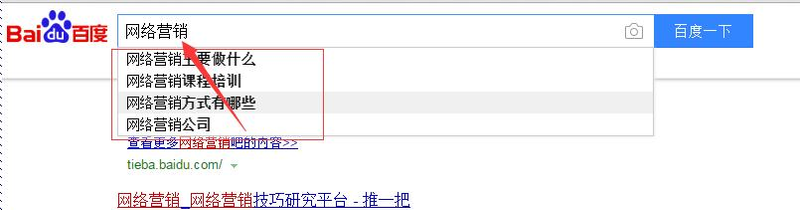

The drop-down box indicates the word that the user urgently needs to address, the demand for drop-down boxes is immediate and the search word is long-term. The search word does not have the value of a drop box word。
8 - we can also use 100-degree reference when we choose a keyword for the website

We can also use the 100-degree index tool to analyse user needs。
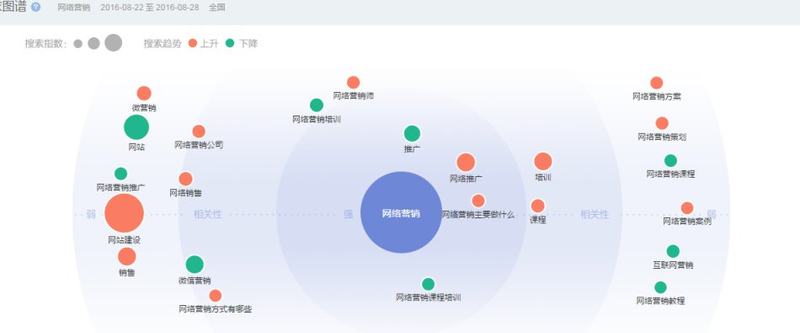
Using an index of demand mapping, selecting as many high-demand words as possible and of higher relative value would greatly help your website ranking and weight。
Secondly, we can use the function of a 100-degree image of the population to analyse the demand in the market and try to choose key words around areas where demand is higher。
Analysis of competition intensity of keywords:
One, by placing the keyword in the 100-degree search box, the ranking of the word shows that there are a lot of 100-degree products, and the competition is very difficult; and then looking at the results of the inclusion of the word, the more difficult the result is。
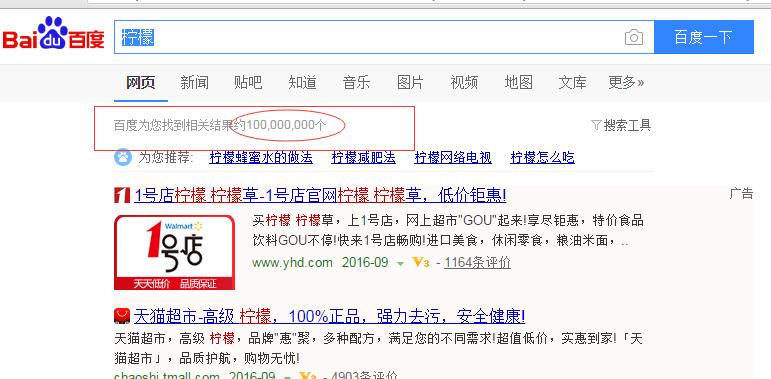
It is not difficult to capture words in the range of 100,000, and it is time-consuming to rank them if they are difficult in the range of millions and if more than millions indicate that the term is relatively difficult。
See the search volume of a word, using a 100-degree index. In general, the higher the search volume of a word, the more difficult it is to compete with。
It was suggested that such words should be as few as possible。
The search volume of 500-1000 is generally difficult to compete with, and the medium edge is difficult to rank, and the words can be multiple。
Words between 100 and 500 are relatively less competitive and easily ranked, with multiple selections。
Below 100 are cold-cut keywords, which are very competitive and particularly easy to rank, and the choice of words is recommended, which are generally placed on the internal pages of the website。
3. The search for a keyword revealed that the higher the ranking of bids, the higher the commercial value of the term, the greater the relative competition。
The search for a keyword found that the 100-degree snapshot rankings were all top-level domain names on the home page, indicating that the word was relatively difficult. Because the top level domain has a weight higher than the sub-domain
Www. Baidu. Com (second domain)
Baidu. Com (top level domain)
5. Stations in the illegal industry are difficult and difficult to rank (gambling, surrogacy, ticketing, certification, credit card offering)