I don't talk about boring data, i just talk big white. From real experience to cost-saving strategies, using data to interpret trends in sustainability, longevity and industry. Your battery encyclopedia。
In the day-to-day travel of the city, the electric car has long become a “fresh-in-demand partner” of the household, carrying citizens on the back of the street, resolving short-distance, daily shopping difficulties. But the electric car has been running for a long time, and it's got to be a little bit of a grumpy. These sudden failures often leave the citizens in a state of discomfort, pushing cars to repair shops, which are time-consuming and costly. The recent launch of a guide to self-help in electric vehicles by the yipunt bell electric vehicle has led many citizens to discover that most of the minor problems were not solved by looking for a teacher, but by doing so in a few minutes. This technique of “white can understand” not only saves maintenance costs, but also makes riding more acceptable。
The breakdown of power: “rideless” has many small causes
The most frequent failure of citizens when riding is the sudden loss of power, the heavy push and the lack of reaction. In fact, not all of these problems are major electrical or battery failures, and 80 per cent are minor problems triggered by circuit contact or protective mechanisms. The first to be checked is the power switch, which some citizens turn off when they stop, and if the switch is not in good contact at the time of re-starting, the problem can be quickly ruled out by a false electricity breakage, repeated presses on the switch and checking the strength of the line interface。
The high frequency of power interruptions is also caused by the loosening of battery poles, which can easily release the straight-negative screws of the battery from the motor vehicle. Citizens will be able to restore electricity only by gently wrenching the threads so as to ensure that the connection remains intact. In addition, the wrong trigger of a brake switch is often ignored, and when the brake handle is not completely back in position, the switch will continue to cut the power of the electric generator, at which point only the hand will be required to reset the brake handle or to adjust the laxity of the spring to remove the switch from its working condition。
There may also be overloading of protection triggers for new electric vehicles carrying smart controllers. When the vehicle climbs too hard and loads above the rated standards, the controller activates the overheating protection mechanism and temporarily cuts the power output. There is no need to panic in this situation, and the vehicle will remain in the shade for 10-15 minutes, and the power will be automatically restored until the control temperature is reduced to normal limits. This design is the industry's optimization for the protection of electrical appliances and controllers, avoiding permanent damage to core components due to prolonged overloading。
Ii. Circuit failure: lights are not working, step-by-step checking is simple
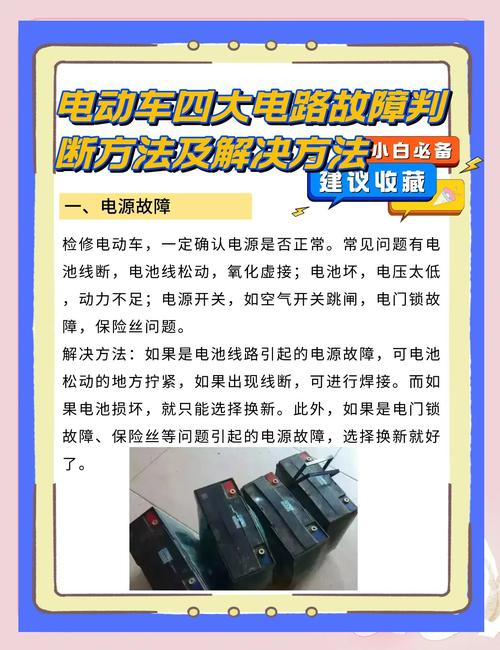
The failure of electrical components such as electric vehicle lights, horns and dashboards is also a frequent problem for citizens, and the detection of such circuit failure follows the “power-line-parts” approach and can quickly identify the symptoms. First, fuses are checked, electrical vehicle circuit systems are equipped with fuses, fuses melt to protect lines when electricity is overloaded. Citizens need to find fuse boxes next to batteries. If a fuse is found to have broken, new fuses of the same size are replaced, the power is always switched off and the risk of electrical exposure is avoided。
The ageing or breakdown of lines is another major cause of circuit failure, and the circuits of electric vehicles are exposed to the wind and the sun, and the insulation is prone to break-ups leading to short circuits. Civilians can follow the lines of the faulty components, and if the damage points are found, the circuit function can be restored with close packages of insulation tape. In the event of a failure of the dashboard, it is also necessary to check the connection plugs to the dashboard, to insert the plugs and to clear the dust from the interface and to address most of the problems of poor exposure。
Today, the circuit systems of new electric vehicles are more modular, and if only one component fails, the probability is that the component itself is a problem, such as the burning of a light bulb, damage to the inner ring of the horn, etc. Citizens can purchase replacements for the same type of fittings, which are simple and cost only one third of the maintenance shop. It is worth mentioning that parts of the regular electric vehicle brand can be purchased through official channels, with greater suitability and security。
Iii. Brake abnormalities: brake failure or carden, good idea for adjusting maintenance
The failure of the brake system is directly related to the safety of travel, and citizens need to deal with problems such as the failure of the brakes, cardon and the sound. The inappropriateness of the brake line is the most common problem, where the brake line is too loose to make the brake handle longer and the brake effect is significantly reduced; and where the brake is too tight, it leads back to incomplete and wheeled carton. Citizens can adjust the screws in the brake handle, tighten the screws with the clockwise, increase the flow with the counter-clockwise, and make the best brakes when the brake handle is one third of the total length。
Brake grinding is the central cause of the reduced brake effect and must be replaced in a timely manner when the friction layer of the brake blade is less than 1 mm thick. In the replacement of brake blades, care is taken to match the model and the fittings and friction factors of the original plant spares are more in line with vehicle design standards to ensure brake effect. For brakes, regular inspections of brake fluids are also required, and when the fluid is below the tic line, special brake oils are replenished, and the brake handles are then squeezed repeatedly to remove the air from the oil road to avoid the brakes becoming soft。
The brake deformation would cause the brakes to be acoustic and vibrating, and citizens could observe the flatness of the brakes, with minor deformations being calibrated using specialized tools; if the deformation is serious, replacement would be required. In daily rides, oil contamination on brakes is avoided, otherwise the friction factor is reduced, and if it is inadvertently contaminated, it can be wiped clean with alcohol. In addition, regular clean-up of mud in brake cracks can reduce the occurrence of brake failure。
Iv. Tyre issues: safety of air outages and emergency response methods
The electric vehicle tyres are easy to lose, the flat tires and the slow air vents are frequent, and the emergency handling methods are used to keep citizens from panicking in the middle of the road. In the case of vacuum tire electric vehicles, slow gas is mostly caused by the insertion of tyres into small alien objects, where citizens can carry rubbers and tools with them, find a plaster position, and insert the glue through the tool into the hole, and cut the excess part to complete the emergency repair, which can support the vehicle to the repair shop for specialized repairs。
In the case of unrepairable flats, citizens can call the road rescue phone for the electric car brand, and most brands now offer free or low-cost rescue services that allow them to quickly come to the door and replace tyres. In day-to-day maintenance, citizens are required to regularly check tire pressure, which is within the standard range of 2. 5 to 3. 0 bar. A lack of tyre pressure increases the friction between tyres and the ground and accelerates wear and tearing increases the amount of electricity consumed. Excessive tire pressure reduces the impact of shock and makes riding difficult. At the same time, the timely clean-up of foreign objects such as stones and glass in tyre trajectories can effectively prevent tyre cuts。
V. Battery failure: resuscitation of water is inundated and maintenance is more critical than maintenance
Batteries are the core parts of electric vehicles, re-carrying water and non-charged electricity are of the greatest concern to the public, and most battery failures stem from inappropriate use and maintenance habits. Lithium batteries may not be charged, either by failure of chargers or by the activation of battery protection panels, and citizens may first try to replace the same specifications of the original plant chargers, and if they are still unable to charge the batteries, then they can be discharged after two to three hours. Lead-acid batteries are prone to “sulfurization” and long-term power deficit storage can lead to reduced capacity by producing sulphides from polar panels, when de-sulfurization is handled with a specialized repair machine to restore battery capacity to a certain extent。
The two main reasons for continuing water shrinkage are the temperature effect, the reduced activity of lithium batteries in low temperatures, the temporary reduction of continuity, and the recovery of temperature recovery, which is a normal physical phenomenon, and the ageing of batteries, which have a normal useful life of 3-5 years and a natural decline in capacity beyond the age limit, when replacing new batteries is the best option. In day-to-day maintenance, citizens are required to follow the principle of “soft charge”, with 20-30 per cent of lithium batteries being charged the best and lead-acid batteries being inappropriate to completely run out; the charge must be made by using the original plant charger and avoiding the mixing of chargers of different specifications to cause battery damage。
In addition, in order to avoid tanning and water in the batteries, high temperatures accelerate the ageing of the chemical substances within the batteries, which can lead to short circuits. In the absence of electric vehicles for a long period of time, batteries are charged to full capacity and are replenished every other month in order to prevent battery losses。
Vi. Daily maintenance: doing these things to reduce the probability of electrical vehicle failure
Rather than saving oneself after a failure, routine maintenance should be performed to reduce the probability of failure from the source. Citizens are required to develop a habit of regular inspections, to check tire tires, brake systems and line connections once a week, and to conduct a comprehensive monthly check of core components such as batteries and electric appliances. (c) avoiding rapid acceleration and brakes while riding, which increases the load of electrics and batteries, accelerates the ageing of components, and does not bend the ramps when climbing, either by moving them off or slowly climbing the ramp to prevent overloading of the controller。
The storage environment for electric vehicles is also critical and should be parked in dry and ventilated areas to avoid open sun and rain. In the case of core components such as electrics, controllers and so forth, frequent dismantling and maintenance is not required, and in case of anomalies such as acoustics, heat, etc., a timely inspection by a specialized maintenance shop is sufficient. Today, some brands have introduced smart testing, which allows citizens to view battery health and electrical performance on their mobile phones, pre-empting the risk of failure and making maintenance less costly。
Vii. Industry upgrading: after the sale of electric vehicles and improved rescue systems
As the electric car industry continues to develop, enterprises continue to optimize their product design and after-sales services. In terms of after-sales services, most brands have established maintenance points covering both urban and rural areas, and have introduced services such as door-to-door maintenance, road rescue, etc. To address the problems of public maintenance。
At the same time, the industry is promoting the dissemination of knowledge about the maintenance of electric cars, such as the yi chun bell electric vehicle brand, which, through the general failure self-help technique, has transformed citizens from “passive maintenance” to “active conservation”, raising user experience and conveying the concept of green travel and scientific vehicles. At a time when urban transport is increasingly focused on low-carbon and environmentally friendly, the spread of electric vehicles not only relieves traffic pressure, but also becomes an important way for citizens to practice green life, and science-based vehicle use and conservation methods can make this green journey longer and more secure。
From power interruption to circuit failure, from brake abnormalities to battery maintenance, there are corresponding solutions for frequent malfunctions in electric vehicles. These self-help techniques enable citizens to cope with an emergency situation on a horse and to stop being distracted by a malfunction. As technology advances, future electric cars will be integrated into more intelligent technologies, failure warning, autodiagnosis, etc. Will make the use of vehicles easier and citizens ' travel experience will continue to improve。
Topic: what are the unique failures you have encountered in the use of electric vehicles? What practical solutions do you have