Homes are worried about heating in the winter, running air conditioners are afraid of electricity, and using heaters is worried about the cost of electricity. Today we're going to make this clear, using the experience of the old electrician, from work to actual electricity consumption, to the cost-saving methods of different scenes, so we can make sure that we're done with our minds, and that winter warmth doesn't cost money。
First of all, it must be understood that thermal principles of air conditioners and heaters differ, which is the central reason for the difference in electricity consumption between the two. Warmers, whether small suns, heaters, or kick wires, electro-heat oils, are by nature the direct conversion of electricity to thermal energy, energy efficiency is close to one, or, in short, one degree of electricity, generating a maximum of one degree of heat, with a small amount of heat loss in the middle and a slightly lower actual heat production. Air-conditioning heat is not simply “heat making”, it is a “heat porter” based on the heat pump principle, which consumes one degree of electricity and drives compressors to move outdoor air heat into the room, generating 3-4 times more heat than 3-4 energy efficiency, which means that, at the same cost of electricity, air-conditioning can produce several times more heat than a normal heater。
Of course, the principle is not solid enough to speak with real data. We calculate it by the average cost of electricity of 0. 6 yuan/degree for household-used equipment and residents, looking at the difference between the actual consumption and the cost of electricity. To begin with, air conditioners, the 1. 5 variant air conditioners most commonly used in households, with power fluctuations between 1,000 w-1500 w for heat production, and automatic cooling after setting temperatures, averaged 1250 w, with a consumption of approximately 12. 5 degrees per hour for 10 hours per day, $7. 5 per day, 30 days per month and approximately 225 for electricity. It is also possible to achieve better performance of first-stage energy-efficient variant-frequency air-conditioning, with a lower actual consumption of electricity, which can be contained within 10 degrees for 10 hours, when outdoor temperatures are appropriate。
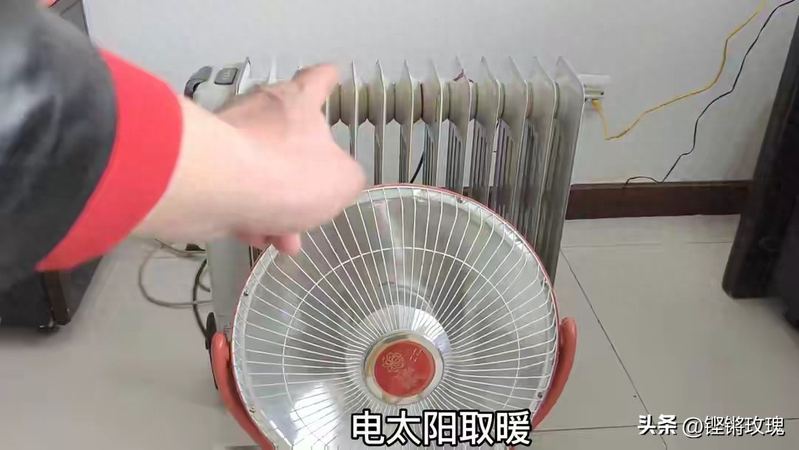
Looking at the mainstream heaters on the market, there are significant differences between the power and power consumption of different types of heaters, but they are generally higher than air conditioners. The small sun is considered to be low in heating, with a power of 800 w-1200 w at 1100 w, 10 hours at 11 degrees, which appears to be lower than the air conditioner, but the small sun can only heat locally and cannot heat the room as a whole, and can only be used alone; the heater power is generally in 2000 w, 10 hours at 20 degrees a day, 12 dollars a day and 360 dollars a month; kick-wiring heaters and thermal oils are in the vicinity of 2,200 w, 10 hours at 22 degrees a day, 13. 2 dollars a day, and the monthly electricity cost is 396. These two energys heat up the house as a whole, but nearly twice as much as the direct electricity consumption of 1. 5 air conditioners. Even for a less powerful heater, to achieve a house-wide heating effect similar to that of air conditioners, there is often a need for multiple simultaneous openings, higher actual electricity consumption and a greater difference in electricity costs。
In particular, one of the key prerequisites for air conditioning is outdoor temperature. The “heat handling” capacity of air conditioners is heavily influenced by outdoor temperatures, with the best working temperature for air conditioners above 5°c in the relevant national standards. If outdoor temperatures are lower than 5°c, especially in the cold winters of the north, less heat in the outdoor air, the heat efficiency of air conditioners will decrease significantly and frost will become more frequent, which will require the opening of electric accelerators, which will typically have a power of 1000 w-2000w, the overall energy consumption of air conditioners will increase significantly, or even flatten the heater once they are activated. The fact that heaters are not affected by outdoor temperatures, however cold they may be outside, and can heat with electricity, is the only obvious advantage of heaters and the reason why many households use heaters in areas in the north where the temperature is extremely low during the winter。
In addition to the equipment itself, the use of the scenes directly determines who is more cost-effective in terms of air conditioning and heating, and the selection of the pairs of devices saves half of the electricity cost, which is also a practical experience of old electricians over the years. In the case of single-person local heating, such as sitting in front of a desk, chasing or working on a balcony, low-power heaters, such as small suns, are more cost-effective than air conditioning, after all, without heating the entire room for one person, and avoiding waste of electricity from small-scale use, which is less expensive and more flexible。
In the case of family activities in the living room and bedrooms, which require room-wide heating, with outdoor temperatures above 5°c, fm ac is absolutely the preferred option, not only to keep the entire room evenly warm, but also to spend much less on electricity than a whole house-heated kick line and oil. In particular, in well-sealed rooms, air conditioners are operating at low frequency when the temperature is set, with lower electricity consumption and better temperature-preservation effects, with greater power savings for air conditioners. There are also special scenarios such as bathrooms, which are suitable for short-term heating with a water-proof wind heater, open 10 minutes in advance, shut down after bathing and avoid prolonged running of electricity, and air conditioning, which is not suitable for use in the bathroom, not only because of safety hazards, but also because of the humid effects。
In addition, local electricity policies have helped to further save electricity from heating, and in most parts of the country the price of electricity is now applied to the population's peak valley time, which is more than 30 per cent lower than the peak segment (generally at 21 p. M. To 8 p. M. The next day), and in some areas it is less than 0. 4 yuan/degree. Whether with air conditioning or heaters, peak price can be used, such as setting temperature at 18-20°c at night when heating with air conditioning, and operating at a low price; heaters can also open preheating in the valley with a time- and heating function, and peaks can be appropriately reduced, which can effectively reduce the cost of electricity. At the same time, we have a policy of subsidies for first-level energy-efficient household electricity, with priority given to first-level energy-efficient products when purchasing air conditioners and heaters. Although the cost of prior-period purchases is slightly higher, long-term electricity consumption savings are much higher and more economical than the initial price differential。
There are several general small techniques to make heating more energy-efficient, both air-conditioning and heating, which are simple and effective. First, it is comfortable to set the temperature at 18-20°c for winter heating, with measured data showing that the temperature of heating equipment at 1°c increases the amount of electricity by 8-10%, not to underestimate the amount of 1°c, which can cost tens of dollars more in a month, and that air conditioning, when heating, avoids increasing the temperature too high, otherwise the accelerator will continue to operate at a high power level, with a sharp increase in electricity consumption。
Second, keeping the room warm and reducing the heat loss is the most basic and efficient method of saving electricity. When heating equipment is used, doors and windows are closed, thick curtains are drawn to prevent cold air entering and indoor heat is dispersed; if there is a leak, seals can be placed on the windows and doors plugged, and these minor operations increase the temperature of the room, and air conditioners and heaters do not need to start heat supplements frequently and naturally reduce electricity consumption. Thirdly, regular maintenance of equipment, air-conditioning filters, which are regularly cleaned, can affect the heat-replacement efficiency of air-conditioning, resulting in overloading of compressors, increased power consumption and a general recommendation for a half-month clean-up; and heat-screeching units in heat-heaters that are kept clean, avoid covering of impurities and affect heat dispersion, both to ensure heating effects and to reduce energy consumption。
A further point that is easily overlooked is the avoidance of frequent switch heating. Many people feel that out-of-door shut-off facilities will save electricity, but when air conditioning and heating is restarted, there will be instant-high power running and short-term outings (e. G. 1-2 hours) rather than keeping air-conditioning operating at low temperatures and heating at constant temperatures, which will actually consume less than when off. In addition, air-conditioning heat can be prepared in a way that leads down to the wind vent, which is expected to move upwards and down, allowing the heat to sink faster, allowing room temperature to rise evenly, and reducing air-conditioning running time to save electricity。
Friends might ask, "how do you choose to do that when there's no concentration of heating in the house and the outdoor temperature is often below 5°c?" this can be done using a combination of “air conditioners plus heaters”, which operate at slightly higher outdoor temperatures during the day, do not need to turn on electricity to assist in the heating of air conditioners, and take advantage of their saver advantage; when outdoor temperatures are extremely low at night, air conditioning is less efficient, air conditioners are shut down, kicklines or oils with a constant temperature function are used to heat up, or air conditioning is used to operate with low temperature, with small solar local heating, which can ensure the heating effect while keeping the overall power consumption within a reasonable range and saves money from the use of air conditioners or heaters alone。
In summary, air conditioners and heaters are more expensive and have no absolute answer, but in general, the value and power savings of fm air conditioners are much higher than those of heaters when outdoor temperatures (over 5°c) are appropriate and house-wide, and heaters are more useful if they are single-person local heating, or when outdoor temperatures are extremely low. In fact, the core of winter heating is not the choice of which equipment, but the selection of which equipment is based on their own use scenes, together with the correct use methods and local electricity policies, which minimizes the cost of electricity while keeping warm。
There are many energy-saving designs in the modern state of domestic electricity, both air conditioners and heaters, such as air conditioners, all-way frequency, graphite-based energy-saving techniques for heaters and smart temperature control, which can further reduce power consumption. Moreover, the state has been promoting universal access to energy-efficient household electricity and has introduced a number of subsidies and preferential policies, which not only allow energy-saving equipment to be purchased at more affordable prices, but also fundamentally reduce household electricity costs, which are a tangible benefit to the population。
This paper is based on electricians ' data, national energy efficiency standards for household appliances and general policies for electricity use by the population. It is shared only by the ministry of electricity for daily heating and does not constitute guidance on equipment selection and use. Differences in electricity prices, peak valley hours, energy-saving domestic electricity subsidy policies, and the impact of actual electricity consumption by air conditioners and heating units, room space, temperature-preservation effects, etc., are determined according to the actual situation。
Is this your winter air conditioning or your heater? What's the monthly heating charge? Do you have an exclusive power-saving technique? Welcome to the comment section